
Summer 2026 / Volume X, Number 2
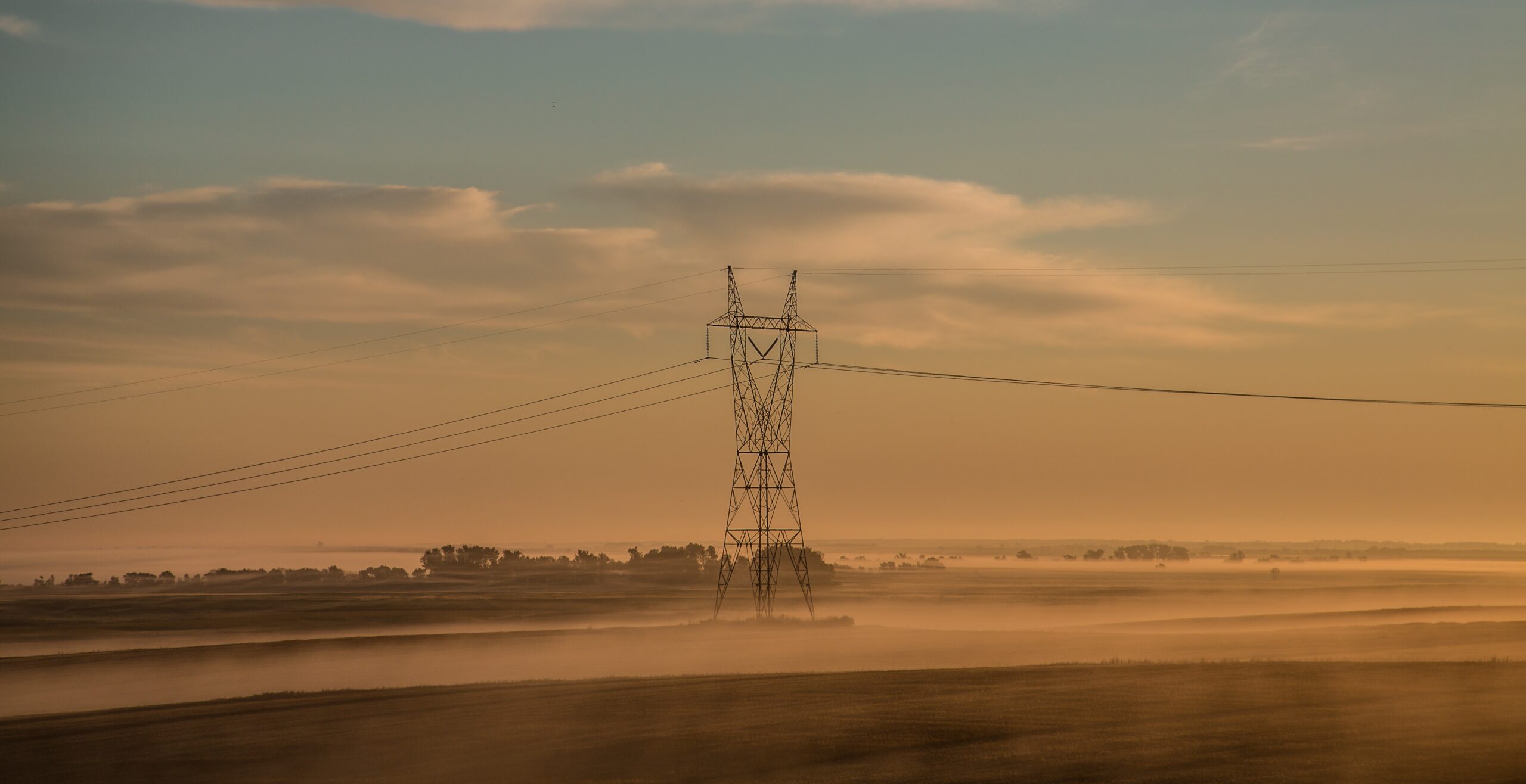
America’s Energy Arithmetic
Who Will Pay for Electricity Infrastructure Investments?
Infrastructure is part of a broader debate about energy and climate, where commercial, regulatory, legal, and technical factors collide. Because of the long life of these assets, contemporary investment choices can have deeply consequential implications, which only intensifies energy debates. Misallocating investment can lead to long-term financial burdens or chronically fragile physical systems. In addition to policy debates, choices about infrastructure are complicated by extenuating factors, including new technologies, increasing incidence of physical shocks over time, and uncertainty about the timing, magnitude, and location of load growth. With all of these swirling uncertainties, it is imperative that industry and government coalesce around a singularity of vision and purpose in refining and expanding our electricity infrastructure…
The Permitting Trap: How Political Abuse Prevents Growth
It is abundantly clear that America must build more energy projects. Clinging to the ability to slow down and block disliked projects may have short-term political appeal. But in the long run, it only serves to maintain a status quo that is becoming increasingly untenable in the face of challenges such as load growth from AI, decreased reliability from aging infrastructure, and climate change. A better system is possible.
Addition over Obstruction: A New Governing Principle for Energy Development
On climate grounds, liberals have generally opposed the expansion of fossil fuels and promoted clean energy alternatives. The conservative response to climate has been both fragmented and shifting. But the emerging reality is deeper than debates over optimal climate policy. Policymakers on either side of the aisle have effectively embraced, to varying degrees, energy obstructionism…
Balancing Acts
The Last Time We Fixed the Trade Deficit: Lessons from the Plaza Accord
Americans last focused sustained political attention on the trade deficit in the 1980s. A crisis strikingly similar to today’s—a collapsing industrial base, bipartisan fury in Congress, and a soaring dollar—produced the most consequential episode of international currency coordination in modern history. The Plaza Accord of 1985 and the diplomatic campaign that surrounded it succeeded in rapidly reversing the trade deficit. But the success did not last. The political coalition that forced action dissolved, the institutional memory faded, and the structural forces that produced the crisis were left largely intact, setting the stage for the even deeper imbalances we confront today…
The Impossible Partnership: Apple’s Coming Reckoning with China
The role of Apple’s chief executive still appears deceptively familiar: steward a portfolio of iconic products, manage a sprawling global supply chain, appease Donald Trump, and deliver outsized returns to shareholders. As Apple is poised to transition from Tim Cook to John Ternus, however, that conception no longer reflects the reality of what the position entails. Ternus will inherit a position fundamentally altered by geopolitics, one that now sits uncomfortably closer to questions of national interest, regulatory authority, and public trust in ways few corporate roles ever have…
National Orchestration and Provincial Competition: China’s Industrial Policy for AI Dominance
The pervasive indifference that characterizes America’s overconfident view of its place in the AI race stems from grading the Sino-American AI race against our own preferred rubric: frontier model benchmarks, the scale of the data center buildout, and timelines to artificial general intelligence (AGI). Rarely do we measure American performance against the categories that the Chinese themselves choose to emphasize. The party-state and various Chinese companies are clearly trying to unleash AI capabilities, and Beijing’s desire for international AI leadership is beyond dispute. But their methods and benchmarks of success are different from ours, evincing a fundamentally distinct understanding of the nature of the competition…
How Bidenomics Went Bust: A Midwestern Case Study
Bidenomics, especially when viewed from the vantage point of central Ohio, stumbled in two ways that threatened its laudable goals. First, problems endogenous to the Biden White House’s key partner, Intel, frustrated political goals in a way that casts doubt on how policymakers structured their relationship with the private sector. Second, the deployment of federal funds proved sluggish in a way that worked to discredit the whole program…
Financing American Industry
How Financialization Can Complement Reindustrialization
To harness the urgency for strategic industrial investment into a self-sustaining force, public financing infrastructure must be built that enables deployment of private capital toward strategic objectives. The conventional debate frames financialization and industrialization as antagonists; in fact, the former can enable the latter. The public sector’s critical role is not as a substitute for markets but as a coordinator of market infrastructure and a backstop for financial risk that the private sector cannot bear alone. The ultimate purpose of this public role is to make the construction and delivery of strategic assets a well-understood, repeatable practice, one that private financiers can evaluate with confidence, and with a declining scale of public support over time…
The Missing Institution: Infrastructure Investment in the Age of Strategic Competition
The central challenge confronting the United States today is not simply the scale of infrastructure investment required but the institutional architecture through which that investment is organized. Infrastructure is often treated as a category of public spending when it is a balance sheet problem: long-duration assets require long-duration capital structures and institutions capable of mobilizing capital across decades rather than electoral cycles. Markets and the private sector alone cannot address what might be called the trifecta that hit the United States in the last decade: supply chain fragility revealed by the pandemic, growing strategic competition with China, and the capital intensity of the artificial intelligence revolution…
Revitalizing the Export-Import Bank for Great Power Competition
The charter of the Export-Import Bank of the United States is set to expire on December 31, 2026. As Congress prepares to draft reauthorization legislation, it has an opportunity to augment and reorient the Bank for a generation. Over time, a legacy design model, bureaucratic calcification, and outdated self-imposed restrictions have left EXIM inadequately prepared to defend U.S. industry in a rapidly changing era of global economic and strategic competition…
Closing the Strategic Capital Gap: The Case for Modernizing the Export-Import Bank
Investment should be directed at sectors where American technology and innovation exist but the infrastructure to commercialize them domestically does not—and where the national security case is clear. Among these sectors are rare earth processing, where proven American technology faces predatory state-backed pricing; defense-industrial reconstitution; and advanced shipbuilding techniques and autonomous vessel design. In short, strategic capital must target the start-up and scale-up gap in advanced industries with national security implications…
Energy Financing Power: China’s Strategy and a Path Forward for the United States
The United States faces a growing strategic challenge: China has emerged as the world’s dominant energy financier, outpacing the United States nearly ten to one in global markets. China’s growing influence not only directly challenges U.S. strategic interests but also excludes American businesses from immense economic opportunities in the world’s largest foreign markets, such as Brazil and India. The United States should not try to out-subsidize China, but true American energy dominance requires global market leadership…
Entrenched Elites
The Appreciation Constituency: Land, Credit, and the Politics of Protected Assets
The passive extraction of land value was the central problem of industrial capitalism. Bird sees that the mechanism is universal and persistent across political systems and centuries. The argument waiting inside The Land Trap, and the one its evidence most powerfully supports, is that democratic capitalism has a structural tendency to convert the aspiration for broad prosperity into an engine of asset price inflation that it cannot, by its own logic, correct…
Rediscovering a Dynamic Elite?
If we have decided that democracy cannot literally mean the rule of the people and has to be redefined, then there is no particular reason why we must accept democratic elites’ openness, mobility, or adherence to some ideals of historical progress to be the key elements of a redefined democracy today. Democracy, once decoupled from the idea of the people ruling, might rather mean that the inevitable elite rules effectively on the people’s behalf. Once we are no longer bound to narratives that have been consigned to history, or to physical metaphors that equate a good society with fluidity and motion, we might be free to rethink what we want from our elites and how to get it…
Online Exclusives
-
An Energy Framework for the Common Good: Permitting, Capital, and Innovation
The availability of energy in America has allowed citizens to use their security, freedom, and formation to advance the social goods of everyday life. Likewise, the future of the country will depend on the addition of large amounts of cheap energy, directed toward the right…
-
The Case for Flat Tariffs
The more strategic move is simpler, dumber even: tariff everything. Create a durable preference for production in the United States, across the whole industrial base, and let entrepreneurs, engineers, and manufacturers discover where the next breakthroughs will come. The scalpel has its place, but the…
-
Build Like Ike: How Surface Transportation Reauthorization Can Drive America’s Next Materials Revolution
As the United States embarks on the next great buildout of strategic infrastructure in the form of AI data centers, it must ensure that the material supply chain for the interstates that underpin it all remains secure and modern.
-
The Interstate Imperative: Infrastructure Maintenance as Nation-Building
The story of the highway system is, in many ways, the story of public infrastructure more broadly. What appears as a transportation challenge is in fact a reflection of a deeper structural issue: governments built vast systems in an era of expansion but have yet…
-
The Long March of Process: Efficiency and its Discontents
Too many seem to think that in a handful of years, Americans will wake up to a technofuturist version of the 1950s, when Uncle Sam’s rolled sleeves, brawny forearms, and dexterous hands peerlessly delivered the world’s goods. A necessary and uplifting vision to be sure,…
-
The Employment Effects of Immigration Enforcement: An Initial Assessment
We are not naïve about the political difficulties surrounding immigration, but we nonetheless wish to underscore the plight and wellbeing of disadvantaged native workers, a group that both parties claim to have some affinity for, either now or in the recent past; recognizing labor market…
-
America’s Critical Need for Nitrile Glove Supply Security
If the United States cannot manufacture what it needs to sustain and defend its critical industries, its ability to maintain its security and independence is put at risk. Ensuring domestic nitrile glove supply is not a matter of industrial nostalgia or protectionism; it is a…
-
Invisible Infrastructure, Visible Results: A Conservative Case for Clean Indoor Air
MAHA promises a country that is stronger, healthier, and more resilient. Achieving that vision does not require indiscriminate expansion of the public health bureaucracy; it requires a federal government that knows where to act—and where to stop. Indoor air quality is an ideal proving ground…
-
Rethinking American Alliances in Europe: From Supranationalism to Nationalism
Our goal must not be a redux of World Wars I and II, when the United States used its superior industrial might to arm European powers. The goal must not be a wealthy deindustrialized Europe rich enough to buy the products of American industrial might,…
-
Arsenal of the Stars: DPA in the Second Space Age
The Defense Production Act (DPA) of 1950 is a survivor of the broad World War II–era powers that once belonged to the executive branch. Based on the War Powers Acts of 1941 and 1942, the DPA “confers upon the President a broad set of authorities…
- ← Older posts