The long 1990s, marked by the optimism of Pax Americana, reinforced belief in extended deterrence. No one expected that we would once again be discussing nuclear weapons outside the context of the Non-Proliferation Treaty (NPT). As a result, several generations of politicians were spared serious reflection on the matter.
Considering the near total absence of debate in Europe, it must be acknowledged: Europeans seem unwilling to confront the implications of a serious analysis of extended deterrence. They are, however, not the only ones who appear to embrace the idealism of extended deterrence. Political scientist Vipin Narang, who helped articulate the Biden administration’s nuclear policy as its Acting Assistant Secretary of Defense for Space Policy,1 maintains that extended deterrence is a proven and highly effective tool for preventing proliferation. According to Narang, the U.S.-led order is fundamentally built on extended deterrence.
This author would assert that extended deterrence is merely a signal of conventional guarantee, not a binding promise. The logic of extended deterrence defies common sense. It is typically framed as “New York for Taipei” or “Los Angeles for Tallinn,” suggesting the United States would risk nuclear retaliation on its own cities to defend distant allies. It is difficult to imagine Washington making such an existential commitment.
The moment the United States folds the nuclear umbrella and removes its bombs from Europe, two things will become undoubtable: first, we are living in a multipolar world; and second, American security guarantees are not what they used to be. Erosion of security guarantees, be it real or perceived, would serve as an invitation for allies to consider acquiring independent deterrents. Let us begin by examining NATO’s decline and the factors that might drive some countries toward the bomb.
The Past and Future of Nuclearization
President Donald Trump has reassured many that America is irreversibly pivoting toward Asia and that he wants autonomy, not engagement. Others argue that his goal is to fundamentally renegotiate the Atlantic alliance, to repair and develop the existing structure into one that is more sustainable. We do not know for certain, but the fact remains: the extended deterrence crisis is a NATO crisis.
The divergence between Brussels and Washington seems only to be widening. The United States considers China a rival, while Europe remains hesitant about whether to treat it as a partner. The European Union contributes little to U.S. interests in South America and offers limited support in the Middle East. Regarding trade, tensions with Brussels appear to be temporarily subdued, although many see the agreements as humiliating for the EU. Pushing for more military spending might end up being pointless. Almost every country on the aging continent faces the dilemma: warfare or welfare? Bloated pension systems and the demographic burden of retired baby boomers make increasing defense budgets a difficult, if not unfeasible, choice.
Europe has begun to fear that it is alone. According to Gary Gerstle, Trump has hastened the end of a certain form of globalization. One could argue this about the security order in the North Atlantic as well: Trump has exposed the growing distance between the United States and Europe. The contours of the coming order are not yet discernible, but the transition has clearly accelerated.
European countries already found themselves in a similar situation once before during the Cold War. When confronted with the looming threat of American disengagement, many of them seriously considered the nuclear option. Two EU member states are particularly interesting from a proliferation standpoint: Germany and Sweden.
President John F. Kennedy accused Europe of “free riding.” He repeatedly threatened to withdraw large numbers of troops. His Secretary of Defense, Robert McNamara, considered the balance of payments more important than reassuring allies. His main concern was economic calculus, not the strategic consideration of deterrence: if the Germans failed to fulfill their obligations, the American divisions would return home.2 In early 1963, JFK warned his National Security Council that “We cannot continue to pay for the military protection of Europe while the NATO states are not paying for their fair share and living off the ‘fat of the land.’”3 That same year, General Franco conveyed to the German ambassador in Spain Kennedy’s warning that if the U.S. did not solve its balance-of-payments problem, it would have to drastically reduce its involvement in the European security architecture. Bonn took the hint.
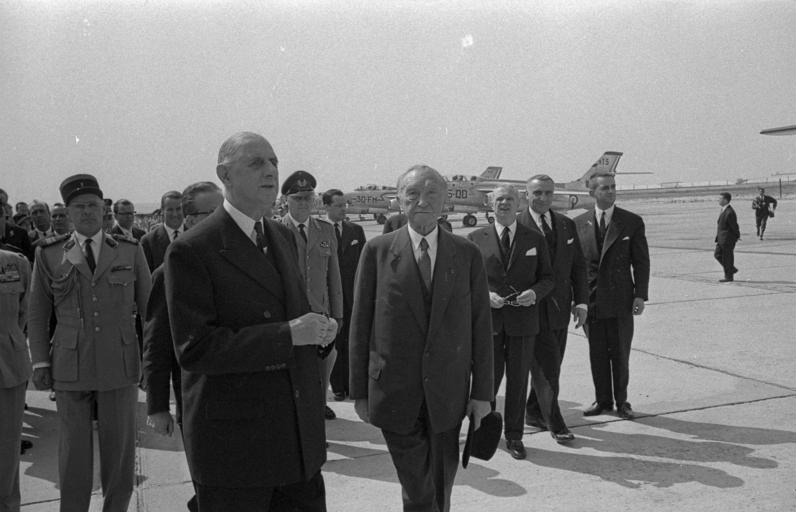
Franz Josef Strauss, the West German defense minister, claimed that the NPT constituted a “new Versailles of cosmic dimensions.” Chancellor Konrad Adenauer compared giving up their deterrent to the Morgenthau Plan, which intended to strip Germany of all its industry and divide its territory. The dispute over the bomb between Washington and Bonn lasted for more than a decade, from the early 1960s until Chancellor Helmut Schmidt ended it in 1977.4
German nuclear intentions, however, did not fade. The treaty was accepted as the price of concessions: it contained many loopholes. These allowed Bonn to keep the door open should a bomb prove necessary as a result of changes in the security environment. After all, Adenauer denounced the NPT as a “death sentence” for his country.5 The tabloid Bild warned on its covers: “Diktat of Atomic Giants” and “Bonn has to stay out!” When Schmidt signed the NPT, he could not allow the nuclear option to be foreclosed altogether. To renounce it would mean a painful surrender of sovereignty.
After German reunification in the 1990s, the issue of a German deterrent resurfaced on the margins of geopolitical debate. In March 1992, the New York Times wrote about a Pentagon document that warned Germany and Japan might become nuclear states.6 Regardless of how we explain the exclusion of nuclear weapons from political debate, we should note one fact: Germany has quantities of plutonium sufficient for “technical hedge.”
Before joining NATO recently, Sweden retained neutrality and remained outside the Alliance during the Cold War. After 1945, Swedish military analyses concluded that autonomy, self-reliance, and non-alignment were essential. This required a strong defense industry and independent defense capabilities. Stockholm viewed the Baltic region as vulnerable to Soviet attack. The idea of nuclear deterrence first appeared in governmental analyses in 1948, but a serious campaign began only in 1957. In the end, a combination of domestic political opposition and American promises kept Sweden out of the nuclear club.
There was debate over whether the Swedish military was secretly conducting a nuclear weapons project. Some sources pointed to slush funds and covert research.7 The most informed book on the Swedish program argues that the 1987 government report claiming nothing had transpired was not entirely truthful. After the collapse of the Soviet Union, speculation was again rampant. In 1994, an article appeared in the Washington Post suggesting that Stockholm had never renounced the nuclear option. It’s hard to conclude what the true story was, but the lesson seems clear: with nuclear weapons, we can never be certain. Intelligence failures attest to this.
The Nordic countries’ performance in many technological and economic domains is ahead of the rest of the continent. Sweden already has a nuclear industry that could facilitate the transition to a military program. Germany, by shutting down its power plants, may have handicapped its ability to acquire a deterrent quickly. That being said, Sweden sees Russia as a permanent threat much more clearly than Germany does.
On the edge of Europe, there is, however, another important player that represents a strong candidate for nuclearization. Turkey is a member of NATO and treats the alliance as a fundamental pillar of its security. The disappearance of the nuclear umbrella, or serious doubt about it, might provide Ankara with an incentive for proliferation. The surest signal here would be the removal of American bombs from the country.
Besides the waning credibility of the United States as an ally, a trigger for nuclearization could be another regional state pursuing the bomb. In this sense, influencing Turkey’s course of action is more complicated, as it requires both solidifying its trust and containing Tehran’s ambitions. The good relationship between Turkey and Iran won’t matter when confronted with such a drastic change. Turkish President Recep Tayyip Erdoğan, or his successor, could very well consider imitating their Iranian neighbor. Some experts argue that the denial of Turkey’s EU accession could raise proliferation pressure. (This author views that risk as negligible.)
Erdoğan has said publicly that at a time when others are building nuclear deterrents, Turkey should also have this option. Keep in mind that Ankara is advancing its defense industry beyond unmanned systems. Turkey will open its first nuclear power plant this year, a necessary step toward nuclear capability.8
Sovereignty and Statesmanship
Strong reasons prevent us from expecting proliferation in Europe. Let us examine all of them, as they appear convincing enough to make nuclearization in the EU seem like a low-probability event in the next decade.
(1) Existential threat: Germany, which during the Cold War feared a Soviet attack, does not display a fear of Russian invasion. Nations rarely pursue nuclear weapons unless they face an existential threat. Sweden and Finland, on the other hand, present a different case. Both have active and developed nuclear sectors. Both view Russia as a legitimate danger. Sweden and Finland joined NATO. A sudden weakening of the alliance or U.S. withdrawal could force them to take drastic measures. These are nations that have retained both industrial capacity and strategic autonomy. Poland also feels threatened by Russia but does not yet have a civil nuclear program. Any future development in this area is likely to involve Westinghouse, making it difficult to envision progress without U.S. knowledge or involvement.
(2) Welfare or Warfare: For a country to build its own deterrent is a huge expense. It amounts to a megaproject that will pay off in the distant future and quite possibly will never be needed. It is a risky, time-consuming, and capital-intensive investment. It would require resolving the question of welfare versus warfare to the detriment of the gerontocratic electorate: to finance such an undertaking, the welfare state must be downsized. This will be more painful in some countries than others, but above all, the political price will be too high to pay. Liberal gerontocracies, democracies where the largest electorate is pensioners, reign from Madrid to Warsaw. The bomb as a political project would fail, as the existence of viable coalitions to support it is uncertain.
(3) Elites matter: Gerontocracy also means a system that selects for political personnel with low tolerance for risk. This dynamic presents itself as the main argument against proliferation in Europe as a high-probability event, developed clearly by Professor Jacques Hymans at the University of Southern California in his book, The Psychology of Nuclear Proliferation (2006). His work focuses on the type of leaders that pursue the most extreme courses of action that a state can take. And to pursue the bomb is to defy the foundations of the international order.
Hymans’s book begins with a story. He recalls visiting Argentina, where he met a professor who worked on that nation’s deterrent program. According to the scientist, leaders decide in their “heart” whether they want the bomb or not. The Argentinians did not have it in themselves to go for it. The key factor, according to Hymans, is “determination” or the will of powerful individuals who have a certain vision of their nation.
This theory challenges the NPT framework. He notes that warnings have pointed to an imminent proliferation domino for years. The pessimism of these predictions has intensified from decade to decade. In the 1960s, the U.S. government predicted there would be between fifteen and twenty-five nuclear states by the end of the 1970s. In the 1970s, Washington estimated that there would be thirty-five nuclear states worldwide by the end of the next decade.9 Based on his examination of over sixty years of proliferation forecasts, national security scholar Moeed Yusuf concludes that “the pace of proliferation has been much slower than anticipated by most.” There is a reason the business of proliferation studies is sometimes called “the sky-is-still-falling profession.”
But if the NPT cannot stop those who truly want the bomb, is it effective? If everyone believes that no one can really be prevented from acquiring nuclear arms, how do those expectations reinforce the treaty? Besides, if the NPT works so well, we should have seen rampant proliferation before its introduction. We did not. Hymans aims to explain precisely this paradox.
As he sees it, the rarity of nuclear proliferation stems from the scarcity of leaders like France’s Charles de Gaulle and Israel’s David Ben-Gurion. In Matthew Fuhrmann and Michael C. Horowitz’s 2015 paper “When Leaders Matter: Rebel Experience and Nuclear Proliferation,” the authors note that existing theories attempting to explain proliferation overlook the role of exceptional individuals.10 These theories focus on external threats, technology diffusion, alliances, or international institutions and norms while minimizing the importance of great figures.
Through their examination of historical cases, Fuhrmann and Horowitz concluded that proliferation-driving leaders typically possess rebellious backgrounds. This experience of rebellion and witnessing how quickly regimes can change—how rapidly a state can lose its very existence—produces leaders who view independence as a defining value.
France built a nuclear deterrent to avoid depending on others’ decisions after the Suez Crisis and its defeat at Dien Bien Phu. Ben-Gurion pursued the bomb to protect a state surrounded by enemies, with its only ally thousands of miles away. Kuomintang generals on Taiwan followed Israel’s example for similar reasons.11
Leaders who build nuclear weapons tend not to trust security commitments. Their experience shows that promises are unreliable. De Gaulle believed the bomb was the sole guarantee of independence: the freedom to defend vital interests on your own terms. Keep in mind that nuclear proliferation is a major decision with unpredictable consequences. Disrupting the international system in this way requires high tolerance for risk. Such leaders are rare, and European liberal gerontocracies do not appear to select for this type of determined leadership. Perhaps the most important fact about proliferation today is this: statesmen like de Gaulle and Ben-Gurion are scarce.
The Coming Era of Proliferation?
Having established a baseline of forecasts of which nations are more likely to acquire nuclear weapons—and which ones are more likely to go without them, it becomes easier to envision potential scenarios of how the near future might play out.
The first scenario is one in which the United States strengthens or reasserts extended deterrence, thereby maintaining the status quo. But given the current administration’s tendencies, the declining credibility of security guarantees, and America’s overall political disengagement from Europe since at least the Obama era, such efforts will likely prove to be difficult and insufficient.
A version of the status quo acceptable to both an America First administration and the EU would rely on a credible enough conventional deterrent to make a bomb unnecessary. This requires a strong and agile European defense industrial base. Unfortunately, its condition leaves much to be desired. Fragmentation is only exacerbated by national rivalries and corporate interests. When France’s Safran wanted to take over an Italian airplane parts manufacturer, Rome used “golden power,” a veto that was introduced to deter Chinese influence. Take another example: the European missile shield. Here we witnessed the outrage of France and Italy when Germany urged member states to choose the U.S.-Israeli option.
The failure of cooperation is equally visible in other areas. France opted out of building the Eurofighter to promote the Rafale as an expression of strategic autonomy (which, beyond Macron’s slogans, essentially means a market for the French defense industry among non-aligned states). The war in Ukraine changed nothing in this respect. The next-generation European fighter jet initiative looks like it’s nearing its end, with Germany seeking a way out,12 and its French counterpart, Dassault, happy to go its own way.13 The list of delayed Franco-German projects provides the strongest evidence against Europe’s ability to create a viable, integrated defense industrial base.
The constant invocation of Airbus as a successful example of industrial cooperation is a stark reminder of the many failures to create truly European giants in defense. The most recent attempt occurred early in this decade, when two major players in naval shipbuilding—France’s Naval Group and Italy’s Fincantieri—agreed to form a joint venture to build ships for European navies. Competition between the two in foreign markets stopped the initiative in its tracks, reducing hopes for an “Airbus for the Navy” to modest R&D cooperation.14
Part of the deterrence problem stems from what some researchers have called “strategic cacophony”15: a great divergence of defense policies and priorities across Europe. Another element is the lack of flexibility needed to incorporate lessons from the Ukrainian battlefields. The incursion of Russian drones into Polish airspace in September 2025 illustrates the point. A small number of drones were met with some of the most advanced and expensive aircraft—such as F-35s and AWACS—deployed by European states. Most importantly, those systems were unable to intercept all of them. It is worth noting that the scale of this incursion was a hundred times smaller than the attacks Ukraine is regularly subjected to, as Professor Phillips O’Brien has remarked.16
European military integration has always triggered ambivalent approaches, both on the Old Continent and across the Atlantic. Washington’s attitude shifted from encouragement to nervousness, while similar contradictions appeared—and still persist today—in European capitals. Americans would like a more autonomous Europe, so they can stop paying “welfare to the rich,” but not one that is too autonomous: they still want Europe to play along and buy American. In Europe, the logic of national interest is almost impossible to overcome in the realm of defense (as the failed joint projects mentioned above demonstrate), yet integration is still seen as a necessary step.
Without efficient cooperation between European states, credible conventional deterrence would only be possible by purchasing American weapons, which now seems more politically complicated than before. The bottom line is that conventional deterrence won’t happen without American involvement, and both Washington and European capitals may be unwilling to pursue this path. Another scenario assumes U.S. support for nuclear proliferation in Europe.
Democratic administrations have viewed proliferation as inherently wrong. Republican presidents have been more flexible. Eisenhower turned a blind eye to Israel’s progress toward the bomb. Nixon and Kissinger adopted an even more pronounced nuclear pragmatism. First, they questioned the power of the NPT: if a sovereign state decides to acquire weapons, a piece of paper won’t stop it. Second, they believed that halting proliferation was not worth sacrificing other geopolitical goals.
Some in American foreign policy sets view the prospect of strict anti-proliferation as unreasonable. As Nixon’s Secretary of Defense, James Schlesinger, said: “The notion that we can abolish nuclear weapons reflects on a combination of American utopianism and American parochialism. . . . It’s like the [1929] Kellogg-Briand Pact renouncing war as an instrument of national policy . . . . It’s not based upon an understanding of reality.”
This kind of thinking is based on the premise of “nuclear revolution,” explained in this author’s past essay for American Affairs on the age of nuclear opacity. The bomb, to quote one physicist involved in the Manhattan Project, “preserves civilization by scaring people into rationality.” Nuclear-armed states do not fight with each other, for the risk involved in such a conflict is extreme. Bernard Brodie put it simply: how do countries behave when confronted with awesome danger? Carefully. Attempting to compute the costs misses the point.
In the past, Washington played the role of sheltering superpower with both Israel and Pakistan. It may now find that its strategic interests not only lie in avoiding conflict over European proliferation but may actually require that its European allies develop a deterrent of their own. As argued in the previous essay, this would likely be done covertly, following the model of Israeli opacity.
The United States does not currently support proliferation among its allies. The same was true, however, for Pakistan initially. Changing geopolitical conditions, specifically the Soviet intervention in Afghanistan, transformed Washington’s attitude: Pakistan found itself on the frontline of the Cold War. From a despised, almost rogue state, its status was suddenly upgraded. The Reagan administration decided that Islamabad’s nuclear intentions should be shielded from Congress and external pressure.
One can imagine a different scenario where a hedging ally uses its nuclear capabilities as a negotiation tool. We would call this behavior “the Japan option.” Tokyo has been using the bomb as a bargaining card since MacArthur.
Indeed, almost every Japanese prime minister, the late Shinzo Abe included, has touched on the subject through private channels or openly to the public. The logic of these signals is crystal clear: if the United States wants to maintain the nuclear status quo, it must step up its commitments. This is how Bonn thought about pursuing the bomb in the 1960s. As one West German politician said: “We undoubtedly have much more to gain from being “persuaded” not to build the bomb than we would have once we actually started.” He adds that the mere threat has proved quite efficient. This fits the pattern of European behavior, reinforced since the Cold War, where Europe is simply in the business of influencing U.S. decisions rather than creating a situation where it can decide for itself.
Of all the scenarios mentioned, the Japan option appears the most plausible if proliferation were to be taken seriously. There is an argument to make that it would not disrupt the current alliance structure or upset the geopolitical chessboard, as it would merely extract commitments to preserve the status quo. One can imagine nuclearization as a tool to escalate American commitment to defend, for example, the Senkaku Islands in the event of a Chinese attack.
Regardless of what probabilities we assign to these scenarios, three final reflections should inform our thinking about proliferation, whether by ally or adversary. The first is the disquieting historical experience: intelligence often fails and predictions mislead.
Two examples seem sufficient. Without Israeli intelligence having even the faintest knowledge, Libya made plans to pursue a turnkey program. South Africa, threatened by Soviet influence in Africa, decided to build an independent deterrent. The United States was completely unaware of this decision until the Soviets shared what they knew. South Africa went much further down the path of nuclearization than Libya. Yet when Johannesburg was on the cusp of constructing the bomb, the CIA still claimed it had no insight into the progress of that nuclear effort: “We do not know precisely what their capabilities are, or how they got there.”
The second point is that we know how states behave in a world of constrained proliferation. Our current nuclear order is composed of great power stakeholders. How will the rules of the game change when we add new players to the table? We cannot be certain, despite the clear logic deployed by nuclear revolution theorists.
The third remark highlights the radical nature of proliferation. Given the risk aversion among Western elites, such a decision seems unlikely—just as unlikely as the sudden emergence of European policymakers with the same propensity for independence as de Gaulle or Ben-Gurion. The question of risk tolerance among American policy elites should also be explored: Nixon and Kissinger were willing to entertain the idea of allied proliferation. Would profiles of current advisers and leaders suggest the same attitude? Hymans’s psychological theory of proliferation deserves more attention.
America First means placing national interest at the center of every issue. How this will play out regarding proliferation? Does this entail letting other states strive independently for their security? Nostalgia for old patterns that brought us to this point will be strong on both sides of the Atlantic. But whatever form the new nuclear order takes, American elites will have to confront the psychological threshold of allowing another state to pursue the bomb. Creating a response to this will involve making trade-offs that could shape the course of foreign policy for decades to come. Whatever happens, let us keep in mind that “nuclear proliferation is not natural, is not a historical law, is not irresistible, and is not irreversible.”17
This article is an American Affairs online exclusive, published November 20, 2025.
Notes
1 Vipin Narang, “Nuclear Threats and the Role of Allies” (speech, Washington, D.C., August 1, 2024) U.S. Department of Defense.
2 Francis J. Gavin, Nuclear Statecraft: History and Strategy in America’s Atomic Age (Ithaca, NY: Cornell University Press, 2012), 59.
3 Gavin, Nuclear Statecraft, 54.
4 Matthias Küntzel, Bonn & the Bomb: German Politics and the Nuclear Option (London: Pluto, 1995).
5 Küntzel, Bonn & the Bomb, 193.
6 The Nuclear Tipping Point, eds: Kurt M. Campbell, Robert J. Einhorn, Mitchell B. Reiss; Jennifer Mackby & Walter Slocombe, “German, the Model Case, the Historical Imperative”, 217.
7 Thomas Jonter, The Key to Nuclear Restraint: The Swedish Plans to Acquire Nuclear Weapons During the Cold War (New York: Palgrave Macmillan, 2016), 102–3.
8 Gavin Maguire, “Turkey’s Clean Power Plans Hinge on the Dawn of Its Nuclear Age,” Reuters, February 12, 2025.
9 Jacques E. C. Hymans, The Psychology of Nuclear Proliferation: Identity, Emotions, and Foreign Policy (Cambridge: Cambridge University Press, 2006), 17.
10 Matthew Fuhrmann and Michael C. Horowitz, “When Leaders Matter: Rebel Experience and Nuclear Proliferation,” The Journal of Politics 77, no. 1 (January 2015): 72–87.
11 Krzysztof Tyszka-Drozdowski, “The Coming Age of Nuclear Opacity,” American Affairs 6, no. 3 (Fall 2022): 113–25.
12 Chris Lunday & Laura Kayali, “Germany explores how to replace France in Europe’s flagship fighter jet project,” Politico, September 18, 2025.
13 Leila Abboud & Sylvia Pfeifer, “Dassault says it can build fighter jet alone if European project collapses,” Financial Times.
14 Joachim Sarfati, “L’Europe de l’armement, vecteur de puissance ou braderie des moyens de notre indépendance ?” Fondation Res Publica, September 23, 2021.
15 Hugo Meijer & Stephen G. Brooks, “Illusions of Autonomy: Why Europe Cannot Provide for Its Security If the United States Pulls Back,” International Security 45, no. 4 (Spring 2021): 7–43.
16 Phillips P. O’Brien, “NATO States Have Failed,” Phillips’s Newsletter (substack), September 10, 2025.
17 Harald Müller & Andreas Schmidt, “The Little-Known Story of Deproliferation: Why States Give Up Nuclear Weapons Activities,” in Forecasting Nuclear Proliferation in the 21st Century: Volume I. The Role of Theory, eds. William C. Potter & Gaukhar Mukhatzhanova (Stanford: Stanford University Press, 2010): 124–58.