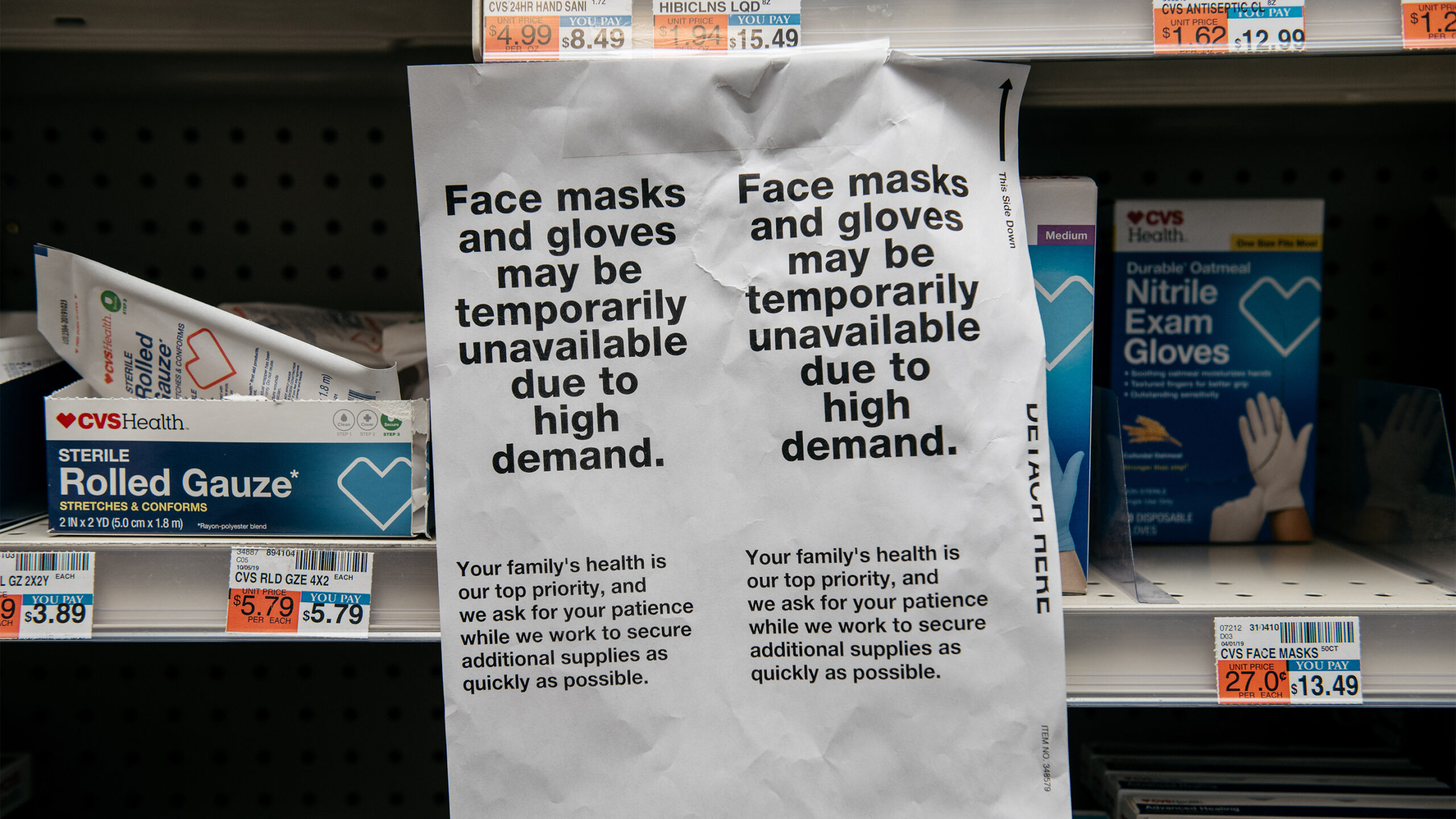
The principal function of the U.S. government is to defend the American people against foreign threats. Yet the U.S. government has so far failed to defend against the threat posed by China’s dominance of the global health care supplies market. Over the past four years, policymakers acted slowly and incompletely as America became dependent on Chinese medical supplies during and after the Covid-19 pandemic. For the first time in American history, a potentially hostile power can shut down the U.S. health care system. The insufficient U.S. response to this threat endangers the health of millions of Americans and compromises any strategy for countering China. Without reshoring our medical supply chain, even major improvements to the defense industrial base would do little to strengthen our position against Chinese coercion.
Since the onset of Covid-19, China has used cheap oil from Iran and Russia,1 along with aggressive pricing tactics,2 to significantly expand its share of U.S. imports of medical supplies. The U.S. health care system now relies on Chinese producers for more than 50 percent of our most critical medical supplies—including such essentials as gauze, gowns, needles, syringes, catheters, and, as we know all too well from our own work, nitrile gloves. Before and during the pandemic, the United States already imported nearly 100 percent of these supplies from East Asian producers.3 This geographic dependence proved deadly during the Covid-era global supply chain disruptions.4 Yet, in the years since Covid-19 began, the United States has not only failed to shift its medical supply chain out of East Asia, it has allowed China to become the most crucial link in our supply chain. In a supply crisis affecting these imports from China, our stockpiles would run out in days or weeks. In other words, if China stopped selling gauze, syringes, and nitrile gloves to the United States, our health care system would soon be gravely imperiled if not entirely shut down.
China has no qualms about choking off critical supply chains when doing so might serve its geopolitical interests. Most recently, China banned the export of gallium to the United States, effectively leaving American firms without access to this critical mineral. While dependence on China is a problem for many other sectors, the risks posed by Chinese dominance of basic medical supplies are especially dire, even if somewhat neglected in broader discussions of national defense. How can the United States hope to defend Taiwan when China could endanger the lives of millions of Americans by simply ending shipments of hospital supplies to the United States, or even sabotaging them with a harmful substance such as fentanyl?
While policymakers have recognized this vulnerability, they have not addressed it with the urgency and seriousness it demands. Indeed, America’s bungled response to the Covid-19 pandemic’s medical manufacturing demands illustrates the limitations of both the American industrial base and state capacity. Despite policies aimed at reshoring medical supply manufacturing, multiple projects’ funding expired before new facilities could be finished, limited federal resources were spread too thin, and the halting pace of policymaking failed to entice investors. An honest accounting of these policies’ failures and shortcomings is necessary to inform any serious response. Drawing from the lessons of the past four years, we offer a range of proposals to defend the American people with policies that secure our medical supply chains, promote private investment in domestic medical manufacturing, and create tens of thousands of domestic manufacturing jobs.
How Not to Rebuild the Medical Manufacturing Base
Early in the Covid-19 pandemic, China nationalized 3M’s mask factories, eliminating the American company’s ability to send critically needed supplies back home.5 In addition to the well-publicized shortages of personal protective equipment (PPE) and medical supplies, this incident demonstrated the vulnerability of the U.S. medical supply chain and the need to untether it from the whims of a foreign adversary. Even before China swiftly seized medical supply market share from competitors in Malaysia, Thailand, and elsewhere in East Asia, U.S. policymakers recognized the need for prompt action to secure U.S. access to these essential goods.
On May 14, 2020, President Trump invoked the Defense Production Act “to ensure that our country has the capacity, capability, and strong and resilient domestic industrial base” to combat Covid-19. The administration settled on a goal of sourcing 25 to 35 percent of PPE used in the United States from onshore manufacturers. This executive order granted the CEO of the Development Finance Corporation (DFC), in consultation with the secretaries of Defense, Homeland Security, Health and Human Services, and relevant agencies, broad authority to ensure “the domestic production of strategic resources needed to respond to the Covid-19 outbreak, or to strengthen any relevant domestic supply chains.”6
The DFC selected numerous U.S. PPE manufacturers to become domestic suppliers. One of these was Blue Star NBR, a nitrile glove and nitrile butadiene rubber (NBR) manufacturer, founded by the coauthor of this essay, Scott Maier. Unfortunately, the DFC, whose work prior to the pandemic was focused on international investment, proved wholly inept, prompting the Government Accountability Office (GAO) to publish a scathing report outlining the agency’s failures. The GAO found that the DFC had not, despite its clear lending authority mandate, issued a single loan as of October 2021. It recommended that the DFC, in consultation with the Department of Defense, assess how it could improve its effectiveness. The DFC did not concur with the GAO’s recommendation, and, according to the GAO, as of January 2024, “DFC reported no additional actions to implement the recommendation.”7
In 2021, six U.S. nitrile glove companies and one U.S. NBR manufacturer (Blue Star, whose business plan also includes glove manufacturing) received partial funding to begin construction of their facilities. These manufacturers believed additional financing would be forthcoming, because that is what the federal government led them to believe. In Blue Star’s (and likely other companies’) case, state and local governments also invested in their projects, anticipating job creation and new government revenue from business operations.
The promised federal financing, both through loans and grants, never materialized. In early 2022, DFC’s lending authority expired; the Biden administration neither renewed nor replaced it. Then, after years of the federal government failing to invest authorized Covid emergency funds, Congress rescinded unspent funding.8 As a result, several manufacturing facilities remain mostly built but not operational.9 Those projects stalled even as the Administration for Strategic Preparedness (ASPR), an agency within the Department of Health and Human Services, awarded funding for a brand new facility to manufacture NBR, the oil-derived material used to make nitrile gloves.10 Astonishingly, ASPR used its limited funds to start a second NBR facility even though the first NBR facility required further financing to become operational. At the same time, every single glove company the government had initially funded—the companies that would purchase the NBR, which itself could not yet be produced—required additional financing to become operational.
In an article titled, “More Medical Gloves Are Coming from China, as U.S. Makers of Protective Gear Struggle,” NPR reported, “A spokesperson for HHS says that it invested approximately $574 million to increase the domestic manufacturing capacity for medical gloves by 7.2 billion gloves a year.” The word “capacity,” it seems, has become the government’s Orwellian term for unfinished, inoperable factories. In truth, the government has spent roughly $1 billion on factories without a single additional nitrile glove produced in America to show for it.11
While these programs floundered, Chinese producers rapidly seized global market share for nitrile gloves, overwhelming their East Asian competitors and becoming integral to the normal functioning of the U.S. health care system. Aside from the greater strategic risks, Chinese market dominance has caused immediate problems. Quality issues plague the Chinese-made supplies flooding our market, threatening the health of Americans. Stories abound of health care professionals “double gloving” due to the high propensity of imported gloves to tear. In March 2024, the FDA announced concerns with syringes from China. “Our ongoing evaluation has confirmed that issues with the quality of plastic syringes made in China and their distribution in the United States are more widespread than originally known,” the FDA stated in a press release. The FDA noted it was “actively evaluating quality issues and performance testing failures with plastic syringes made by Jiangsu Caina Medical Co. Ltd, a China-based manufacturer,” and referenced “performance testing that showed unexpected and unexplained failures with several Jiangsu Caina plastic syringes.”12 Sadly, the FDA has little to no access to most Chinese medical manufacturing facilities, so the full extent of quality deficiencies in China-based medical supplies is unknown.
As it stands today, this fumbling of early efforts to create medical supply-chain security for PPE has left America notably more vulnerable than before the onset of the Covid-19 pandemic, as U.S. manufacturing has failed to blossom, and the United States has become dangerously dependent on China for too many medical supplies. As then Senator J. D. Vance wrote in a 2024 letter he sent to Health and Human Services Secretary Xavier Becerra:
Without swift action by this administration, our nation could find itself once again dependent on our adversaries for essential goods. . . . All of the available evidence indicates that our critical medical supply chains are as weak today as they were before the pandemic. Despite billions in federal spending and investment to build out discreet production lines within the medical equipment supply chain, projects remain incomplete. The programs established by the Trump administration now lie fallow under your watch. New initiatives have failed to bear fruit while China retains control of critical consumables markets.13
Too Little, Too Late?
By the second half of 2024, the Biden administration seemed to recognize the failures of prior polices. For example, after listening to comments from American medical manufacturers, the Office of the U.S. Trade Representative revised its initial Section 301 tariff proposal to increase tariffs on nitrile gloves imported from China to 25 percent (matching the pre-Covid level) to 50 percent in 2025, followed by 100 percent in 2026, which would put American and other countries’ manufacturers on a level playing field with gloves from China.14 HHS’s Centers for Medicare & Medicaid Services (CMS) also announced, in the fall of 2024, that in 2025 it would propose reimbursing hospitals for the purchase of 100 percent domestically sourced and manufactured nitrile medical gloves and other medical supplies in 2026.15
These two measures, however, are inadequate if the goal is the emergence of a robust and enduring U.S. nitrile glove manufacturing sector. Let’s start with the tariff proposal. While the tariff increase undoubtedly should go into effect, USTR fails to address China’s manufacturing of both NBR and its precursor chemicals which are derived from cheap oil purchased from Russia and Iran. China has begun selling this NBR and precursor chemicals to glove manufacturing companies in Malaysia and Thailand, allowing these companies to produce nitrile gloves at prices below fair market value. Thus, increasing Section 301 tariffs while failing to address the use of Russian and Iranian oil in the manufacture of gloves will simply shift U.S. dependence back to where it was four years ago, Malaysia and Thailand, which resulted in massive supply-chain disruptions, in part due to the rejection of some gloves from Malaysia because they were made using child and forced labor.
CMS’s announcement that it would recommend reimbursing Medicare hospitals’ cost differential for purchasing domestically sourced medical gloves also came following comments on its proposed rule that made the case for both reimbursement and a Buy American requirement. CMS did not, however, heed the recommendation that it require at least one-third of gloves purchased by Medicare hospitals to be 100 percent sourced and manufactured in the United States. In failing to uphold this requirement, CMS missed an opportunity to guarantee demand that would entice private investment in U.S. glove manufacturing.
Measures aimed at enabling American medical supply manufacturing have struggled to entice private investment. Of course, private investors lack the confidence to invest when the government fails to renew its projects’ lending authority and uphold its promises to guarantee domestic producers’ market share. CMS has clearly slow-walked these needed reforms that would spur domestic manufacturing. The federal government more broadly fails to enforce Buy American requirements such as those in the Make PPE in America Act that, on paper, require the Department of Veterans Affairs, the Department of Homeland Security, and the Department of Health and Human Services to purchase personal protective equipment that is 100 percent sourced and manufactured in the United States.16 Month after month and year after year, these departments request waivers from the Office of Management and Budget to the law to purchase foreign-made gloves, citing lack of domestic supply options. But while the waivers keep coming, long-term contracts with American glove companies, which would signal a federal commitment and spur investment, remain nonexistent.
This takes us to the intersection of two mutually reinforcing factors weakening the nation’s medical supply chain: a federal government that has failed to deliver on its basic promises to domestic medical manufacturing, and businesses maximizing shareholder value at the expense of productive, long-term investment. The government defies the spirit of the law, citing the lack of American business with which to contract; meanwhile, American capital does not invest in American businesses for want of federal support; and businesses, particularly the distributors of imported medical supplies, do not even consider the national interest a factor in their decision-making. Until these dynamics change, it will be difficult for policymakers to secure our medical supply chains.
Taking the Gloves Off: Policies for Health Care Security
Something has got to give if the United States is to secure the future of our health care. First and foremost, there must be a broad, bipartisan recognition that Americans’ health care system is a vital national interest, as vital as we deem certain minerals, metals, and microchips, and far too vital to leave to the whims of foreign adversaries. A shared commitment to this objective will be necessary to provide the domestic medical manufacturing sector with the policy stability and long-term support it needs to grow. To follow through on this commitment, policymakers must consider a range of policy solutions.
Enforce Buy American laws. The Buy American laws already on the books must be enforced. A goal of 25 to 35 percent domestic supply for PPE, as set by the first Trump administration, would be a solid starting point. This requirement sends a strong signal to investors in medical supplies. But Buy America requirements in health care must go beyond PPE to ensure that the United States has the domestic manufacturing base to supply essential medical supplies in a time of crisis or urgent need.
Tax incentives. Targeted changes to the U.S. tax code may also help favor domestic producers that serve the national interest through fixed capital investment in critical manufacturing, over firms aimed at maximizing shareholder value through cheap imports. Solutions include creating a capital gains tax exemption for critical manufacturing investments, a tax-deferred reinvestment program, and enhancing loss allocation for investment funds.
Deferring capital gains taxes for investments in critical manufacturing sectors, including medical supplies, would attract more investors to these essential industries, encouraging long-term investments in new technologies and facility expansions.
A tax-deferred reinvestment program, modeled after the 1031 real estate exchanges or opportunity zone investments, would allow investors to roll over profits from investments in critical manufacturing sectors into new projects on a tax-deferred basis. This would create a continuous cycle of reinvestment, leading to enhanced production capacity and more robust supply chains. It would also support economic growth in areas with a strong manufacturing base, creating jobs and fostering innovation.
In addition, allowing private equity and venture capital funds to allocate potential investment losses in critical manufacturing sectors against gains across their entire funds’ investment base would reduce investment risks. This would make investing in critical U.S. manufacturing sectors, where upfront costs and risks can be high, more attractive, resulting in greater production capacity, technological advances, and economic growth in manufacturing regions of the United States.
Development finance. Beyond marginal changes to the tax code, reshoring will require government institutions that serve to reinforce private investment in domestic manufacturing. Most crucial of these institutions would be a strategic, national financing system that competently executes the responsibilities that had been assigned to the Development Finance Corporation. Senator Chris Coons has introduced legislation to create a government agency, the Industrial Finance Corporation Act, meant to leverage federal investment to generate exponentially more private investment in critical industries.17 A financing agency along the lines envisioned in Senator Coons’s legislation should be pursued with vigor in the next Congress, even as it may need to change shape to win the favor of a bipartisan majority. If established, this organization must consider medical supplies every bit as essential as pharmaceuticals, rare earth metals, critical minerals, and microchips.
The Cost of Inaction
While skeptics may object to these policies above on account of their cost to taxpayers, we must also weigh the enormous excess costs incurred by insecure supply chains and insufficient preparedness. While a comparable U.S. study has not been completed, the British Medical Journal reported that the U.K. government “has written off almost £10 billion of spending on PPE that was either unusable, above market price, or was not delivered, official accounts show.”18 Assuming the United States had a similar experience to the United Kingdom’s and accounting for its larger population, we can estimate that Americans overpaid for PPE during the pandemic by more than $160 billion. What if we had invested that sum in strengthening our medical supply chain?
There are still more important costs to consider. Policymakers must realize the true cost of importing all our medical supplies, even if it means cheaper prices and higher profits for U.S. firms with offshore production. It is increasingly accepted that chips, pharmaceuticals, and rare earth minerals are significantly more expensive to produce in the United States but still worth producing here. It is accepted because the cost and risk of not having quick access to them is unacceptably high—financially, strategically, even existentially. Yet the prevailing mindset still judges that when a nitrile glove, syringe, or another critical medical commodity costs even a fraction of one dollar more to produce in the United States, doing so is non-competitive. This mindset must change: The health of American patients is not worth marginally cheaper medical supplies now. Americans must have guaranteed access to finished, essential medical products, and that will require reshoring the entire value chain of items from design to production.
That is not to say that reshoring medical manufacturing will mean perpetually higher prices. With increased investment and the confidence instilled by government support, American producers can overcome their competitive disadvantages through innovation. For example, it may be possible to compensate for the massive disparities in packaging costs between the United States and east Asian nations with little to no labor protections, a factor that drove medical supply production abroad in the first place. Blue Star has invested in automated packaging, dramatically lowering costs to compete with companies in east Asia. Other U.S. companies can make similar investments to make themselves cost competitive.
In addition to cost and quality considerations, there are undeniable environmental benefits to reshoring American medical manufacturing. This is an area that merits greater investigation, but it is common knowledge that American factories are greener than their east Asian counterparts, especially Chinese factories that are powered by electricity generated from coal plants, and the reduced CO2 emissions from reduced shipping could be calculated, as well. These benefits should be factored in when considering U.S. industrial policy options.
A sea-change for medical manufacturing seems possible under the second Trump administration. As the administration shows a redoubled commitment to both American manufacturing and Americans’ health, there’s no better place to start than the medical supplies industry. Without a secure supply of our most essential medical needs, the United States cannot protect the lives of its citizens nor credibly defend our interests against Chinese aggression. Alternatively, if policymakers take effective steps to reshore the medical manufacturing base, then Americans will reap the benefits of secure supply chains, more jobs, and greater leverage against foreign adversaries.
This article originally appeared in American Affairs Volume IX, Number 1 (Spring 2025): 55–63.
Notes
1 Kimberly Donovan, and Maia Nikoladze, “The Axis of Evasion: Behind China’s Oil Trade with Iran and Russia,” Atlantic Council, March 28, 2024.
2 Keith Bradsher, “China Dominates Medical Supplies, in This Outbreak and the Next,” New York Times, July 5, 2020.
3 “Dataweb, Imports for Consumption,” U.S. International Trade Commission, November 12, 2024.
4 Elizabeth Skokan, “Glove Story: Global Glove Production Amidst the COVID-19 Pandemic,” U.S. International Trade Commission, June 2021.
5 David Brennan, “China Reportedly Takes Control of Mask Production After Numerous Countries Complain of Faulty Exports,” Newsweek, April 27, 2020.
6 Donald J. Trump, “Executive Order on Delegating Authority Under the DPA to the CEO of the U.S. International Development Finance Corporation to Respond to the COVID-19 Outbreak,” The White House, May 14, 2020.
7 U.S. Government Accountability Office, U.S. International Development Finance Corporation: Actions Needed to Improve Management of Defense Production Act Loan Program, GAO-22-104511, November 2021.
8 Ximena Bustillo and Tamara Keith, “Debt Limit Deal Claws Back Unspent Covid Relief Money,” NPR, May 31, 2023.
9 Laura Vozzella, “A Va. Plant Promised PPE for Health Workers. $123m Later, It’s Mothballed,” Washington Post, December 28, 2023.
10 U.S. General Services Administration, “Special Notice: Industrial Base Expansion (IBx) Related to the Manufacturing of Personal Protective Equipment (PPE),” SAM.gov, September 7, 2023.
11 Nell Greenfieldboyce, “More Medical Gloves Are Coming from China, as U.S. Makers of Protective Gear Struggle,” NPR, November 3, 2023.
12 Jeff Shuren, “FDA Update: Plastic Syringes Made in China, Issues Warning Letters,” U.S. Food and Drug Administration, March 19, 2024.
13 “Senator Vance Raises Concerns over Medical Supply Shortages & Warns against U.S. Dependence on China,” Office of Senator J.D. Vance, February 29, 2024.
14 “USTR Finalizes Action on China Tariffs Following Statutory Four-Year Review,” Office of the United States Trade Representative, September 13, 2024.
15 “CY 2025 Medicare Hospital Outpatient Prospective Payment System and Ambulatory Surgical Center Payment System Final Rule (CMS 1809-FC),” Centers for Medicare & Medicaid Serivces, November 1, 2024.
16 U.S. Department of Homeland Security, “Homeland Security Acquisition Regulation, Make Personal Protective Equipment in America Act Restrictions on Foreign Acquisition (HSAR Case 2024-003),” Federal Register 89, no. 190 (October 1, 2024): 79851–56.
17 Industrial Finance Corporation Act, S. 2662, 117th Cong. (2021).
18 Gareth Lacobucci, “Covid-19: Government Writes off £10bn on Unusable, Overpriced, or Undelivered PPE,” BMJ, February 3, 2022.