Throughout the twentieth century, American imperialism has found expression in the forced immersion of Europe in consumer society. The Marshall Plan made it possible to flood the old continent with Hollywood films, cheap food, and machine tools, leading to the end of the peasant world that had been the matrix of French society for centuries. Just as God shaped man in his own image from clay, Europe was to be shaped by the United States according to its will. Immersion in consumer society was not enough; the same logic demanded the penetration not only of households and groceries with American wares but of people’s minds with American ideas and norms.
To this end, the rise of the digital industry was a godsend. By monopolizing Europeans’ attention spans, and therefore their lives, they were uprooted from their cultural and civilizational foundations and turned into the “last men” described by Friedrich Nietzsche and then Francis Fukuyama. They lost their sense of tradition, history, and faith, falling into the hedonistic and capitalist materialism that American society needed to fuel its trade balance. Passivity and excitability are the two traits of a new humanity, bound hand and foot to Uncle Sam, indifferent to its enslavement as the enjoyment of consumption and immediate desire became its only horizon. In this respect, the libertarian movements of 1968 merely paved the way for a process of erasing the past and the historicity of peoples, which was to take full root in the migration from a physical and cultural world to a digital and ahistorical world.
The Atlanticist Orthodoxy: Salvation through Technology
This reshaping of the world by the American giant is, of course, nothing new. Stefan Zweig, in a prescient 1925 book, The Uniformization of the World, described how the innovations of the time––the radio, telegraph, record players––were causing the destruction of local particularities as they existed in Europe, making life more convenient in many respects while simultaneously draining it of its organic texture and spiritual substance. These innovations came largely from the United States, and the Austro-Jewish writer saw through the seemingly benign liberatory ideals that accompanied the expansion of American trade and technology across the continent: “we still delude ourselves about America’s philanthropic and economic goals: in reality, we are becoming colonies of its life, its way of life, slaves to an idea that is deeply foreign to us Europeans: the mechanization of existence.”1
The example of song and dance is striking: gradually, we no longer danced the Bolero in Spain or the waltz in Vienna. American pop music made its entrance and swept away all traditional and regional dances in its wake. This phenomenon continues to occur in absolutely every field, to the benefit of acceleration and an increased search for the ephemeral. Today, what is authoritative is not what has stood the test of time, but rather what is new. We must keep pace with technical progress, even if it means losing ourselves. To quote the French poet Arthur Rimbaud, Il faut être absolument moderne (“One must be absolutely modern, one must be modern forever”).2 This progressive quest, present in its embryonic form in Christianity and its eschatology, but also in the liberal era through material progress, becomes not a worldview, but an ontological obligation. Not to be of one’s time is to renounce being, to wither away.
Progress becomes a totalizing whole, and to discriminate between what truly constitutes progress is heresy: whether material or spiritual, scientific or moral, everything that moves toward the unknown, everything that moves forward, is to be welcomed with open arms. We are thus far removed from the warnings of Jacques Ellul in a seminal text on personalism entitled We Are Revolutionaries Despite Ourselves: “The common error of the myths of progress is the more or less clear belief that a kind of fatality makes material progress, that is, the development of the means of production, coincide with not only the material but even the spiritual interests of man.”3
Within the West, however, the terms of “progress” have effectively been defined by the technical and political establishments of the United States, and it is they who have largely shaped the prevailing understanding of what it means to be free, modern, cutting-edge, and “Western.” This dispensation has followers on both sides of the Atlantic, and it holds that progress comes from a specifically American conception of and capacity for innovation. This innovation is not just technological but moral, characterized by detachment from any historical or cultural anchors, which allows the forces of capital and technique to not only invent and create but also, above all, to displace. The weight of the past no longer mattered in a cultural milieu in which the primary imperative was not so much liberty but the constant pursuit of novelty.
In the nineteenth-century heyday of American growth, this national ethos yielded forms of progress that enabled genuine mastery over nature at a scale never before seen: railroads covered a whole continent; Edison’s electric lights illuminated its cities; Rockefeller’s oil powered its industries; and mass production techniques, such as Fordism and Taylorism, created a standard of living that became a singular model to the world.
To a Europe won over to the idea of progress since Condorcet and the Enlightenment, American innovative power could only be extremely attractive. The Promethean fascination captivated the Old World, then drained of life after the First World War, which confirmed the “death of God” as diagnosed by Nietzsche. The new ideal that remained was technical progress: the idea of man as demiurge. Even if the nuclear bombings of Hiroshima and Nagasaki in 1945 and the discovery of ecological limits put a brake on this morbid—because self-destructive—fascination, the fact remains that we Europeans are also the descendants of a mythology of progress; this mythology has been taken up and monopolized by the United States, and to reject it would be to admit its death wish, its exit from history.
And yet technical progress brings with it societal, cultural, and anthropological changes. It cannot be separated from our lifestyles and the ways in which we inhabit the world. In this respect, television has helped to create a common culture at the national level and to form a new family ritual, sometimes to the detriment of interpersonal relationships and local cultures. Technical progress, as a factor in the abolition of spatial and temporal boundaries, has had the effect of reducing cultural, even anthropological, differences. A dominant model or template of Western life emerged through technology, which is not (and never has been) neutral. The digital industry, artificial intelligence, and more generally what we call Big Tech represent only the most recent culmination of this process of cultural leveling.
Through the seduction of technical progress and the demiurgic ideal, the United States proposes to fill our lives with machines while our beings become exhausted, diminished, and uniform. Our lives have become so similar that Europe, as a distinct geographical, civilizational, and cultural pole, has been rendered practically obsolete, reduced to the status of an American colony. In this respect, the advisors to President Donald Trump are not wrong to speak of the risk of Europe’s “civilizational erasure” in the National Security Strategy document published in late 2025. And while immigration is indeed a central factor in European social discontent, the United States must not ignore the no less significant role it has played in the ongoing cultural dissolution of the continent through the influence of American technological and consumer industries (Hollywood yesterday, social media and AI today).
While many right-wing political platforms in Europe focus on immigration as a primary factor influencing cultural continuity, an alternative perspective highlights the structural impact of technology on local identity. Rather than viewing cultural transformation solely through demographic shifts, this analysis suggests that digital platforms, predominantly based in the United States, play a significant role in reshaping European social and cultural practices. By mediating daily routines, commercial interactions, and personal relationships, these technologies integrate non-local norms and modes of thought into everyday life, operating subtly and continuously alongside demographic trends. It is no secret that the U.S. administration has aligned itself fully with the tech sector, as evidenced by the gallery of billionaire moguls who stood so close to the president at his inauguration (recent clashes between the White House and individual tech firms notwithstanding). But the fact that the United States aggressively promotes the interests of its tech giants abroad––often treating these uncritically as coterminous with the American national interest––while simultaneously lecturing European states about the dangers of cultural passivity and self-sabotage, as Vice President JD Vance did at the 2025 Munich Security Conference, is the very height of irony.
When a politician of the French nationalist Right spoke in January 2026 about the threat of American “vassalization,” it was in reference to the combination of “territorial pressure” and “commercial blackmail” coming from Washington over Greenland.4 But the sentiment is just as valid with respect to U.S. digital integration. Europe is suffering from having abandoned its identity for a range of security and economic rationales that are no longer justified, and the technological wave has played a critical part in bringing about this condition. The question remains: what form is this cultural erosion taking, and what cultural differences have been erased by this phenomenon over the past twenty years?
Submission and Transcendence
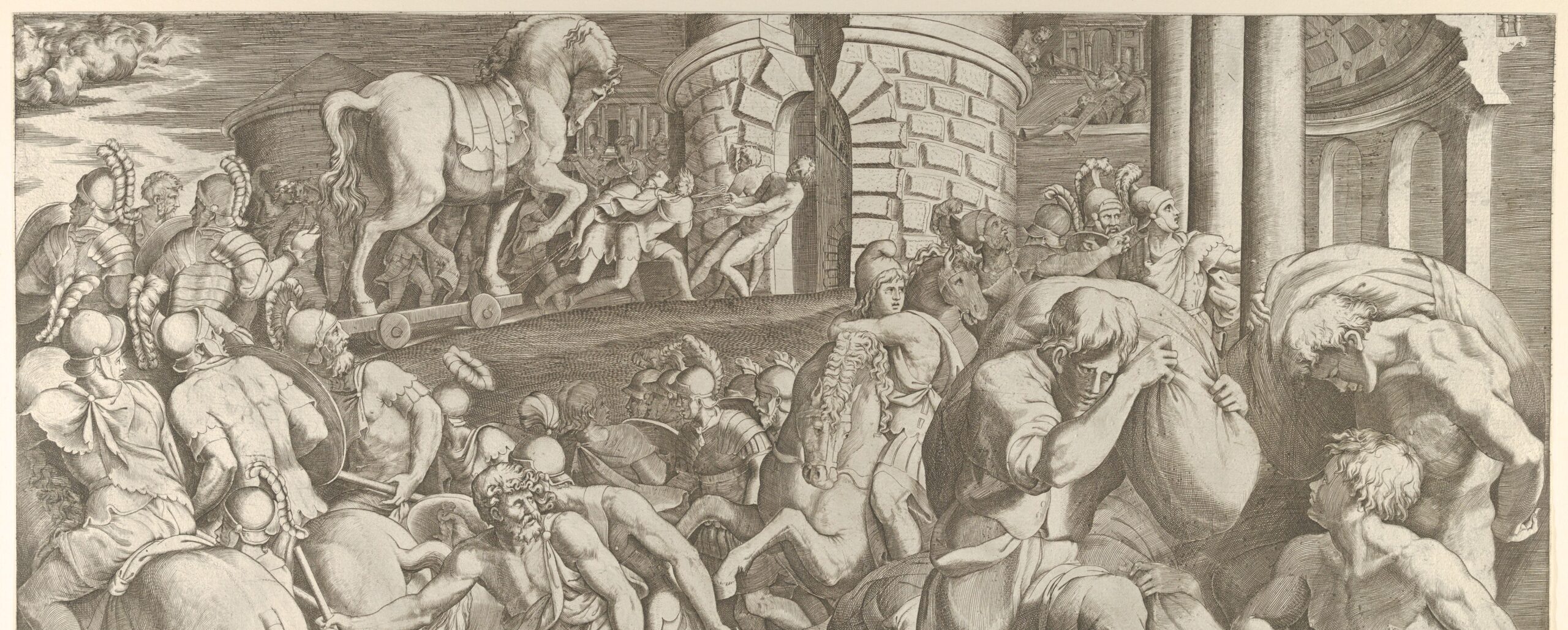
Europe has for years been confronted with the hegemony not just of American technology but of the Silicon Valley ideology that precedes and shapes it. This specific blend of digital applications and overriding value system represents the modern face of progress: it is also the Trojan Horse by which the wholesale Americanization of Europe is accomplished. It is no longer a question of industrial revolution or agricultural progress, but rather the expansion of a single sector of activity: the digital industry.
To give up on the giants of Silicon Valley would be to acknowledge one’s withdrawal from history. In this respect, technical progress, partially criticized for its ecological limitations, is being relegitimized by the policymaking elite. Techno-optimism is back in the spotlight: the Silicon Valley ideology is supposed to have a solution for every great social problem, even as it intensifies the very maladies and imbalances it sets out to correct. Social media was originally billed as a way to foster connections only to produce widespread antisocial pathologies, to the extent even of contributing to the global fertility collapse, as screen-addicted youths forget how to socialize and form romantic bonds; the data center buildout promises to galvanize a socially beneficial expansion of energy infrastructure only to stoke new fears of dramatic overconsumption and ecological collapse; the AI revolution promises massive new productivity gains only for firms to struggle to identify how that productivity is supposed to be generated, not to mention the sheer glee with which tech-aligned executives contemplate eliminating multitudes of jobs.5
In short, no problem should escape the purview of the technologies of Silicon Valley, which has assumed responsibility for contemporary problems even as it has yet to actually solve any of them. In our collective imagination, regardless of practical results, technology must be the ultimate horizon. This partly explains the massive subsidization in Europe of digitization programs in schools, although many nations are trying to reverse this tragic mistake, which has proven to be yet another faddish application of technology that worsened an issue (i.e., improving educational outcomes) it was supposed to help fix.
Another salient feature of this ideology is “disruption.” What counts as progress is whatever creates change throughout the productive and social apparatus. Tech wants not only product innovations but above all process innovations, by which the whole of our market economies and social lives must be revolutionized. What this ideology ultimately hates is permanence: things must change, and as quickly as possible. Permanence is a symbol of decline, of a loss of ambition for the future, of an unspoken death wish. In these respects, the ideology of Silicon Valley fits perfectly into the capitalist dynamic described by Karl Marx and Friedrich Engels: “The bourgeoisie cannot exist without constantly revolutionizing the instruments of production, and thereby the conditions of production, and thusly all social relations.”6
Tech has this revolutionary pretension intrinsic to the capitalist model: it revolutionizes the social world while ensuring that only the market and technical progress are sources of instability. Ideas, grand aspirations, and religions must not hinder the progress of the economic world, whose ups and downs are a sign of good health. Alternative European social models have long since given way to this emanation of American productivism.
Finally, the ideology of Silicon Valley offers another essential element: transhumanism. This idea goes hand in hand with the previous one: the upheaval in the means and conditions of production is also an upheaval for humanity itself. After all, what else is a factor of production, in this case labor, in a market economy? The factor can only be increased. This is all the more urgent given that labor is subject to a veritable “Promethean shame,” to quote Günther Anders: it is increasingly aware of its inferiority to the technical world it deploys. Artificial intelligence, by competing with the inventive and creative intelligence of humans, appears to be putting additional pressure on the fusion of man and machine. Transhumanism is nothing more than the endpoint of this evolution: the overcoming of the biological basis of human beings through the means of neuroscience, molecular biology, data science, and cybernetics.
Silicon Valley’s efforts to bring about the “augmented human” are already flourishing, through such projects as Elon Musk’s Neuralink or Bryan Johnson’s biohacking; the fusion between our human senses and the cybernetic capabilities of our technical extensions is accelerating all the time. Tech feeds its techno-solutionism by offering solutions to a purely human problem, considering the limitations of our nature to be unacceptable and implanting in us the desire to become something greater and more complex than our human selves.
The question now is how? How does tech manage to impose its ideology on the world? It would seem that the secrets of its domination rest on two pillars. First, the imposition of the myth of the “self-made man” on competing nations, and second, a powerful, internal intertwining of multinational technology companies and American state power.
Thus, behind the rhetoric of a libertarian like Peter Thiel, who accuses the state of being the source of all evil, lies a more nuanced reality. Far from being the result of isolated initiatives, the American technology industry was structured around an ecosystem in which the federal government played a decisive role: research funding, military contracts, university coordination, and strategic support in the context of the Cold War. The mere fact that the first internet network, arpanet, was a product of the U.S. military evinces that tech is not an isolated initiative of geniuses but rather the organization of a federal research and innovation network to pioneer a sector that would not otherwise exist.
All of this is clearly demonstrated by Mariana Mazzucato in her seminal work, The Entrepreneurial State: Why the Government Should Be in the Business of Innovation. The porosity between digital platforms and American power is now obvious, which tends to dispel the myth outside U.S. borders. Europeans are gradually realizing that they have been duped, that there can be no technological power without protecting start-ups from foreign direct investment and subsidizing a homegrown digital ecosystem. Disruptive innovations present too many risks to come from the private sector alone. European leaders have therefore had to accept, for better or worse, this symbiotic proximity between Silicon Valley and American state power, through such items as Elon Musk’s participation in the U.S. administration, or Mark Zuckerberg’s changes in Meta’s moderation policy to make it more compatible with Donald Trump’s line. None of this is to mention the president’s constant threats of retaliation against the European Union and other jurisdictions for their digital regulation policies.7
The narrative of the self-made man is collapsing in favor of a more realistic and pragmatic vision, but one that will have cost Europe twenty crucial years that cannot be made up for any time soon. American rhetoric in defense of its technology industry comes at a time when Europe’s dependence is already well advanced. No sooner have these overtures been called into question than once new arguments arise to sustain European passivity. Recently, freedom of expression has been exploited by the American political establishment to undermine any plans by a foreign state for digital regulation; in this view, regulating the tech sector is construed as an assault on liberty and democracy itself, whose terms are, of course, to be determined and judged by Washington alone. At this juncture, Europe is unable to escape the rhetorical clutches of a United States determined to preserve its technological as well as geopolitical stranglehold.8
The Great Uprooting: Symptoms and Pathologies
To understand what the digital revolution has done to European cultures, we must delve into various cultural practices that, if not extinct, are at least threatened by the continent’s entry into the Silicon Valley era. As we have seen, technological progress is not neutral and involves changes in the way we relate to the world, to others, and to ourselves. As Europeans, we have been impacted by this change in the world imposed on us by technology: like Americans, we spend a significant part of our waking hours in the digital rather than in the physical world.
Cultural standardization began with the collapse of memory and the breakdown of intergenerational transmission. While for centuries children were the product of their immediate social environments, their families, and the institutions they frequented (school, neighborhood, church, etcetera), today they are no longer children of a cultural substrate but of a borderless digital world. They have been taken away from the traditional actors of transmission in favor of digital personalities with whom they now spend most of their time. Influencers are the embodiment of these new reference actors who completely decouple newcomers from their predecessors, thereby creating a real break in cultural transmission. What is more, American films and television programs account for 48 percent of the visible content on streaming platforms, compared with 32 percent for European productions.9
The concept of “technoference,” already widely studied in cognitive science, shows that the mere presence of a screen in a room tends to decrease the number of words exchanged by 85 percent.10 Not only are our interactions less frequent, but they are also less deep, intimate, and intense. Loneliness has reached such a point that a town in France has built a bench dedicated solely to social interaction; a sign specifies that it is a place designed for people to meet, implying that the rest of the public space is no longer such a place. 62 percent of young French people today say they feel lonely on a regular or chronic basis: such a rate can only be that of a sick society.11
In other words, we are becoming, paradoxically, more distant from those physically closest to us. Neighbors, teachers, and parents are becoming disruptive forces in a socialization process that is now almost entirely taken over by digital platforms, mainly American, and increasingly also Chinese. Rootedness, which Simone Weil described as “the most important and most misunderstood need of the human soul.”12 is becoming rare in this era of digitally induced social displacement. Europeans are no longer the product of a family, a nation, a land, or a people, but rather of an artificial, algorithmic world sustained by digital interfaces.
Separation from one’s environment is an extremely important factor in deculturation, insofar as it implies ignorance of the traditions, rituals, and beliefs that have structured the psyches of past generations. Through this leveling, Big Tech has created a blank slate that it can now fill by proposing a new anthropology. It is free to shape a new human species, one that better conforms to its expectations. This new breed must be more malleable, more excitable, sensitive to external stimuli, and compulsively consumerist.
To create such a humanity, all that is needed is to produce the technological context that favors it. In this case, addiction to social media and uncontrollable dependence on the reward hormone dopamine, produced irregularly by digital platforms, allow for a modification of the brain structure that weakens the prefrontal cortex and strengthens the amygdala. The ability to control oneself, to delay short-term pleasure, and to exercise reflectivity is thus altered by the powerful addictive effect of digital applications. It is, by now, well established that the areas of the brain that are activated and damaged by digital addictions are the same as those affected by substance addictions.13
Rather than augmenting human cognition, digital dependence induces a structural shift in how we process information: prefrontal activity adapts to constant offloading, and spontaneous memory recall recedes in favor of a hybrid, externally reliant form of memory.14 The destruction of memory in the broad cultural and civilizational sense is thus predicated on the literal destruction of our capacity for memory at its most basic biological levels.
This fragmentation of our attention prevents us from staying focused on an external object, leading our lives to become empty, to the point where only so-called vital activities take us away from the screen (eating, bathing, sleeping, etc.). Any other activity we might engage in is inevitably seen as a hindrance to the frenzied consumption of digital media to which our cognition has become accustomed. The same is true of our loved ones, whose presence forces us away from our screens.
Our mental universe is emptied of all surroundings but also of all passions (music, sports, romance, etc.). And yet the dominant American response to these well-documented anti-social symptoms—certainly the one favored by Silicon Valley and its protectors in Washington—is to subsume these objections, and reasonable calls for regulatory restraints, into a totalizing narrative about individual liberty and the threat of its violation by the state, even when the very ability to develop one’s individuality is effectively debased and neutered by the sweep of these technologies.
More specifically, it is an entire way of being in the world that has been standardized. Young Europeans are caught up in the American consumerist void, when, in the past, they could enjoy a more intense and richly lived life, as expressed through forms of communal life and socialization particular to European cultures.
To take one of the more prominent examples, meals are caught up in the technical rhythm, taken between notifications, televisions turned on, and the urgent desire to get one’s dopamine fix. The French meal, known for its length, its passionate discussions, its richness in expressing the full social function of the meal far beyond its biological role of nutrition, seems incongruous in a world of technical efficiency where human presence is a hindrance to technical consumption. Since the 1960s, France has lost more than 80 percent of its bistros.15 As if that weren’t enough, since the 1980s, the number of nightclubs has also fallen by two thirds.16 While in the 1960s, 25 percent of couples met at community dances, these events have all but disappeared from the French social landscape.17
Another illustrative example is the Americanization of work culture. The American Calvinist mindset leads to an overvaluation of work: the sign of divine election necessarily involves professional success. European culture, largely influenced by Catholicism, takes a more balanced view on the matter: etymologically speaking, work is also a form of torture, as well as a punishment inflicted on humankind after the Fall. Very early on, under the influence of antique thought, particularly that of Seneca and his treatise, On the Shortness of Life, work was viewed as the lot of slaves and entailed a risk of missing out on life. The notion of otium, leisure that elevates the soul, is thus the most highly valued social activity, an idea echoed in the twentieth century in the writings of Hannah Arendt. Socialist movements, which were very strong in twentieth-century France, came to view idleness as a form of resistance against the industrial grind: Paul Lafargue, for instance, wrote in praise of laziness.
In short, Europeans, in their mindset, view work as a necessary constraint rather than as a manifestation of God’s favor. In this respect, the relationship to work is more balanced; it is one aspect of life, not its entirety—a necessary step, not an end in itself. The American mindset has now spread beyond its borders. LinkedIn, the culture of conspicuous striving, and a status hierarchy premised on acquisition completed the transformation of work into the ultimate measure of social and moral value. One encounters young, ambitious Europeans who are completely consumed by a certain sense of unease and who look to American influencers for ways to rediscover themselves through a cult of optimization known as “the grindset” (e.g., waking up before dawn, cold showers, a singular focus on one’s work to the exclusion of all other social considerations). Needless to say, earlier generations of French professionals would have found such an outlook incomprehensible and intolerable.
Likewise, other European traditions have also been devastated by cultural flattening: the Iberian practice of the sobremesa, or after-meal lingering, is falling to American efficiency routines, which value compressed break times; Northern European sauna and bathing cultures are being warped by severe American standards of prudishness, technologically induced paranoia, and related cultural neuroses, transmitted to the youths of those nations through their phones; similarly, in Eastern and Southeastern Europe, the tradition of the smoke-worn taverns found from Prague to Sofia, where friends and strangers alike spend hours, trading stories, arguing politics, and singing late into the night, is fading under the same pressures.18
Across all these diverse national contexts, what were once unhurried, almost ritualized forms of communal presence are giving way to the solitary, uniform, mechanistic, tech-centered, and quintessentially American life cycle depicted by journalist Derek Thompson in his 2025 Atlantic essay, “The Anti-Social Century,” as younger generations across these regions increasingly substitute the shared table, sauna, or dance hall, for the private screen.19 In another essay entitled “America’s Top Export May Be Anxiety,” which explores the striking statistical correlations found worldwide between mental health collapse and exposure to English-speaking culture and technology, Thompson wonders if this trend could be described as “the globalization of Western—and, just maybe, American—despair.” It is worth asking: is this the version of Western civilization that the U.S. administration and its conservative allies now defend as inviolable?
At perhaps an even deeper level, the way we in Europe speak, and therefore conceptualize the world, is also changing rapidly. Beyond the aggressive penetration of English into all European linguistic usage, a new style of speech is emerging that is faster, more sequenced, and less capable of describing and dwelling on one’s emotions or impressions. This new technical language is essentially utilitarian and practical, far from allowing the full deployment of all the communicative and linguistic richness that each culture has to offer. Thus, by being exposed for hours to short videos that force comments to be more concise and more quickly displayed on digital interfaces with nanosecond temporalities, a whole way of expressing, and therefore also of being oneself is standardized by constant contact with digital tools. Researchers have found a universal reduction in text length and diminished lexical richness over time as a result of this technological environment; the study concluded that the globalized web environment acts as a sociolinguistic trigger that drives a progressive process of linguistic simplification.20 Studies have found a direct correlation between high short-video consumption and a reduced attention span.21
We can also mention the culture of clash, or the vision of the political arena along a friend-enemy axis. Of course, this has always existed, but it has never been as ubiquitous as today, when social networks deploy algorithms favoring polarization and self-identification with marked political groups, as evidenced by the descriptions under our accounts, which, through symbols, must put an end to any form of ambiguity. Since the advent of digital technology, European parliaments have become veritable boxing rings. Speaking time has been significantly reduced, while lawmakers tailor their remarks to fit within 150 words so they can churn out short videos, one after another. The culture of immediacy is also a culture of confrontation. There can be no meaningful debate without a minimum amount of time.
New technologies also appear to be a tool of American soft power when it comes to romance and sexuality. The rise of dating apps has thus spread the Anglo-Saxon approach to courtship: everything becomes highly formalized around les dates, which is not just a foreign loanword but really a foreign concept in French, during which individuals continue to interact with other potential partners until a declaration formalizes the relationship. This highly procedural approach has not traditionally been very popular in France, where ambiguity, spontaneity, and taking one’s time seemed to prevail. French-style romance is thus falling victim to dating, a custom that is naturally imported, not without difficulty, by dating apps, along with “match,” “swipe,” “ghosting,” “situationship,” etcetera. In fact, when they first appeared, these apps were, to say the least, poorly received. They were seen as signs of romantic distress and as tools of the most desperate. Today, they are widely accepted, even if one cultural exception remains: dating apps rank only third among ways to meet romantic partners in France, compared to first in the United States.22 It would seem that standardization is still only partial, and thankfully so.
Finally, how can we end this litany without mentioning the question of the body? Never before have bodies been so much the product of an aesthetic cult that serves only an algorithmic logic of one-upmanship. It is through repeated and daily exposure to extraordinary physiques that Europeans have seen American-style “optimization” culture proliferate, characterized by crude metrics and unnatural chemical and surgical interventions.
In France, just as in the United States and other places that have fallen under its cultural sphere, “looksmaxing” is all the rage. Frustrated by the body types showcased on social media, many young people are trying to perfect their physiques. To do so, they turn to the first influencers they come across, no matter how unscientific their advice may be. This is particularly true for eighteen-year-old Baptiste Giribaldi, who wears a mask at night to force himself to breathe through his nose and thus improve the shape of his face. In this instance, the face has become a construction site in and of itself in the race to win the digital image competition. A recent visit to France by the most famous looksmaxer of all, Clavicular, ended in unpleasant confrontations with the local population, which caused the influencer to denounce the French as “terrible people to be around”; no less than former prime minister Gabriel Attal hit back in defense of his country, asking, “Was he hoping that French women would come along to feed his narcissism and his masculinist ego trip? He got thoroughly shut down.”23
This postmodern vulgarization of the body, so different from the classical heritage that produced the original Greek gymnasium or Michelangelo’s David, serves the pursuit of gaudy spectacle in which we have all been locked, destroying the cultural specificities that permeate the bodies of different peoples. The American ideal of the human body as yet another frontier to be conquered and violently reshaped is presented as a new normal when it is anything but.
As we can see, technology itself, in its present globally homogenized configuration, tends to be naturally biased in favor of American cultural practices and assumptions, strengthening the Anglo-Saxon mindset’s hold on the world. Silicon Valley’s technological arsenal is thus a tool for standardizing the world into a uniformity more complete than what previous eras of American cultural expansionism could accomplish, to such an extent that the phrase uttered by Zweig a century ago rings truer than ever: “It is now more difficult to list the peculiarities of nations and cultures than to enumerate their similarities.”24
The Case for European Cultural Specificity
To conclude this essay, I feel it is important to point out something that is obvious but, unfortunately, no longer self-evident: Europe is not the United States, and the West is larger (and older) than the United States. As an umbrella term, the West has given rise to the idea of unity, which is historically real, but by no means entails uniformity. As differences become increasingly blurred, however, there is an even more ardent quest for singularity, whether in the cultural, political, or digital realms. The technological steamroller, originating in America, continues to whet Europeans’ appetite for identity. French philosopher Régis Debray speaks of a “thermostat of belonging” from which we cannot escape.25
We need to belong, to identify with a group; dilution in the global mass does not satisfy the very human need to know oneself and to be unique. Unintentionally, the United States, trapped in the logic of Manifest Destiny, a universalizing Christian messianism of which technology is one of the armed wings, has exacerbated populist and identitarian resurgence in Europe through its hegemony. And, in a sense, a European response to this homogenization was necessary.
It is possible, however, that the form that identitarianism is taking in Europe is too artificial, radical, and neurotic to remain consistent with the European spirit. Identity here would arise from a stinging reaction rather than a long-term construction, and therein lies the danger of the quest for identity that is affecting Europe in relation to the United States.
The situation could not be better summarized than by Jacques Ellul and Bernard Charbonneau in their manifesto, Nous sommes des révolutionnaires malgré nous (“We Are Revolutionaries Despite Ourselves”):
Another adversary is universalism, that is, the tendency to make a given type of civilization universal. The more a civilization spreads, the more abstract and sterile it becomes. It covers the particularities of race and soil with a suffocating veneer; it unnaturally makes all men different in identical molds. Man ends up getting used to this abstract civilization and lives in abstraction, believing, however, that he is on earth. He thus loses what connected him to his homeland, his profession, his very humanity.26
If we were to summarize the anthropological model produced by the United States, an anthropology of capitalism and individualism, here are the features we would need to retain: behind the discourse of the self-made man who is all-powerful through the force of his will alone, who has proven his predestination for paradise through his economic success, lies a consumerist, passive, and impulsive mentality. To develop, markets need individuals who are tame, well integrated into market society, incapable of repairing things but whose first reflex is to buy, and whose wills have been transmuted into simple desire, always projected towards merchandise.
This anthropology is also based on the idolatry of matter: material goods, as proof of election, as an essential criterion of social stratification, must be the only thing to seek on this earth. In this respect, we are faced with an exceedingly earthly anthropology (despite the discourse that regularly refers to God) because God himself has been reduced to the rank of immanence. The proof of God’s action on Earth lies in the actions of men, and so Americans have rehabilitated Pelagianism.
Finally, this anthropology resides in ahistoricity. The average individual has no real relationship with time, knows nothing of his past, finds it difficult to project himself into the future (hence the low savings rate of the American population), and thus lives in an eternal present whose main marker is the primacy given to desires, which instinctively find their only response in what the market offers. Finally, the collective, from the perspective of the sole satisfaction of immediate desires, quickly becomes a barrier, an obstacle, and in this sense quickly appears as a collectivist aberration in the eyes of a very liberal and individualistic people. In short, American anthropology is one of deified materialism, of a high value placed on acting in the world, of a paradoxical reign of consumerist passivity, and of the individual as king.
Europe differs significantly in terms of this anthropology. The cult of innovation, disruption, and breaking with the past is not a characteristic of Europe. Greek wisdom taught a love of inventions and machines for the sake of libido sciendi, but there was no question of systematic commercial application. We could say that Europe has traditionally been more marked by fundamental research than by applied research, partly due to its Hellenic heritage.
In addition, the fact that much of Europe is rooted in the Catholic tradition implies a direct relationship with authority, and even more so with tradition. It is therefore not surprising that Pope Leo XIV, in his encyclical Magnifica Humanitas, describes AI as a “Tower of Babel” that threatens humanity through standardization and a demiurgic dream.27 Authority and tradition are the guarantors of a gradual approach to progress, which must necessarily be rooted within society. In this regard, it is not a matter of becoming a slave to technology but rather of ensuring that technology serves society and human dignity. This is the essence of the Pope’s message: to “disarm AI” so as not to succumb to hubris, which tends to make us forget the only valid compasses for knowing where we are headed. Market capitalization alone, or the mere desire for power, cannot justify the absence of political and spiritual oversight. This European sense of moderation is perhaps what is lacking in the United States—and helps to explain why Silicon Valley’s high priests, from Thiel on down, are reported to be furious at the pontiff’s intervention.28
It is not so easy to break with the forms of the past, and in this respect, Europe was less directly compatible with American capitalist anthropology. Freed from the Church by English-speaking Protestantism and shaped by the tabula rasa of the New World, the United States was not concerned by this principle of limitation. Thus, Americans benefited from the flexibility of Roman law without the philosophical and intellectual safeguards of Greek antiquity and Catholic theology.
Similarly, Europe has traditionally maintained a certain caution toward the cult of money. Its Greek heritage, notably carried on by Aristotle, led Europe early on to fear speculation, which was criticized under the name of “chrematistics.” Similarly, the Catholic Church carries a strong message about poverty, as evidenced by the Franciscan orders that spread throughout Europe during the Middle Ages and the messages of Christ in the Gospels calling for people to renounce wealth in order to follow him fully. The idea that salvation comes through predestination, evidenced by economic success, according to Calvinist theology, on the contrary, extols wealth as a symbol of direct access to salvation.
Finally, by abandoning Greek philosophy, which makes prudence and temperance”cardinal values, again according to Aristotelian typology, the United States quickly became a land of excess. Moderation, in terms of ethics and social life, is indeed more present in the European ideal. In this respect, it would be difficult to imagine the statements made by tech giants on the old continent, such as Mark Zuckerberg of Meta, who stated that in the metaverse, “you’ll be able to do almost anything you can imagine,” or Altman of OpenAI, who believes that generative artificial intelligence “could be the most empowering technology humanity has ever seen.”
A Europe free from American technological dominance would be very different. We might see the reemergence of even more distinctive cultural and local identities. The need to put down roots is never more urgent than when the emptiness has become unbearable. It is, therefore, likely that local communities would grow stronger; perhaps even some major cities would see their populations decline in favor of medium-sized towns and villages. This dynamic would be fueled by the need to rediscover one’s identity through a connection to place. A shift away from the digital world would necessarily lead to a revival of the physical one, though this would be limited by the concentration of jobs and social life in major cities. Such a movement will need to be supported by public authorities; otherwise, it will only lead to new imbalances.
Another key factor in achieving technological independence involves two strategies: protecting European markets from direct American and foreign investment, so that the continent’s native technological enterprises can grow without being directly absorbed; and subsidizing the development of alternative digital platforms. As a reminder, France has a pool of promising tech companies. For instance, Blablacar, a French ride-sharing app, has a market capitalization of over €500 million. But if the European market is open to American giants that use every aggressive and harmful tactic possible (personalized algorithms, infinite scrolling, short videos, integration of AI into algorithmic recommendations, etcetera.), then it is certain that no European social network will be able to withstand the competition.
The rise of a European tech sector can only come about through the protection of the continental market, something that seems to have been a structural oversight in Europe since its inception and which will place the continent’s digital industry in direct conflict with the present nexus of political and technological power in Washington. European regulation of the digital world is pointless if it serves only to produce standards that only American giants can meet. In this way, Europe is creating insurmountable barriers to entry into its digital market for rapidly growing European start-ups, such as Mistral’s AI model, another emerging French tech alternative. Pan-European protectionism and massive investments to scale—a Gaullist approach to digital self-determination—are the only tools capable of securing a future distinct from American homogenization.
America has its Promethean vision, which has undoubtedly served as a source of great wealth and vitality. Through technological deployment, however, it risks suffering the same fate as Icarus: burning its wings by seeking growth without meaning. Going higher and faster without knowing where you are going quickly becomes a nihilistic dead end that can lead to your own downfall. Europe still has its specific characteristics to counter this trend: ethical questions, a place given to humans that should not be the market’s adjustment variable, a greater role given to the collective over the individual compared to the American cultural paradigm.
Of course, caught up in international competition, the old continent is seeing its defenses crumble and its specific characteristics diminish. The long-term risk is that Europe will become nothing more than an appendage of the United States. As the market reigns supreme in people’s minds, the prospect of preserving European uniqueness is diminishing. American technology, driven by economic power, is acting as a steamroller, sparing no cultural diversity in a Europe that has forgotten the imperative to take charge of its own destiny after a century that left it bloodless.
This article is an American Affairs online exclusive, published August 20, 2026.
Notes
1 Stefan Zweig, L’Uniformisation du monde, trans. Francis Douville Vigeant (Paris: Éditions Allia, 2021), 24.
2 Arthur Rimbaud, “Adieu,” in Une saison en enfer, éd. anniversaire, pref. Yannick Haenel, postf. Grégoire Beurier (Paris: Gallimard, 2024).
3 Jacques Ellul and Bernard Charbonneau, Nous sommes des révolutionnaires malgré nous: textes pionniers de l’écologie politique, ed. Quentin Hardy (Paris: Seuil, 2014), 105.
4 Marion Solletty and Max Griera, “For Europe’s Far Right, Trump Has Become a Liability,” Politico, January 22, 2026.
5 John Burn-Murdoch, “Are Smartphones Causing the Fertility Crisis?,” UnHerd, May 21, 2026; Hubert Horan, “Understanding the LLM Bubble,” American Affairs 10, no. 1 (Spring 2026): 122–42.
6 Karl Marx and Friedrich Engels, Marx & Engels, Communist Manifesto, 1848, Hanover College Department of History, accessed June 2026.
7 Jonathan Vanian, “Why Meta Had to ‘Bend the Knee to Trump’ Ahead of His Inauguration,” CNBC, January 11, 2025; Nicholas Gordon, “The Trump Administration Says It Could Go After Spotify If Europe Doesn’t Back Off American Tech Companies,” Fortune, December 17, 2025; Scott Horsley, “Canada Ditches Digital Tax after Tariff Threat from Trump,” NPR, June 30, 2025.
8 “Munich Security Conference Tech Censorship Elon Musk,” Slate, February 2026; Chiara Castro, “EU Rejects Claims of Censorship Targeting US Tech Giants—but Trump Threatens Sanctions,” TechRadar, August 28, 2025.
9 Maria Milovanova, “US Works Dominate European VOD Availability Despite High Number of Individual European Titles,” European Audiovisual Observatory, April 2, 2026.
10 “Proposition de loi visant à protéger les jeunes de l’exposition excessive et précoce aux écrans et des méfaits des réseaux sociaux, [Proposed law to protect young people from excessive and premature exposure to screens and the harmful effects of social media],” commission text, no. 202, Sénat, December 10, 2025.
11 Sacha Montagut, “62 % des jeunes Français éprouvent de la solitude et près d’un sur trois n’ose pas appeler un ami lorsqu’il se sent seul,” INfluencia, May 20, 2026.
12 Simone Weil, L’Enracinement: Prélude à une déclaration des devoirs envers l’être humain (Paris: Gallimard, 1949), 61.
13 Kai Yuan et al., “Microstructure Abnormalities in Adolescents with Internet Addiction Disorder,” PLOS ONE 6, no. 6 (2011): e20708.
14 Betsy Sparrow, Jenny Liu, and Daniel M. Wegner, “Google Effects on Memory: Cognitive Consequences of Having Information at Our Fingertips,” Science 333, no. 6043 (2011): 776–78.
15 CNEWS, “« C’est très triste » : 170.000 bistrots ont fermé depuis les années 60 en France,” CNEWS, August 17, 2025; Assemblée nationale, “Baisse de 85 % de cafés et bistrots,” question écrite no. 9575, 17e législature, by Thierry Frappé, Journal officiel, September 9, 2025, 7628.
16 Marina Ada Ondo, “Prix trop élevés, sentiment d’insécurité… L’avenir des discothèques françaises en péril,” CNEWS, August 12, 2025; Ricardo Daniel, “Combien y a-t-il de boîtes de nuit en France ? Les chiffres clés et leur évolution,” Elephant Club, February 15, 2026.
17 Guillaume de Morant, “Pour se rencontrer, les soirées entre amis ont supplanté les bals d’antan,” La Revue française de Généalogie, January 29, 2013.
18 Marina Ada Ondo, “Prix trop élevés, sentiment d’insécurité… L’avenir des discothèques françaises en péril,” CNEWS, August 12, 2025; Ricardo Daniel, “Combien y a-t-il de boîtes de nuit en France? Les chiffres clés et leur évolution,” Elephant Club, February 15, 2026; Kim Kristensen, “Den nøgne sandhed,” UD & SE, June 9, 2025; Young Europeans, “Young Europeans and Nudism: All the Young Prudes?,” Europe & Me, October 2, 2018; Knut Nærum, “En kort historisk gjennomgang av nakenhet i Norge,” Dagbladet, September 26, 2014; Dimitri Zahov, “[How Social Media Exhausted Gen Z],” Toest, July 6, 2026. Radek Pesout, “Konec hospod v Čechách. Jak jsme dohnali Západ,” Médium.cz, May 11, 2024.
19 Derek Thompson, “The Anti-Social Century,” Atlantic, February 2025.
20 Niccolò Di Marco et al., “Patterns of Linguistic Simplification on Social Media Platforms over Time,” Proceedings of the National Academy of Sciences 121, no. 50 (2024).
21 Emmanuel Opara, Theresa Mfon-Ette Adalikwu, and Caroline Aduke Tolorunleke, “The Impact of TikTok’s Fast-Paced Content on Attention Span of Students,” Preprints.org, preprint, January 3, 2025.
22 “Le marché des sites et applications de rencontre en France — Introduction,” MyStudies, accessed June 2026; “Online Dating Statistics 2026: Users, Revenue, Trends & Safety Data,” CatfishFinder, March 24, 2026; Alex Shashkevich, “Online Dating Is the Most Popular Way Couples Meet,” Stanford Report, August 21, 2019.
23 “French Presidential Candidate Attal Hits Back at ‘Looksmaxxing’ Clavicular,” Politico, June 25, 2026.
24 Zweig, L’Uniformisation du monde, 19.
25 Régis Debray, Un mythe contemporain: le dialogue des civilisations (Paris: CNRS Éditions, 2007).
26 Jacques Ellul and Bernard Charbonneau, Nous sommes des révolutionnaires malgré nous: textes pionniers de l’écologie politique, ed. Quentin Hardy (Paris: Seuil, 2014), 70.
27 Pope Leo XIV, Magnifica Humanitas: On Safeguarding the Human Person in the Time of Artificial Intelligence, Vatican.va, May 15, 2026. Leo XIV is, of course, the first American pope but his moral sensibilities were shaped in the non-American world, in the Global South and in Europe.
28 Tommy Walters, “Peter Thiel in Aspen: The Pope Is ‘Working for the Chinese Communists,’” CNN, July 2, 2026.