The United States faces a growing strategic challenge: China has emerged as the world’s dominant energy financier, outpacing the United States nearly ten to one in global markets.1 China’s growing influence not only directly challenges U.S. strategic interests but also excludes American businesses from immense economic opportunities in the world’s largest foreign markets, such as Brazil and India.
The United States should not try to out-subsidize China, but true American energy dominance requires global market leadership. To expand global markets for U.S. businesses and compete strategically with China, the United States needs to sharpen its export and development finance tools and coordinate them more effectively. For instance, the U.S. Development Finance Corporation (DFC) should be empowered with greater scale and flexibility to pursue long-term investments that strengthen supply chains and national security. The U.S. Export-Import Bank (EXIM) should have the capacity to back larger American-made energy projects and direct financing toward a wider set of energy technologies. Additionally, the establishment of Energy Security Compacts (ESCs), modeled on the Millennium Challenge Corporation’s (MCC) existing framework, can leverage these financing tools to align agencies on strategy, support allies, and make energy a pillar of American industrial and economic policy.
China’s Foreign Finance Toolkit
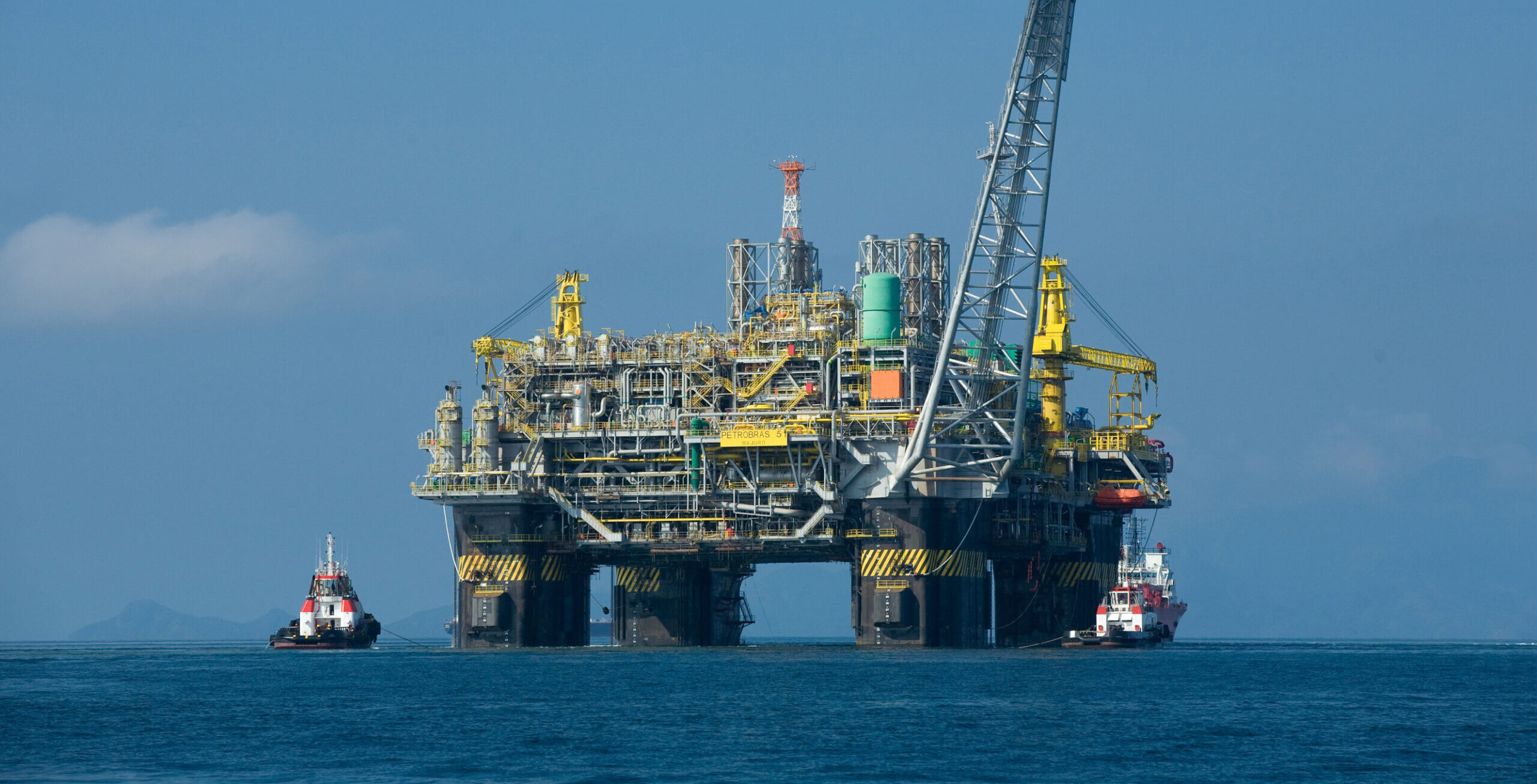
On the morning of July 17, 2022, the floating oil and gas platform Almirante Barroso set sail from the Dalian shipyard in Liaoning province, People’s Republic of China (PRC).2 After months at sea, it moored above the Búzios oilfield off the coast of Brazil. Petrobras, Brazil’s national oil utility, and two Chinese oil majors, China National Offshore Oil Corporation (cnooc) and China National Petroleum Corporation (CNPC), partnered under a joint venture to develop the Búzios field.3 The China Development Bank (CDB) also provided $1.5 billion in project finance to Petrobras for the Almirante Barroso, the sixth of eleven planned Floating Production, Storage, and Offloading Units (FPSOs) to operate in the Búzios.
Global Chinese investment in Brazil and in global energy markets extends far beyond the Búzios oilfield. The Chinese Communist Party (CCP) has an array of policy and financial tools that it uses to secure diplomatic influence, strengthen supply chains for domestic Chinese manufacturing, and gain physical control of strategic assets in partner countries. The energy industry is a focus for the PRC because of its importance for the domestic Chinese economy and its national security implications abroad.
Readers of American Affairs will be familiar with the PRC’s negotiated compromise between private “free market” activity and state-directed resource planning.4 This “state capitalist” system is supported by financial institutions with various degrees of distance from the central CCP command. Closest to the ruling party are the policy banks: the CDB and the Export-Import Bank of China (chexim). Outside their official policy organs, the PRC has stakes in a variety of state-owned enterprises (SOEs), including the four largest Chinese banks and some of the world’s largest energy companies, which receive strategic direction from the State-Owned Assets Supervision and Administration Commission (sasac), the arm of the PRC government that manages its ownership of private businesses. Furthest removed are private PRC-flagged companies that are not state-owned, like BYD and Contemporary Amperex Technology Co., Limited (CATL), which have no direct connection to the CCP. After years of decentralization dating back to Deng Xiaoping’s tenure, Xi Jinping has aggressively reasserted control in Chinese capital markets, wielding this diverse toolkit of institutions in support of PRC strategy.5
Since the turn of the century, the PRC has taken its state-owned system abroad, using the full range of its institutional toolkit. These efforts include, but are by no means limited to, the Belt and Road Initiative (BRI), the PRC’s state-directed development program focused on the Eurasian continent. The PRC’s policy and state-owned banks also engage in sophisticated lending and energy investing alongside leading Western financial institutions.
Until recently, U.S. policymakers and the American public have been left in the dark about the extent of the PRC’s state-owned foreign investments, in part because of the complicated web of institutions that invest on behalf of the PRC. Existing data publication efforts from the AidData lab at the College of William and Mary, the American Enterprise Institute, and others are robust but limited in scope. It was possible to track individual deals from PRC entities, but no single data source existed for all PRC state-owned finance.
There was also a severe lack of information about U.S. investments in international public energy finance. No single source of public data existed on the activities of EXIM, DFC, and the various agencies offering assistance and foreign aid.
New research from Casey Kelly, Justin Williams, Jacob Kincer, and myself at ClearPath has solved these data gaps, which allows us to present comprehensive totals of U.S. and Chinese international public energy finance.6 Since 2015, China has outspent the United States $446 billion to $45 billion in foreign public energy finance. Without policy action, the United States stands to lose its competitive edge in foreign energy markets, which will hurt American manufacturers and cede strategic ground to the PRC. Policymakers should sharpen the policy toolkit to strengthen the American industrial base, lead the world in energy innovation, and prevail against the CCP. This article will utilize Brazil and India as case studies to analyze PRC and U.S. strategies and chart a path forward.
In Search of Scale and Coordination: The Brazilian Case
Since 2015, the PRC has outcompeted the United States in public energy finance in Brazil by $60 billion to $472 million. The PRC’s interest in Brazil stems in part from its reliance on Brazilian commodities, including fossil fuels, iron ore, and agricultural products. Their full institutional toolkit operates in Brazil’s energy industry to secure these critical exports. The PRC’s policy banks focus on lending and project finance for Brazil’s offshore fossil fuel and iron ore industries, while Chinese SOEs build, acquire, and operate transmission and electric generation of all types.
Official debt flows from PRC entities to Brazil focus on three sectors: upstream oil and gas, electric transmission, and mining. Oil and gas transactions are by far the largest and most sophisticated. These deals closely resemble the activity of a private investor, rather than the concessional, development-focused lending that a development bank typically undertakes. The CDB, along with the PRC’s state-owned commercial banks, participates in syndicated lending with the world’s leading financial institutions, including private U.S. banks, to support extraction at one of the largest oil and gas discoveries of the twenty-first century: the ultra-offshore fields in the Santos Basin. PRC entities have been involved in financing at least a dozen FPSO facilities that are in operation in the Santos Basin, and the Chinese oil majors own equity stakes in the development of several Santos oilfields.
CDB has also provided financial backing for China’s largest electric utility, State Grid, to make aggressive investments in Brazil’s transmission system. From 2012 to 2014, State Grid took on more than $1.2 billion in debt from CDB to finance buyouts of several Brazilian transmission companies. These companies are now owned and operated by State Grid.7
ICBC and BOC—Chinese state-owned commercial banks, which are the first- and fourth-largest banks in the world, respectively—have supported more than $2.6 billion in financing for Vale, Brazil’s largest mining company. Vale is primarily a miner and exporter of iron ore; these investments support China’s large, growing, and highly emissive steelmaking industry. By weight, Brazil’s iron ore exports to the PRC account for 16 percent of all Chinese virgin steel production.
Unlike lending from the United States, which often comes with conditionalities related to governance, environmental standards, and human rights, Chinese debt financing typically lacks transparency. In contrast, the United States, along with other major developed economies, largely operates within established international financial frameworks, such as the Organization for Economic Cooperation and Development (OECD) Arrangement and the Paris Club; these frameworks promote transparency, responsible lending, and coordinated debt relief, a stark difference from China’s often bilateral and less transparent mechanisms.8
On the equity side, Chinese SOEs own and operate assets across Brazil’s fossil fuel and electric industries. CNPC and cnooc, two of the largest oil companies in China, have each made significant state-owned investments in oil and gas plays in the Santos Basin.9 These equity transactions are mirrored by large debt deals between the PRC’s policy banks and Petrobras, an instance where the CCP’s centralized political economy benefits the semiprivate institutions within its orbit.
The story is similar in electric transmission, where State Grid has acquired or built at least 12,739 miles of transmission, or 9.3 percent of Brazil’s entire system, using debt from the CDB.10 State Grid’s holdings include at least three concessions from the Brazilian government for high-voltage direct current transmission lines that connect the Amazon’s abundant hydroelectric resources to Brazil’s population centers in Rio and São Paulo.11 State Grid has also acquired two Brazilian distribution companies, CEEE and CPFL, granting them at least 13 percent ownership of Brazil’s distribution network.12
Chinese SOEs own generation resources of all types, but Brazil’s abundant water resources and in-house technical expertise at the China Three Gorges Corporation (CTG) has resulted in a focus on hydropower. Across all technology types, PRC entities own twenty-five gigawatts of generation in Brazil, or 12 percent of Brazil’s total electric capacity in 2025.13
The United States, meanwhile, has contributed to valuable one-off projects in Brazil but lacks a coordinated strategy to secure export markets for U.S. energy innovation and compete with China. Since 2015, five U.S. agencies have initiated forty-two projects totaling $472 million. The majority of U.S. funding is captured by one project from 2021 to modernize public lighting and grid management in the city of Rio de Janeiro, a valuable project, to be sure, but not transformative or strategic.14 The balance of the U.S. projects brings DFC’s total financing in Brazil to $353 million. EXIM’s $102 million in spending is distributed across twenty-eight deals in coking coal mining, natural gas pipelines, and nuclear engineering. The United States Trade and Development Agency (ustda), though small in dollar amount, has funded the most activities of any agency in Brazil, and DOE has a limited presence as a regulatory adviser.
Three transactions—one each from DFC, EXIM, and ustda—represent a strong foundation on which future policy can build. Beginning in 2022, DFC made equity investments in TechMet Limited, supporting its nickel and cobalt critical minerals mining operations. DFC’s $55 million investment will support the development of TechMet’s Piauí Nickel Project, which will produce an average of twenty-seven thousand tonnes of nickel and nine hundred tonnes of cobalt per year, with first production expected in 2028.15 While the total dollar amount of DFC’s commitment is limited, these equity investments in TechMet are of high strategic value to DFC. This is partly due to challenges DFC has faced in broadly utilizing its equity tool because of an investment scoring issue. The Corporation’s ability to finance TechMet’s critical minerals projects and other high-priority strategic investments is crucial for securing supply chains for American manufacturing and countering Chinese influence in the sector.16
In 2020, EXIM guaranteed Westinghouse Electric Company’s $22 million contract with Eletronuclear, a subsidiary of Brazil’s national electric utility Eletrobras.17 This contract involves engineering analysis for the long-term life extension of the Angra-1 nuclear power plant, a crucial step in a plan to extend the reactor’s lifespan and the first of many anticipated deals between EXIM and Brazil.18 EXIM’s approach to nuclear energy in Brazil reflects a broader strategy that it has also implemented in Poland and Romania. Because it is restricted from making large upfront investments before a project gains viability, EXIM begins its involvement with pre-project loans, services contracts, and other small investments to signal interest and derisk the project so it can finance at a larger scale. This strategy helps EXIM partner with host countries earlier in the project development lifecycle, in order to counter large, upfront project finance offers from Russia or China. If EXIM can win deals against Russian and Chinese competition, it brings on average 5 percent excess revenues home for the American taxpayer, collected from the foreign buyer.19 EXIM’s continued support of Westinghouse will contribute to American leadership in innovation and industrial strength.
ustda is a smaller agency than EXIM or DFC, but its assistance for American industrial exports is no less transformative. As Brazil’s grid expands and drought conditions worsen hydroelectric reliability, innovative American grid technology can play an important role in ensuring efficient and reliable grid operation. ustda has served as a matchmaker between Brazilian grid operators and American engineering companies with the technical expertise to implement smart grid solutions.20 The agency provides private American businesses with the contacts and credibility to initiate service exports, which allows those exports to continue after ustda has ended its involvement.21 Brazil and other strategic partners stand to benefit from innovative American energy technologies, while ustda strengthens America’s strategic presence abroad by providing profitable export business to American companies. Despite its small budget, ustda catalyzes $231 in private American exports for every American taxpayer dollar.22
These three examples show that U.S. agencies have the ability to coordinate with private American businesses to finance valuable strategic projects. They lack the scale and coordination, however, to execute a comprehensive energy security strategy that can effectively compete with the PRC. The PRC can simply provide more financial heft in partner countries. If the United States does not respond, it risks losing its global leadership in innovation and will fall further behind in key sectors.
The Need for Strategic Direction: The Indian Case
In India, the scale of public Chinese energy investment is smaller than in Brazil, but the strategy is the same: large-scale debt to Indian companies with strategic relevance for domestic Chinese industry, and greenfield construction of large and long-lasting energy generation. Yet, as in Brazil, China still leads the United States in public energy investment: $26 billion to $3 billion since 2005. Through EXIM and DFC, the United States has shown expertise in specific energy technologies, but challenges remain in expanding interagency coordination and strategic ambition to advance American energy and national security.
The PRC’s policy banks have had a significant presence in India’s energy system, with $7.2 billion of debt in the past two decades.23 They have primarily offered project finance to private power producers such as CLP India and Reliance Power, supporting the development of at least fifteen gigawatts of capacity across more than a dozen gas generators, one coal plant and a 2.5-gigawatt wind farm. Mirroring their strategy in Brazil, CDB and chexim have also lent to India’s state-owned oil and gas companies, including the Hindustan Petroleum Corporation. The PRC’s state-owned commercial banks perform similar kinds of transactions but at a smaller scale than the policy banks, totaling $3.3 billion of debt to Indian companies since 2005.24 These transactions have supported at least seven gigawatts of thermal power generation, the acquisition of several upstream oil and gas companies, and an iron ore miner. Most notably, the China Construction Bank (CCB) and ICBC participated in two syndicated loans to Reliance Power in 2006 for the construction of the Jamnagar Refinery, which today is still the largest oil refinery in the world.25
On the equity side, several SOEs have taken ownership of Indian power producers or financed greenfield construction in India directly. Available sources show that the PRC has equity in at least 9.6 gigawatts of coal capacity worth $6.9 billion. A remaining $8.6 billion of equity financing represents an unknown amount of capacity across coal, hydropower, and renewable energy. In 2008, Shanghai Electric bought $1.1 billion of equity in the aptly named Sasan Ultra Mega Power Project, a four-gigawatt integrated coal mine and power plant in Madhya Pradesh, India. This project also received $1.1 billion of debt or export credit from CDB, BOC, and chexim, an instance of coordination between a diverse group of PRC institutions to finance critical Indian infrastructure.
As in Brazil, PRC lenders and investors in India focus on capital-intensive projects in upstream oil and gas, thermal generation, and mining that secure diplomatic influence, inputs for Chinese manufacturing, and long-term asset ownership. At lower levels, China imports from India the same commodity inputs that it does from Brazil: $295 million of refined petroleum and $124 million of iron ore in July 2025 alone. The PRC’s state-owned debt for the Jamnagar Refinery and Vedanta Resources’ buyout of the Indian iron ore miner Sesa Goa represent long-term strategic thinking from PRC lenders to secure supply chains for their domestic industry.
At $3 billion of public energy investment since 2005, U.S. activity in India is much larger than in Brazil. EXIM and DFC have demonstrated the ability to export and deploy American energy technology in specific sectors; more needs to be done, however, at the level of coordination and strategic direction.
Of the $3 billion total, the largest bucket of investment by the United States is DFC’s $1.6 billion of project debt for clean energy manufacturing and generation. Since 2020, DFC has financed one gigawatt of solar and wind generation in India across several transactions. In 2022, the Corporation financed the development of a solar module manufacturing facility with 3.3 gigawatts of capacity.26 The facility is sponsored by the Indian subsidiary of the U.S.-flagged energy company First Solar, and it represents a secure supply chain for critical energy technology free from PRC influence. The next year, DFC financed another solar manufacturing facility in India, this time with four gigawatts of capacity and sponsored by the Indian-flagged TP Solar.27 These investments are large and strategically vital for reorienting American energy supply chains away from China.
While DFC has expertise in clean energy, EXIM has focused on exporting American thermal generation technology to India. The Bank has completed $1.05 billion of export guarantees or insurance for natural gas turbines since 2009. Their first project in India guaranteed $73 million of upstream equipment and generator sets for the 1.5-gigawatt Lanco Kondapalli Power Project in Andhra Pradesh.28 Since then, EXIM’s largest project in India has been two loans in 2011 worth a combined $800 million to finance the export of combined-cycle generator sets for the 2.5-gigawatt Samalkot Power Plant.29 In the past decade, EXIM has continued to focus on oil and gas and other strategic sectors, such as electric transmission, albeit on a much smaller scale, with only $4.3 million financed since 2015. With renewed strategic direction and ambition, EXIM and DFC could leverage their financial heft and existing experience in India’s energy sector to strengthen American energy innovation and counteract PRC influence.
Ustda, the Department of State, and usaid account for the remaining $105 million of U.S. public energy finance in India. Of this total, $80 million supported usaid’s efforts to build partnerships and forums with Indian policymakers, regulators, and utilities to support the integration of renewable energy technologies in India’s grid. Although smaller in dollar terms, ustda’s $21 million in technical assistance enabled American companies to assess export opportunities in India and partner with Indian firms to secure supply contracts and expand to new markets. By soliciting proposals from America’s innovative private sector, ustda directs private capital to support foreign policy objectives.
U.S. activity in India has been significant but limited in scope. By increasing strategic ambition and interagency coordination, policymakers can direct existing expertise at EXIM, DFC, ustda, and other agencies toward national priorities. In particular, the United States could build on EXIM’s example of supporting American manufacturers as they export to new markets. DFC’s financial scale and ustda’s technical capabilities can be directed toward sectors that provide export markets for American goods or foreign industries that supply critical inputs to domestic American manufacturing.
A Path Forward
Where can policymakers go from here? The United States should sharpen its existing toolset at EXIM, DFC, and across the interagency spectrum to strengthen its geostrategic position and advance American industry. In response to unfair Chinese financing, Congress created the China and Transformational Exports Program (CTEP) during EXIM’s 2019 reauthorization to improve the competitiveness of U.S. exports. While CTEP was a strong first step on the path to countering Chinese influence, more can be done to scale up EXIM’s financing in critical sectors and regions. China continues to offer export subsidies and other concessional finance in order to establish footholds in critical markets.
Policymakers can provide flexibility for EXIM by establishing a National Interest Account (NIA) to prioritize strategic projects vital to U.S. national interests. This NIA, with increased risk tolerance, will better position the United States to advance economic and geostrategic priorities in a global landscape where trade and export finance are increasingly focused on geostrategy.
EXIM’s current 2 percent default rate cap is a unique requirement placed on the Bank that other countries do not face. This restraint prevents EXIM from financing strategically valuable capital-intensive projects and advances a risk-averse culture at the Bank. Similarly, EXIM’s domestic content policy is the least flexible among export credit agencies globally, creating a significant obstacle for the ability of American innovators and manufacturers to leverage the Bank as a resource for competition. Policymakers can raise EXIM’s default rate cap to align the Bank with OECD norms while exempting NIA-eligible projects entirely to provide flexibility for strategic sectors like energy. Policymakers can also modernize the metrics for EXIM’s domestic content policy to fit today’s shifting supply chains.
Lastly, EXIM’s mission should be updated to support American jobs and advance U.S. national interests. This includes directing the Bank to proactively develop a project pipeline aligned with U.S. national security objectives and partner agencies like DFC, fostering a clear understanding that global competitiveness is a core priority.
DFC’s first use of its equity tool with TechMet was celebrated as a strategic and economic victory. By providing equity rather than debt, DFC gave TechMet greater bandwidth to develop critical minerals supply chains to support U.S. national security and provide a profitable return to American taxpayers. Similar opportunities exist in other industries, which could be unlocked by scoring these investments correctly or by establishing a revolving fund. Currently, DFC’s equity purchases are scored as a loss, despite the economic value of these investments: DFC has returned $555 million to the taxpayer since its creation in 2019. Several legislative proposals have been put forward that would circumvent this issue by establishing a revolving fund for DFC’s equity investments.30 This fix will allow DFC to use its equity tool more broadly in industries critical to American national interests, notably critical minerals.
Today, due to current country eligibility rules and the European Energy Security and Diversification Act, it is easier for DFC to support an energy project in the United Kingdom than in Thailand, a puzzling circumstance given the Corporation’s development mandate. Rather than firm country exclusion lists, DFC should be given greater flexibility to support energy security on project-level merits and with broader U.S. strategic goals in mind.
Energy infrastructure tends to be large and expensive, with PRC financing often well into the billions for individual projects. Total state-owned PRC financing for energy in Brazil alone would hit DFC’s global maximum contingent liability cap of $60 billion. DFC currently has a variety of constraints, from an individual project limit of $1 billion, a maximum contingent liability cap that the Corporation is fast approaching, and a requirement to notify Congress of every project it approves over $10 million. Raising these caps would give DFC flexibility to support larger projects. For example, American investment in clean steelmaking in Brazil could require large dollar amounts but would strengthen our diplomatic ties with Brazil, reduce Brazilian and American reliance on China’s steel industry, reduce emissions from Brazilian steelmaking, and provide export markets for American steelmaking technology and liquefied natural gas, a key input to cleaner steel production.31
Simply increasing U.S. financial commitments would not be sufficient to guarantee American competitiveness and national security. The PRC can coordinate across its policy banks and SOEs, while U.S. agencies work with broad or diverging mandates. The United States needs to lean on its primary economic advantage, a competitive and innovative private sector, while creating a platform for enhanced cooperation between agencies and with world-leading American firms. This approach enables U.S. agencies to work in concert to support private businesses on regulatory harmonization, diplomatic and business connections, technical assistance, geopolitical risk mitigation, and national security priorities.
America already has a model to build on. The Millennium Challenge Corporation utilizes a compact framework that serves as a platform to coordinate agencies, serve U.S. national security interests, and support American energy innovations in foreign markets.32 A new Energy Security Compacts (ESCs) model, inspired by the MCC and led by the State Department, would create five- to ten-year bilateral, U.S.-led engagements with clear, measurable outcomes targeting energy security and infrastructure.33 These compacts would pull together authorities and capabilities across the U.S. government, including, among others, DFC, EXIM, MCC, the Department of Energy, and ustda. To ensure that national security objectives are the priority, this effort could receive support from the National Security Council.
Establishing a U.S. interagency platform would multiply capabilities and provide more comprehensive and strategic support to partners and allies. Agencies such as ustda and MCC can provide crucial early-stage support and complementary investments through grant financing, including feasibility studies, reverse trade missions, and infrastructure upgrades. For example, ustda has demonstrated proficiency in connecting American engineering expertise to transmission operators in Brazil, while MCC has supported upgraded grid infrastructure in other partner countries.
These activities would directly support America’s financing agencies, EXIM and DFC, by helping to build a pipeline of viable projects. EXIM and DFC are well equipped to derisk international investment by providing direct financing, guarantees, insurance products, and equity investments to American businesses and foreign partners. This collaboration would be guided by the State Department’s diplomatic leadership, ensuring alignment with foreign policy goals; the Department of Commerce’s commercial engagement to align with the private sector; and the Department of Energy’s technical expertise to support energy sector planning and project development.
More than economics is at stake: such investments involve geopolitical influence, national security, and the advancement of American innovation rather than Chinese control. We must get serious about competing with China by strengthening America’s capabilities to sell energy technology and expertise worldwide.
This article originally appeared in American Affairs Volume X, Number 2 (Summer 2026): 200–11.
Notes
1 William Bryant et al., Energy Financing Power (Washington, D.C.: ClearPath, 2025).
2 Global Times staff, “Offshore Floating Oil, Gas Production and Storage Vessel Completed in Dalian,” Global Times, June 19, 2022.
3 “Petrobras on the Start-up of FPSO Almirante Barroso,” Brazil Energy Insight, May 31, 2023.
4 Henry Hopwood-Phillips, “It’s the Ideology, Stupid: How China’s Political Agency Vexes the West,” American Affairs 7, no. 2 (Summer 2023): 84–94.
5 USCC staff, “CCP Decision-Making and Xi Jinping’s Centralization of Authority,” U.S.-China Economic and Security Review Commission, November 2, 2022; Keith Bradsher and Joy Dong, “Xi Jinping Is Asserting Tighter Control of Finance in China,” New York Times, December 5, 2023.
6 Bryant et al., Energy Financing Power.
7 “Listing Particulars,” State Grid Corporation of China, January 20, 2015.
8 Sebastian Horn et al., “How China Lends: A Rare Look into 100 Debt Contracts with Foreign Governments,” Center for Global Development, March 2021.
9 “China’s cnooc Pays Petrobras $1.9 Billion for Production Sharing Deal at Brazil’s Búzios Field,” Reuters, November 24, 2022.
10 Bryant et al., Energy Financing Power.
11 Jimena Esteban, “State Grid to Undertake Brazil’s New Push for Clean Energy,” China Daily, April 16, 2024.
12 Bryant et al., Energy Financing Power.
13 Serhat Demirkol, “Brazil Surpasses 210 GW in Installed Electricity Capacity,” Brazilian NR, May 11, 2025.
14 “Public Information Summary,” U.S. International Development Finance Corporation, accessed July 9, 2025.
15 “Brazilian Nickel,” TechMet Ltd., accessed July 10, 2025.
16 “Sourcing Cobalt and Other Critical Minerals by Countering China’s Rare Earth Dominance,” U.S. International Development Finance Corporation, accessed July 9, 2025.
17 David Dalton, “Westinghouse Signs Engineering Analysis Contract For Angra-1,” Nucnet, October 6, 2020.
18 “Brazil’s Angra 1 Approved for 20-Year Life Extension,” World Nuclear News, accessed July 9, 2025.
19 “President Trump Strengthens Export-Import Bank of the United States, Supports U.S. Jobs by Establishing Board Quorum Through Acting Appointments,” Export-Import Bank of the United States, February 28, 2025.
20 “Ustda, Cemig Distribuição Expand Power Sector Partnership in Brazil,” U.S. Trade and Development Agency, June 8, 2022.
21 “Vrinda’s Clients and Partners,” Vrinda, accessed July 9, 2025.
22 Ustda staff, Annual Report 2024 (Washington, D.C.: U.S. Trade and Development Agency, 2024).
23 Derek Scissors, $2.5 Trillion: 20 Years of China’s Global Investment and Construction (Washington, D.C.: American Enterprise Institute, 2025).
24 Scissors, $2.5 Trillion.
25 “Retail Markets | Telecom | Petroleum Refining & Marketing | Petrochemicals | Hydrocarbon Exploration & Production | Jio 4G | Reliance Shares,” Reliance Industries Limited, accessed October 14, 2025.
26 “Public Information Summary: FS India Solar Ventures Private Limited,” U.S. International Development Finance Corporation, October 14, 2025.
27 “Generating Energy Capacity in India by Countering China’s Manufacturing Dominance,” U.S. International Development Finance Corporation, accessed October 14, 2025.
28 “Power Plant Profile: Lanco Kondapalli Combined Cycle Power Plant, India,” Power Technology, December 7, 2021.
29 “Black & Veatch Is the Sole Designer of the 2,500 MW Combined Cycle Samalkot Power Plant,” Black & Veatch, accessed October 14, 2025.
30 Adva Saldinger, “A Senate Plan for DFC Reauthorization,” Devex, August 26, 2025.
31 For example, see: Kaitlyn Ramirez et al., “Forging a Clean Steel Economy in the United States,” RMI, March 9, 2023.
32 Katie Auth et al., US Energy Security Compacts: A Fast and Lean Approach to Reasserting US Interests through Global Energy Investment (Washington, D.C.: Energy for Growth Hub, 2025).
33 Jake Kincer and Nick Lombardo, “Put Energy Security at the Center of U.S. Foreign Policy,” ClearPath, September 18, 2025.