The economic history of the United States is marked by recurring moments in which markets alone have proved insufficient to meet the demands of structural transformation. In such moments, Congress and successive administrations across time and political affiliations did not abandon markets; rather, they supplemented them with institutional frameworks capable of mobilizing capital, restoring capacity, and catalyzing development. American state capitalism, particularly in infrastructure development, has historically meant the creation of purpose-built financial structures designed to address structural investment gaps and vital strategic needs.1
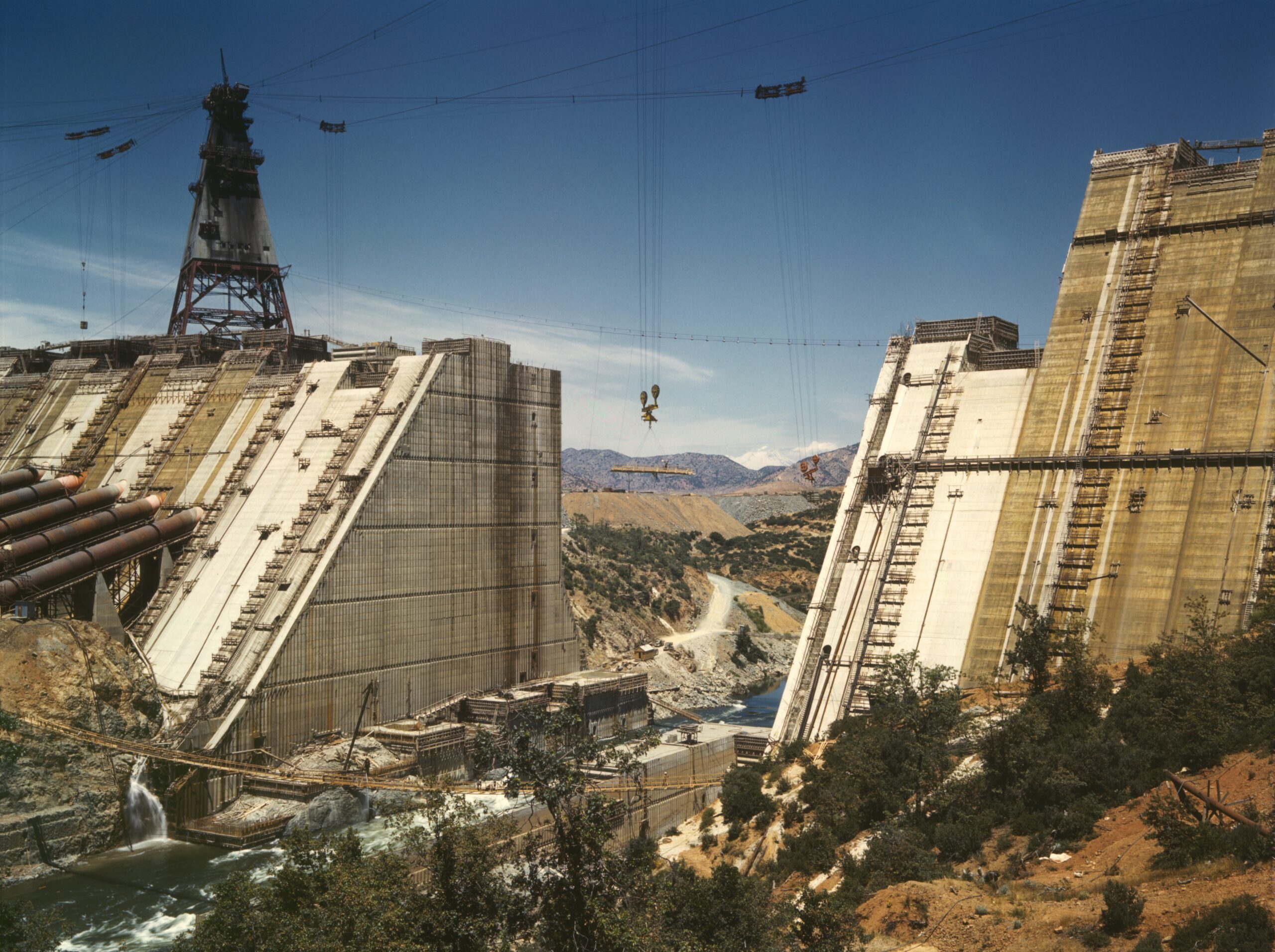
During the Great Depression, for instance, President Herbert Hoover and Congress established the Reconstruction Finance Corporation, a federally capitalized institution empowered to extend credit and take equity stakes in banks, railroads, and strategic enterprises.2 The Public Works Administration followed, financing and overseeing dams, bridges, and tunnels that reshaped the country’s productive capacity while restoring employment. Two decades later, the National Interstate and Defense Highways Act of 1956 marked another institutional turning point.
The central challenge confronting the United States today is not simply the scale of infrastructure investment required but the institutional architecture through which that investment is organized. Infrastructure is often treated as a category of public spending when it is a balance sheet problem: long-duration assets require long-duration capital structures and institutions capable of mobilizing capital across decades rather than electoral cycles. Markets and the private sector alone cannot address what might be called the trifecta that hit the United States in the last decade: supply chain fragility revealed by the pandemic, growing strategic competition with China, and the capital intensity of the artificial intelligence revolution. This has led many to reexamine the need for an industrial policy through various policy tools, including direct investments by the government.
Several explanations have been offered for this renewed interest in the state’s ability to spur industrial development.3 One perspective emphasizes the domestic economic consequences of globalization and the consequent erosion of the American industrial base with its accompanying increase in income inequality; thus, the need for a strong America First policy to reestablish our industrial base, improve the income of working-class households, and establish greater independence from foreign sources.4 A second frames industrial policy primarily in terms of strategic competition with China and the need to ensure technological leadership and security of supply chains, especially in sectors with national security implications.5 A third focuses more on structural impediments in the way the United States finances long-term infrastructure investment and the reforms the country needs to ensure its products reach markets with greater speed and efficiency.6
Although these perspectives differ in emphasis and overlap in some regards, they converge on a common conclusion: structural investment gaps exist that private markets alone cannot solve without some form of government intervention. In this sense, the arguments are observationally equivalent. One policy implication is common to all: the United States requires institutional mechanisms capable of mobilizing capital at larger scales and over longer timeframes.
My purpose in this essay is not to adjudicate among competing theories of industrial policy; as the ever-pragmatic Keynes once stated, “no great question of principle is involved” here.7 Rather, it is to focus on the institutional tools required to support long-term national investment while minimizing the risk of market distortions.
One such tool is the creation of a sovereign institution that could play a role in financing critical infrastructure. Below, I will argue that the United States needs a sovereign institution dedicated to specific infrastructure-related investments. The form this institution might take can vary, as can its investment horizon and governance structure. Broadly speaking, several models have been discussed over the years. This essay will focus on two: a national infrastructure bank and a sovereign infrastructure fund. The choice between these alternatives reflects a deeper decision about how the American state should intervene to enable capital intensity in infrastructure investment against the backdrop of industrial policy’s renewed importance.
Why Existing Tools Are Structurally Inadequate
The American Society of Civil Engineers has estimated that trillions of dollars are required merely to bring existing infrastructure into a state of adequate repair.8 At the same time, the rapid expansion of investment in digital infrastructure illustrates the scale and complexity of the challenge. As of late 2025, announced investments in AI data centers alone are expected to exceed $5.2 trillion globally, representing a historically unprecedented level of capital deployment.9 These facilities require enormous complementary infrastructure. In practice, the distinction between “new” and “old” infrastructure quickly disappears. Building data centers requires power; building power infrastructure requires transmission networks and grid integration; and both require access to transportation and water resources. For example, utility companies will need to spend over $60 billion just to upgrade the grid system.10
The challenge lies in the multilayered nature of infrastructure investment. New infrastructure sectors, digital infrastructure being the most prominent example, have largely been driven by private capital. Traditional infrastructure sectors, such as electricity transmission and distribution, water systems, and transportation networks, remain largely the domain of federal, state, and municipal authorities. That model, whereby the state owns, regulates, and manages infrastructure assets all at once, is simply not conducive to attracting private capital, where in many cases, private capital can play a critical role.11 Yet these systems are deeply interconnected.
The development of new industries increasingly depends on the modernization of older infrastructure systems that remain institutionally fragmented. The American model of municipal finance, anchored in taxexempt bonds and federal grants, has historically supported incremental infrastructure development. It is less suited, however, to large-scale modernization that requires equity participation, coordinated planning, and the aggregation of investment opportunities across sectors and jurisdictions.
The United States has historically invested less than 2 percent of GDP in infrastructure, significantly below the levels observed in countries such as China. Beijing has invested closer to 8 percent of its GDP in infrastructure development for decades. While such comparisons should be treated cautiously, the gap nevertheless highlights the scale of the structural investment challenge facing the United States. The gap does not include what the United States needs to invest globally to maintain its strategic capabilities, whether in the form of access to critical minerals, port infrastructure, or civilian infrastructure needed to support U.S. military presence across the globe.
Recently, federal legislation has attempted to address these issues. The Infrastructure Investment and Jobs Act (IIJA) passed by Congress in 2021 allocated approximately $1.2 trillion to upgrade various infrastructure sectors. It was followed by the chips and Science Act and the Inflation Reduction Act. Yet these bills relied primarily on traditional fiscal tools—appropriations, grants, and tax incentives—while leaving the underlying institutional structure of national infrastructure finance largely unchanged. These instruments allocate expenditures within budget cycles; they do not create enduring balance sheet capacity as was demonstrated when the new administration changed the terms of these bills. Infrastructure assets, by contrast, are long-duration assets whose financing structures must operate over decades.
The deeper issue is, therefore, institutional. Infrastructure investment in the United States is financed project by project and election by election. There is no long-term planning to manage infrastructure investment as a portfolio, through which risks can be aggregated and strategic priorities incorporated into investment decisions. Without institutions capable of operating beyond short-term political or financial cycles, the United States will continue to rely on episodic spending rather than sustained capital formation. In addition, China’s apparent successes in technological advancement and infrastructure expansion domestically and internationally have been attributed to careful control of state-owned entities working in concert through the multidecade planning that China’s economy follows. That isn’t to say that we need such a system, but drawing lessons from the Chinese model is necessary to complement our own private capital system.12
A recent study published by the Council on Foreign Relations identified the three critical areas where the United States is in a state of intense strategic competition with China: Artificial intelligence (AI), quantum, and biotechnology.13 The report maps a one-to-one comparison with China’s funding capabilities relative to the United States and what the U.S. economy needs to undertake to ensure continued investment in these critical sectors. The basic premise is that in certain sectors, “private capital avoids quantum and biotech due to long time horizons, lack of commercial demand, and scaling challenges.”14 This structural inadequacy frames the institutional choice examined below. Whether through a national infrastructure bank, a sovereign infrastructure fund, or some other coordinated activity, the objective must be the same: to create the conditions necessary for sustained capital mobilization.
In recent years, the U.S. government has increasingly found it necessary to intervene directly in designated strategic sectors of the economy, reflecting an emergent consensus across both major parties. Federal policy initiatives have supported semiconductor manufacturing, rare earth production, advanced energy technologies, and other industries considered essential to America’s global leadership position. But in early 2025, a major shift occurred when the federal government engaged in equity participation in private sector projects as well as firms. These developments together illustrate an important transformation in the policy scope of U.S. economic statecraft.
Though the federal government has begun participating more directly in capital formation across a range of critical sectors, this process is defined by an ad hoc character, one that emerges from the absence of a coherent financial architecture that could effectively align the financial resources at hand with national goals and priorities. As a result, capital allocation occurs through a patchwork of programs administered across multiple federal agencies, including the Departments of Energy, Commerce, Defense, and Transportation.
This fragmentation becomes particularly problematic in sectors where infrastructure investment interacts with broader industrial policy objectives. Once again, the rapid expansion of data centers provides a ready example because of the aforementioned connection between the energy-intensive hardware and the supporting infrastructure in electricity, water, and transport. These systems are deeply integrated, even as their financing and governance remain institutionally separated.
The United States possesses the deepest and most sophisticated capital markets in the world. Institutional investors—including pension funds, insurance companies, and foreign sovereign wealth funds—actively seek long-duration assets capable of generating stable returns over decades. Infrastructure assets are well suited to these investment preferences. But the institutional mechanisms required to connect global capital with infrastructure investment opportunities remain underdeveloped. The question, therefore, is not whether the federal government should participate in strategic investments. Across many sectors, that participation is already a fait accompli. The more important question is whether such participation should remain improvised and sector-specific, or whether it should be organized through a permanent institutional framework.
The creation of a sovereign infrastructure institution is not a novel idea. Over the past two decades, policymakers, economists, and infrastructure experts have proposed a variety of institutional models designed to mobilize private capital for infrastructure investment. These proposals have generally centered on two broad institutional shapes: a national infrastructure bank and a sovereign infrastructure fund. Both models aim to address the same underlying problems of extending the time horizon and scale at which capital can be deployed and directed. Yet they differ significantly in their financial structures, governance frameworks, and investment mandates. Understanding the trade-offs between these models is essential for designing an institution capable of operating effectively within the American political and financial systems.
The National Infrastructure Bank
The national infrastructure bank model would envision a federally capitalized financial institution that leverages its equity by issuing debt in capital markets to provide loans, guarantees, and credit enhancements for infrastructure projects. Operating as a leveraged financial intermediary, the bank would support projects undertaken by state and local governments or public-private partnerships and would be governed by prudential regulations, including capital adequacy and risk management requirements under Federal Reserve supervision.
The first proposal for such a bank dates back to 2007 when a National Infrastructure Bank plan was considered by Congress.15 That proposal went nowhere but was revived in the latter part of the Obama administration with the same structure but with an emphasis on larger megaprojects. That proposal, too, went nowhere. The initial draft of the IIJA included the creation of a quasi-infrastructure bank, this time named the “Infrastructure Finance Authority.” That part of the bill was dropped at the last moment.16 The most recent proposal for an Infrastructure Bank, the prospective Federal Infrastructure Bank Act of 2025, goes the other way by offering a bank that is more in line with a privately owned commercial bank. The bank would be owned by a holding company which would be owned by private shareholders and would act as a commercial bank.17
The appeal of such a structure is considerable. First, the bank model benefits from institutional familiarity and is well understood by policymakers, regulators, and investors alike (even though it has repeatedly failed to convince Congress). Second, regulatory discipline would, in theory, constrain risk-taking. Capital ratios and supervisory oversight would provide guardrails limiting excessive risk exposure. Third, the bank model would focus primarily on credit provision rather than direct ownership of infrastructure assets.
Despite these strengths, the infrastructure bank model also has structural limitations. Because banks operate primarily through lending activities, their financial structures naturally bias them toward debt financing rather than equity investment. Yet many infrastructure projects—particularly those involving new technologies or emerging sectors—require equity capital during their early development stages. In addition, the bank model may favor projects with well-established revenue streams capable of supporting debt financing. While this characteristic can enhance financial discipline, it may limit the institution’s ability to support transformative infrastructure investments whose economic benefits extend beyond immediate revenue generation. And such a bank is less likely to invest in quantum or biotech.
For critics of the concept, establishing such a bank suggests yet more unwarranted government interference: it may be seen as just another bureaucratic institution that will have little impact, increase inefficiency, and cause distortions in the market. Opponents of the bank idea (or a sovereign fund for that matter) have argued that if an infrastructure project is worthy of investment, capital markets should provide the solution; if a project is not worthy, then it should not receive any financing, or the government should provide direct support through preexisting mechanisms rather than new financial machinery,18 though such objections do not address the issues regarding institutional mismatch discussed above.
Others have also suggested that since the United States already has several state infrastructure banks that are underutilized, a national infrastructure bank may not be needed.19 Others may point to the lack of success of the infrastructure bank model in other countries. The Canada Infrastructure Bank (CIB) comes to mind, especially as the recently proposed 2025 U.S. National Infrastructure Bank plan closely resembles the institutional blueprint established by Canada. Founded in 2017, the CIB was created by Parliament with its own board and management; it has invested in loans, including equity investments in projects that generate revenues through user fees. While the bank has been a relative success for some, it has also been heavily criticized for being too slow and failing to have clear objectives.20
Since its creation, the CIB has deployed $14.9 billion compared to a target of $35 billion. And while its ability to galvanize private capital in the last few years has increased materially, only 33 percent of its total capital deployment to date has come from the private sector. The designers and managers of any U.S. bank will need to carefully study the lessons provided by the Canadian experience. For example, a U.S. Infrastructure Bank would need to attract upfront private capital to show clear additionality and make it a condition precedent to extend loans.
The Sovereign Infrastructure Fund
An alternative institutional framework, which on balance may be more favorable, is the Sovereign Infrastructure Fund (SIF). Unlike a bank, the SIF would operate as a principal investor rather than as a leveraged lending institution. Under this model, Congress would capitalize the SIF with a mandate to invest in critical infrastructure sectors. The fund would have authority to deploy capital across the capital structure, including equity investments, subordinated debt, and other forms of patient capital.
Because the fund would not operate as a regulated bank, it would not be subject to the same capital adequacy constraints governing leveraged financial institutions. Instead, its investment activities would be guided by a statutory mandate and governed through institutional mechanisms designed to ensure disciplined investment decisions. This would be closer to a state pension fund or state sovereign funds (e.g., the Alaska Permanent Fund Corporation).21 Such institutions typically have a board nominated by the governor and/or state legislators, with a management team that undertakes investments, generally passive ones, though some investments take stakes in real estate assets, including large infrastructure assets; the management typically may also invest in venture capital funds that could fund new technology companies, including those related to AI, quantum, or biotechnology. For instance, the Alaska Permanent Fund maintains a diverse portfolio with over $85 billion in assets and generated a return of 8 percent over the last five years.22
Much has been written about President Trump’s 2025 proposal for a sovereign fund. The basic proposal was to examine the feasibility of a fund that would achieve multiple goals: fiscal stability, to be attained by a reduction of the tax burden for households and small businesses; long-term wealth creation by “establishing security for future generations”; and national security by “promoting United States economic and strategic leadership internationally.”23 As a general rule, sovereign funds have been created to manage surplus funds either generated through a windfall event (mineral rights, tobacco settlements, etc.), through permanent surplus (the case for oil-exporting economies such as Kuwait, UAE, Qatar), through imperatives to serve future generations (Singapore’s GIC and Temasek), or a combination of these objectives. The U.S. budget is not in a surplus, nor will it be for the foreseeable future. There is no appreciable need to provide for future generations through a fund given the size of the U.S. economy and the fact that it does not rely on a single source of revenue such as oil or mining. A sovereign fund cannot play any meaningful role, if any, on debt sustainability or tax reduction, which are areas subject to the fiscal instruments of the U.S. government.
What remains then is a sovereign vehicle designed not for fiscal management but for the large-scale deployment of capital where private sources alone are deterred by time and risk thresholds.24 Critics of a U.S. sovereign fund make the following argument not dissimilar to those made about a national infrastructure bank. In addition to the governance issue, the principal objection, as distilled by critical analysts at the Peterson Institute, is that “given the depth and sophistication of the US financial system, it seems implausible that such a fund could outperform private investors—the unstated premise of the initiative—unless the government uses its size to extract uncompetitive returns. This would distort the market, crowd out private investment, and raise the cost of capital for everyone. This premise also flies in the face of the administration’s commitment to free markets and market competition.”25
Yet these theoretical objections do not hold up against the empirical reality of decades-long infrastructure strain and underinvestment. As this essay argues, the size of the investment requirements and the structural impediments to them suggest that any real advances in capital mobilization will require a funding institution capable of catalyzing the process independent of both short-term financial market constraints and the political back-and-forth between Congress and successive administrations over budgetary matters. A sovereign fund offers several potential advantages that are consistent with this ideal.
First, the sovereign fund model provides greater flexibility across the capital stack. Infrastructure investments often require combinations of equity, subordinated debt, and other forms of structured finance. A sovereign fund could provide cornerstone equity investments that catalyze larger pools of private capital. Also, like U.S. pension funds, the SIF could invest with a mix of investment strategies, including funding speculative new technologies. Second, the SIF allows for longer investment horizons. Infrastructure assets typically generate returns over decades. A sovereign fund structured with a long-term mandate could align its investment strategy with the lifecycle of infrastructure assets. Third, the fund structure may facilitate the development of platform investments across multiple infrastructure sectors. Rather than financing individual projects, the fund could support the development of integrated infrastructure platforms capable of scaling across regions and technologies.
These characteristics would enable the SIF to play a more catalytic role in mobilizing private capital for infrastructure investment, especially in the realm of megaprojects with long development cycles; these would include critical grid investments across the United States, AI digital infrastructure, biotech, quantum, and other critical areas related to the onshoring of industrial manufacturing. Another key area is the ability to invest internationally in sectors and regions where risk premia would not allow the private sector to invest alone but would require capital in the form of political risk insurance.
The sovereign fund model also raises important governance challenges. Without robust governance structures, such a fund risks political interference or mission drift. The design of governance safeguards, therefore, becomes central to the credibility and effectiveness of a sovereign infrastructure fund.
Structure and Funding
The choice between a national infrastructure bank and a sovereign infrastructure fund ultimately reflects a deeper institutional tradeoff between discipline and flexibility. Banks derive discipline from regulatory structures. Prudential supervision, capital requirements, and risk management frameworks constrain lending activities and should reduce the likelihood of excessive risk-taking. Sovereign funds, by contrast, derive flexibility from their investment mandates. Freed from the regulatory constraints applied to leveraged financial institutions, they can deploy capital across a broader range of investment opportunities. Yet flexibility without discipline can create governance risks. Successful sovereign investment funds, therefore, rely on carefully designed institutional safeguards to ensure that investment decisions remain guided by the need to deliver returns while nonetheless being balanced with national economic security objectives.
Given that several examples of an infrastructure bank already exist, I will focus on the investment strategy, governance structure, and funding of the SIF. The strategy of such a fund would be to invest in traditional and new infrastructure. Traditional infrastructure would include transport and logistics, power, utilities, and digital infrastructure both domestically as well as internationally to the extent that they cannot be funded by private capital markets alone (including the municipal capital market). New infrastructure sectors would include AI-related investments, quantum, and biotech.
To meet these needs, the fund would target a net return of 300 basis points above the long-term U.S. Treasury rate and have a lifetime of up to twenty years, thus ensuring that taxpayers’ capital will have generated a return higher than the U.S. cost of funding. It would have the ability to invest in equity and debt instruments but would only take minority investments so that additional capital will need to be raised, thus acting as a catalyst.
No less than 80 percent of the investments would be in the territories of the United States and no more than 20 percent would be global investments.26 One of the key criteria will be for the SIF’s capital to be absolutely required, without which the investment would not occur. This standard would require a careful study of every investment decision: a determination must be made that no alternatives exist in the capital markets (or through an existing U.S. government program) to serve the investment need in a timely manner. Portfolio construction could look like the following: 60 percent invested in equity investments, 30 percent in debt, and 10 percent in venture capital. The institution should be governed by an independent board of directors with staggered terms. Board members should be appointed based on professional expertise in infrastructure, finance, public pension funds, and public policy. Congress can appoint a number of board members on a bipartisan basis, while the remainder can be appointed by the president.
The chairman of the board would be the Secretary of the Treasury, with a CEO reporting to the Treasury Department and the board. Investment decisions would be delegated to a professional team managed by a Chief Investment Officer (CIO) who chairs the investment committee. The investment committee will have delegated authority to invest or dispose of investment capital up to a certain dollar threshold and any amounts above that threshold would require board approval. Like most public pension funds, quarterly reporting on the performance of the fund and its investment would be publicly available. Finally, the investment team would have compensation equivalent to leading U.S. and Canadian public pension funds.
Establishing a sovereign infrastructure institution would require initial capitalization from the federal government. This capitalization, however, need not rely exclusively on new fiscal expenditures as alternative funding sources would be available if the SIF adopts the following measures.
First, any direct investments made to date should be transferred to the sovereign fund, including fees acquired from transactions brokered by the U.S. government; this source, based on my estimates of official reports, could generate approximately $30 billion. Second, the fund should be open to strategic investors from allied countries who have already committed several trillions of dollars in investments in the United States. Even a small percentage of what has been committed could fund the SIF with over $100 billion.27 Third, the fund should also be open to U.S. institutional and retail investors who could be charged a fee that would also generate revenues to cover fund expenses.
A fourth source of revenue involves the transfer and monetization of existing federal assets. For example, the Strategic Petroleum Reserve (SPR), created in the aftermath of the 1970s oil shocks, does not need to be operated by the government. It can be leased under a long-term agreement to private operators with some of the capacity leased back to the U.S. government for its strategic needs. A comparison with existing storage companies listed and otherwise owned by private capital suggests that the SPR could plausibly generate up to $60 billion of proceeds. The SIF could grow using these multiple funding sources to exceed well over $100 billion in equity over several years, which would act as a catalyst for over a trillion dollars in investments over the lifetime of the fund.
America’s Infrastructure Future
The United States does not lack capital; quite the contrary, there is an abundance of it, probably enough to rebuild its aging roads, bridges, and runways. But the country nonetheless faces a dramatic crisis of underinvestment in infrastructure because it lacks the institutional framework capable of deploying its capital resources at the scale, duration, and discipline that infrastructure demands. As noted, infrastructure ought not to be treated as a line item in the federal budget; it should be recognized and engaged with for what it really is: a balance sheet problem. Long-lived assets require long-term capital—and institutions built to think in decades, not election cycles.
Today, infrastructure investment is trapped in a cycle of repeated political conflict: appropriations battles, shifting priorities, and fiscal brinkmanship that are fundamentally incompatible with the nature of the assets being built. The same debates have persisted for more than twenty-five years, often almost verbatim.28 This must end. No serious nation can modernize its physical foundations under these conditions, especially at a time defined by both profound challenges and historic opportunities for American prosperity.
A national infrastructure institution is more than another policy option; it serves as a structural response to what has become an intractable problem. It creates a mechanism to insulate long-term investment from short-term political volatility while maintaining democratic accountability over strategic direction. As I suggest, it can be carefully defined and limited in time and scope. But it can also do something else: it can provide the basis for a durable consensus. Rather than forcing competing priorities into opposition, it allows them to be reconciled: financing energy security and climate resilience, industrial capacity and technological leadership, regional development and national competitiveness. It replaces zero-sum budget politics with a model that mobilizes public and private capital together at scale. In doing so, it transforms infrastructure from a recurring political dispute into a sustained national project.
The rewards should not be abstract. Within a decade, if coupled with broader structural reforms, the effects could be visible across the country: faster and more reliable transportation networks, modernized ports and airports, resilient energy grids, and the digital backbone required for an economy driven by artificial intelligence and advanced manufacturing. Supply chains would shorten and become more secure. Productivity would rise. Under an infrastructure revival, industrial entrepreneurs would profit and engineers could apply their expertise, while the multiplier effects on job creation would be profound. Regions long left behind would attract new investment and recover a sense of economic purpose. The physical landscape of the United States would begin to reflect the technological frontier it seeks to lead. Building the institutions needed to realize this vision is now the central task of American economic policy, and fulfilling it will help to unleash the next era of American economic leadership.
This article originally appeared in American Affairs Volume X, Number 1 (Spring 2026): 155–68.
Notes
1 Gail Radford, The Rise of the Public Authority: State Building and Economic Development in Twentieth Century America (Chicago: University of Chicago Press, 2013).
2 James Stuart Olson, Saving Capitalism: The Reconstruction Finance Corporation and the New Deal, 1933–1940 (Princeton: Princeton University Press, 1988).
3 For a proponent of industrial policy, see: Keith Belton, “The Emerging American Industrial Policy,” American Affairs, 5, no. 3 (Fall 2021): 3–17. For a critique, see: Ely Sandler, “State Capitalism in America: The Government as Investor, Broker, Rentier . . . Thug?” Council on Foreign Relations, October 2025; or Shantayanan Devarajan “Three Reasons Why Industrial Policy Fails” Brookings Institution, January 14, 2016. For a good summary, see: Inu Manak, “The Curse of Nostalgia: Industrial Policy in the United States,” Council on Foreign Relations, January 22, 2024.
4 For example, Arthur Herman, “America Needs an Industrial Policy” American Affairs, 3, no. 4 (Winter 2019): 3–28.
5 Sadek Wahba, Integrating Infrastructure in U.S. Domestic and Foreign Policy: Lessons from China (Washington, D.C.: Wilson Center, 2021).
6 Sadek Wahba, Build: Investing in America’s Infrastructure (Washington, D.C.: Georgetown University Press, 2024).
7 John Maynard Keynes, Collected Writings of John Maynard Keynes. Vol. 19, Activities 1922–1929: The Return to Gold and Industrial Policy, ed. Donald Moggridge (New York: Macmillan, 1981).
8 “2025 Report Card for America’s Infrastructure,” American Society of Civil Engineers, accessed March 2026.
9 Jesse Noffsinger et al. “The Cost of Compute: A $7 trillion Race to Scale Data Centers,” McKinsey & Company, April 2025.
10 Katherine Blunt and Jennifer Hiller, “The Electric Grid Needs Huge Upgrades. No One Knows Who Will Pay for Them,” Wall Street Journal, March 12, 2026.
11 See the first chapter of Wahba, Build.
12 Sadek Wahba and John Hillman, “America’s Private-Capital Advantage: How to Outcompete Chinese State Capitalism,” Foreign Affairs, September 4, 2025.
13 Gina Raimondo et al., U.S. Economic Security: Winning the Race for Tomorrow’s Technologies, Task Force Report no. 83 (New York: Council on Foreign Relations, 2025).
14 Raimondo et al., U.S. Economic Security.
15 It had a limit of $60 billion of loan issuance and was structured as a Government State Entity (GSE) reporting to the President and Congress. See U.S. Congress, Senate, National Infrastructure Bank Act of 2007, S. 1926, 110th Cong., 1st sess., introduced in Senate August 1, 2007.
16 Wahba, Build, 273–74.
17 U.S. Congress, House, Federal Infrastructure Bank Act of 2025, H.R. 1235, 119th Cong., 1st sess., introduced in House February 12, 2025.
18 Chris Edwards, “10 Reasons to Oppose an Infrastructure Package,” Cato Institute, May 26, 2021.
19 Joseph Kile, “Answers to Questions for the Record Following a Hearing on Options for Funding and Financing Highway Spending,” Congressional Budget Office, August 6, 2021. Most state infrastructure banks have focused on providing soft loans for traditional transport projects. For a review of SIBs, see Thomas Tiberghien et al., Status of Major State Infrastructure Banks: Overcoming Challenges and Leveraging Successes (Washington, D.C.: Build America Center, 2025).
20 Katarina Michalyshyn, “Update on the Spending Outlook of the Canada Infrastructure Bank,” Office of the Parliamentary Budget Officer, July 10, 2025.
21 “Who We Are,” Alaska Permanent Fund Corporation, accessed March 2026.
22 “Alaska Celebrates the Permanent Fund’s First 50 Years, Prepares for the Next 50 Years,” BusinessWire, January 14, 2026.
23 “A Plan for Establishing a United States Sovereign Wealth Fund,” White House, February 3, 2025.
24 For an excellent summary review on alternatives for a U.S. sovereign fund, see Mark Kennedy, et al., 360 View of a US Sovereign Wealth Fund (Washington, D.C.: Wahba Institute for Strategic Competition, The Wilson Center, 2025); Steve Bowsher and Sarah Sewall, “America Needs a Sovereign Wealth Fund,” Foreign Affairs, February 24, 2025.
25 Adnan Mazarei, Anna Gelpern, and Edwin Truman, “A US Sovereign Wealth Fund? A Confused Solution to an Undefined Problem,” Peterson Institute for International Economics, February 12, 2025; Romina Boccia, “The Fool’s Gold of a US Sovereign Wealth Fund,” Cato Institute, February 2025.
26 The international activities will be closely coordinated with the Development Finance Corporation (DFC), which focuses solely on international investments.
27 “Trump Effect: A Running List of New U.S. Investment in President Trump’s Second Term,” White House, March 10, 2026; Peter E. Harrell “The Global Industrial Development Toolkit: Unpacking Trump’s Investment Deals with Japan and South Korea,” American Affairs 10, no. 1 (Spring 2026): 12–24.
28 Wahba, Build, 228–40.