In 2015, Cape Wind, a proposed 468-megawatt offshore wind farm in Nantucket Sound, Massachusetts, was canceled after a group of wealthy landowners sued to block the project’s federal permits.1 Even though Cape Wind won in court, the beachfront landowners managed to kill it through delay: a chain of over two dozen lawsuits stalled the project for fourteen years until its finances were finally crippled.2 The saga was a classic case of obstruction in which local nimby interests leveraged third-party lawsuits to make new energy infrastructure unviable.
A decade later, Cape Wind’s spiritual successor, Vineyard Wind, is facing a similarly existential threat. Vineyard Wind, an 806-megawatt offshore wind farm, has been targeted despite already being 95 percent complete.3 The project began planning in 2011, received its lease in 2015, completed a 2,422-page environmental review, and finally received its federal permits in 2021; it has already received investments of up to $4.5 billion and begun supplying power to the grid.4 If the project gets canceled at such a late stage, the developer will almost certainly go bankrupt.5
This time, however, the attacks on the project’s permits aren’t coming from anti-growth activists or special interests; instead, they are coming from the United States federal government.6 Indeed, permitting abuse, carried out from the center of national power, is the new frontier in energy obstruction. Since coming into office, the second Trump administration has launched a series of attacks against offshore wind and blockaded onshore renewables.7
But permitting abuse is fundamentally the result of our laws, not our presidents. It is tempting to think the current abuse is just a product of the current administration’s brazenness, but that isn’t the full story. While Trump has taken it to a new level, the abuse of permitting has been increasing successively across multiple administrations.8 This is because federal permitting laws create a hook for abuse: if a permit is required to build a project, withholding that permit can block the project. Worse, our laws actually incentivize misuse. Permitting makes delivering infrastructure projects take years, far longer than a presidential term. This means a project initiated on day one of a presidential term will not be permitted, litigated, and built before the president is up for reelection or out of office. But blocking a disfavored project can happen overnight with the stroke of a pen, generating a win for a president who needs it now.
This is the “permitting trap.” Our permitting laws cut off the president’s ability to succeed by delivering new projects, but they offer him readymade authority to block projects. This creates a political incentive to prefer abuse. From the perspective of a president wanting to show progress within a four-year term, the misuse of permitting may often be the rational choice: polarized voters want the president to act on energy; the president wants to show progress to get reelected; our laws make building hard but canceling easy, so the president uses the authorities available to the executive and blocks projects his party dislikes.
The sheer uncertainty created by this situation means project developers considering new investments have to price in the risk of a future hostile administration, even if the current administration is friendly. For example, the Keystone XL pipeline was restarted under Trump 1.0 but canceled under Biden,9 and most of the current offshore projects began under Biden but are being canceled under Trump 2.0.10 The whiplash of different administrations creates volatility for investors which, over time, means less investment and less infrastructure of all types. As an anonymous respondent in the Dallas Fed Survey put it: “Investors (rightly) avoid investing in energy (of all types, now) because of the volatility of underlying business results as well as the ‘stroke of pen’ risk that the federal government wields as it relates to long duration energy developments.”11
Without reform, political abuse of permitting is here to stay. The norm of good faith implementation that upheld fair use of permitting rules has been eroded by presidents of both parties. The Obama administration delayed the Dakota Access pipeline and the Keystone XL pipeline.12 The first Trump administration delayed Vineyard Wind and the federal review for New York City’s congestion pricing.13 The Biden administration sporadically paused oil and gas leasing,14 delayed scheduled leasing plans, and delayed review of LNG export terminals.15 Now the Trump administration has taken these tactics to their logical extreme. Putting the cat back in the bag will be very difficult, if not impossible. Both parties harbor deep distrust of the other’s preferred energy sources, and the scar tissue of recent abuse will be difficult to undo.
Getting out of the permitting trap requires Congress to step in. As part of ongoing bipartisan permitting reform negotiations, both parties need to agree to a détente and limit the ability of the president to unilaterally block and cancel projects. Reform needs to realign incentives. Building new projects needs to get easier and the option of abusing the permitting process to block disfavored projects should be eliminated. Permitting timelines need to get shorter and litigation needs to be reduced. Projects proposed on day one of an administration need a viable path to get permitted, break ground, and complete construction within the span of a presidential term. Congress needs to set firm rules that require permitting decisions to be based on clear, objective criteria, and it needs to be able to back those reforms with enforceable remedies.
How Permitting Undermines the Political Economy of Infrastructure
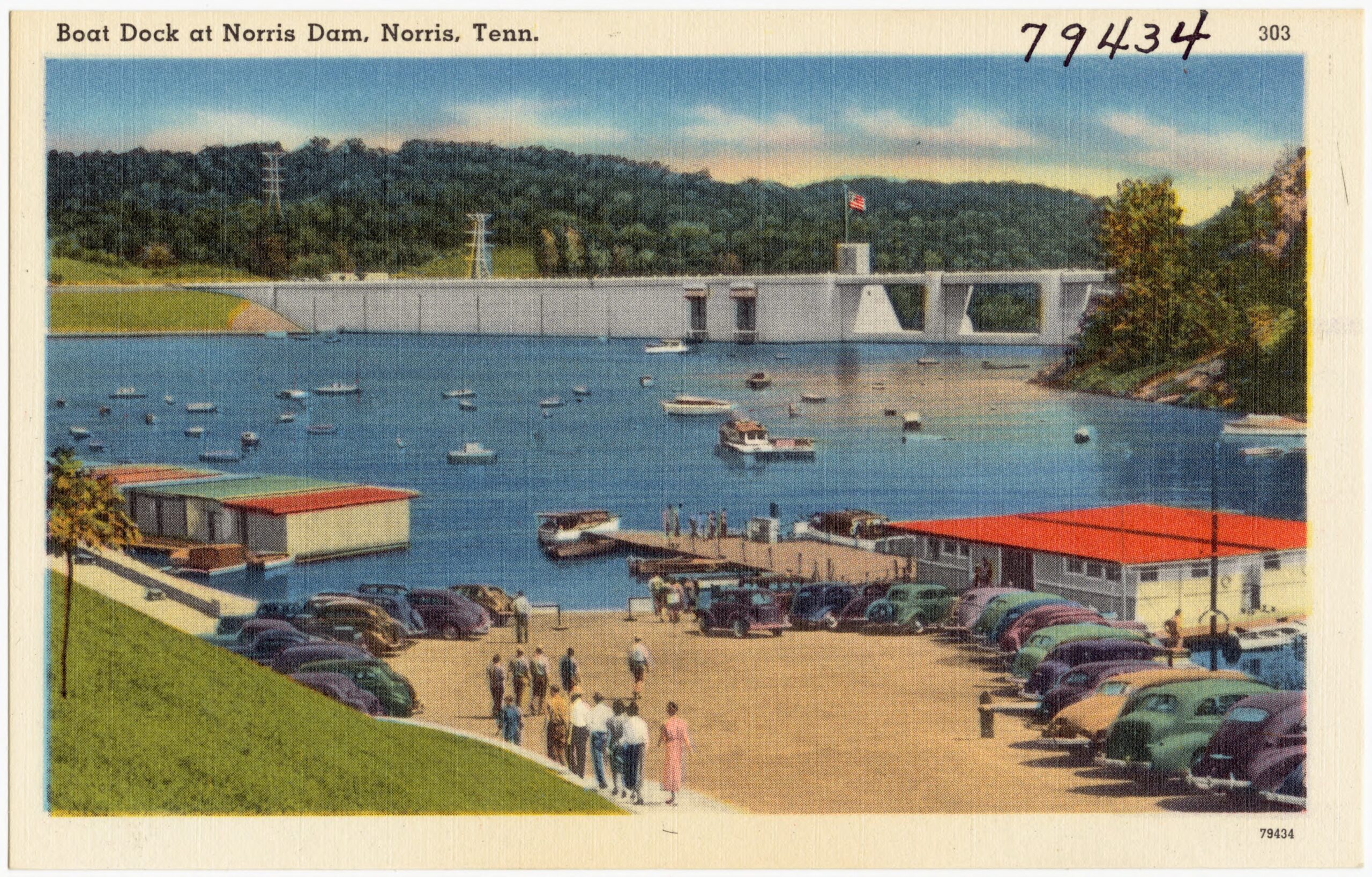
In 1936, President Franklin D. Roosevelt won reelection by successfully touting the accomplishments of his New Deal programs. A core aspect of his message was his ability to point to tangible progress and delivered infrastructure.16 In Tennessee, the Norris Dam was funded in October 1933 and completed construction in March 1936, in time to benefit FDR’s reelection.17 The Hoover Dam was completed two years ahead of schedule in March 1936, marking a landmark accomplishment that FDR touted as a symbol of the country’s progress toward economic recovery.18 In his second term, rural electrification was similarly tangible. Between 1937 and 1940, hundreds of thousands of rural families watched the lights turn on for the first time.19
By contrast, in January 2023, President Biden stood in front of the Brent Spence Bridge, which connects Cincinnati, Ohio, with Covington, Kentucky, and promised to use funds from his signature infrastructure law to finally complete the needed replacement, stating: “For decades, people have talked about the Brent Spence Bridge. But, folks, the talking is over . . . we’re finally going to get it done.”20
Yet while the talking might have been over, the permitting certainly wasn’t. The bridge replacement, which had already completed environmental review in 2012, needed to redo its environmental analysis, delaying the project’s permit until May 2024.21 Shortly after its permits were finalized, the project was sued under the National Environmental Policy Act (NEPA) and the Administrative Procedure Act (APA).22 Despite the $1.6 billion investment President Biden secured in 2022, the project failed to even break ground before he left office. The project, with a budget that has since risen from $3.6 billion to $4.39 billion, will not be open to traffic until at least 2033.23
The environmental laws of the 1960s and ’70s have made infrastructure a bad political bet. Large infrastructure might be visible and popular with the public, but fixing it takes years to plan, permit, and build. President Biden couldn’t attend ribbon cuttings for projects he funded or even point to significant progress at construction sites. Voters in 2024 did not feel the benefits of rapid development that communities felt during the rural electrification of the 1930s. In stark contrast, despite the bipartisan infrastructure law spending $42.45 billion for rural broadband development in 2021, not a single person got connected under the program before Biden left office.24 As Biden’s infrastructure coordinator Mitch Landrieu described the challenge, “It takes a long time for things to manifest themselves, and if people can’t physically see them, then why would you expect them to give credit to Biden.”25
The length of time required to deliver major infrastructure also warps the president’s sense of priority. Investing political capital to reduce a twelve-year delivery timeline to six years does nothing for a president’s reelection in four years. Reducing a project’s costs might even be politically harmful because it lowers the only thing the president can campaign on: headline investment and number of jobs. Consider how infrastructure spending on the Northeast Corridor, the passenger rail line that connects the District of Columbia with New York and Boston, focused overwhelmingly on nameplate projects like tunnels and bridges, rather than mundane but significantly more effective upgrades like track straightening.26 Because the president isn’t around to benefit from the results, it does not make political sense for him to prioritize delivering them.
How Political Meddling in Permitting Works
Permitting laws require the government to complete complex, bespoke reviews before allowing a project to move forward.27 This creates a hook for political interference because the laws require the government to affirmatively complete a lengthy review that requires technical expertise and an explicit exercise of discretion. This sets up an implied veto: if for some reason the federal agency does not complete the required review, the project in question cannot move forward. So, if an administration can find a way to hold the permit—by dragging their feet, coming up with pretextual reasons to delay, or simply sitting on their hands and ignoring project sponsors—projects can effectively be vetoed, even though the laws directing agencies to complete permits were never intended to concede such authority.
Political meddling is possible wherever a permitting process gives agencies discretion. Both procedural laws, such as NEPA, and substantive laws, such as the Clean Water Act, create a hook for meddling because they require the government to do something complex, meaning agencies have to exercise discretion when completing the review. An Environmental Impact Statement under NEPA or a Dredge and Fill Permit under Section 404 of the Clean Water Act require the preparing agency to make complex decisions based on competing considerations, in addition to expending the procedural and bureaucratic energies needed to complete the review.28 Because agencies have to exercise discretion to complete these reviews, they can easily misuse their discretion and decide that a permit needs to be studied for several years longer. One instance of this is when the Biden administration decided that LNG terminals could not be reviewed for public interest determinations until a lengthy climate impacts study was redone.29 Similarly, the first Trump administration held up Vineyard Wind’s approval for years in order to do more thorough “cumulative impacts” analysis, a portion of NEPA review that the second Trump administration now fervently denounces as excessive and not required at all.30
Current law does little to constrain a motivated administration. Even the APA, which forbids agencies from “unreasonably delaying” a permit, offers little recourse to project sponsors.31 Unreasonable delay claims are difficult to establish because courts are deferential to agencies on matters of technical review and discretionary reviews give agencies a wealth of excuses.32 Legally, proving an agency’s decision to delay a permit is pretextual is extremely difficult; even when done well, complex permits take several years. Moreover, inadequate review is frequently the culprit in cases where agencies lose lawsuits, so agencies have a built-in reason to prefer longer reviews. From a judge’s perspective, it is not clear if an extended timeline is a pretext for political interference or a legitimate administrative decision. In rare cases where unreasonable delay claims succeeded, the delay lasted more than ten years.33 A Montana drilling lease issued in 1982 languished for twenty-nine years until a court finally ruled that the government’s indefinite suspension constituted unreasonable delay.34
Even when sponsors do succeed in court, judges have no way to force agencies to act. When a court finds an agency guilty of unreasonable delay, the judge cannot approve the project’s permits; agencies are still obligated under law to complete outstanding complex technical review before they can legally make a decision on a project. In the twenty-nine-year delay of Solenex’s Montana lease, the court could only set an “accelerated schedule” for the Bureau of Land Management (BLM) to make a decision.35 Instead of finally approving the lease, BLM obstinately responded by canceling the lease instead, leading to eight years of further litigation.36
Tactics to skirt statutory limits and court reprimands are ubiquitous in the administration of permitting. For example, the Outer Continental Shelf Lands Act (ocsla) has a provision requiring the government to pay project sponsors if the government chooses to cancel an offshore lease.37 To get around paying fees, however, the Bureau of Ocean Energy Management (BOEM) often opts to “indefinitely suspend” leases rather than formally canceling them.38 Similarly, when a court struck down the Biden administration’s pause on approving LNG export terminals in July 2024, the administration responded by saying it was “complying” with the order but then chose not to approve any major LNG export terminals until the end of Biden’s term, essentially carrying out the pause anyway, just without the formal declaration of policy on the books.39
The only real limit on abuse is politics. As of March 2026, the Trump administration has relaxed its blockade against issuing new renewables permits, but this was only because Democratic senators made it a precondition for negotiating bipartisan permitting legislation which the administration wants—and not because courts or the law forced the administration’s hand.40
The only partial exception to this rule is for fully approved projects under construction, which have marginally stronger protections under law. In these cases, arbitrary uses of agency discretion can be clearly and effectively reversed; courts can vacate an arbitrary stop work order and allow construction to resume. This is possible only because a fully permitted project does not need the government to complete an affirmative approval. Because of this, several offshore wind projects have successfully overturned stop work orders and resumed construction.41 Still, the government can and has inflicted damages, causing an estimated $1–5 million cost per day for offshore wind projects that were paused during construction.42 Many other offshore wind projects were less lucky and are indefinitely paused after courts decided against their case.43
America’s Environmental Laws Weren’t Built to Stop Abuse
America’s environmental laws were written without regard for the idea that political officials might someday use the rules to block projects. In the 1960s and ’70s, environmentalist opposition grew to oppose the pollution and disruption from the industrial buildout of the late 1940s and ’50s.44 The overwhelming sentiment of the era was to curtail pollution and slow the government that environmentalists saw as authorizing too much, too quickly. The idea that the government might someday use the new rules enshrined in environmental protection laws to selectively block too many projects would have seemed completely foreign.
Environmental reform in this era aimed to put emphatic brakes on development and pollution; reform did not prioritize establishing a careful technocratic balance of regulatory incentives. The environmental laws produced by this growth-skeptical mindset were written quickly and made to be universal: NEPA applies to all major federal actions45; the Clean Air Act applies to all air pollution emitters46; the Clean Water Act to all discharges across the waters of the United States47; the Endangered Species Act applies to all endangered species regardless of region or industry.48 The laws are full of open-ended terms that have plagued regulators, project developers, and courts for decades—terms like “major federal action” and “significant effects” in NEPA, or “waters of the United States” in the Clean Water Act.49
Indeed, far from imagining the current political abuses, the environmental advocates of that era and the legislators who voted for such an agenda barely understood how the laws they brought into being would be used in practice. NEPA’s biggest provision, which requires federal agencies to prepare detailed reports (Environmental Impact Statements or EISs) analyzing the environmental impacts for every proposed federal action (project), was barely discussed in Congress.50 Judicial review of NEPA documents under the APA, the mechanism for enforcing NEPA that has led to decades of heartache and slow approvals for infrastructure projects, was not anticipated or even discussed by congressional framers or the Nixon White House.51 Policymakers also failed to foresee the Council on Environmental Quality asserting authority to issue binding NEPA regulations and massively expanding the scope of NEPA in 1978.52 In a retrospective, Professor Lynton Caldwell summed up Congress’s failure to engage with or understand the law: “The disruptive effects of the Act on the business-as-usual economy do not appear to have been foreseen by the Congress or by those interests most likely to have been affected.”53
Environmental laws also did not account for potential abuse because U.S. law in general is premised on trusting the executive branch to make a good faith effort to implement the law as intended. This assumption is baked into the Constitution’s directive that the executive branch shall “take care that the law is faithfully executed” as well as our common law tradition that relies on less-prescriptive statutory text in favor of deference to agencies and court precedent.54 The environmental laws of the 1970s followed the assumption of good faith implementation, preferring open-ended mandates to carefully balanced incentives and never considering the potential for issues like political meddling.55
But now that the executive branch is increasingly willing to break the assumption of good faith implementation, our permitting laws leave us with few solutions. As political fights around climate change, pollution, and renewables have intensified, both parties have found ways of justifying their misuse of permitting. Democrats point to the costs of climate change or the harm of pollution to excuse adding delays to fossil projects while Republicans point to reliability concerns with wind and solar.56 Both parties excuse their imposed delays by accusing the other party of “rushing” certain approvals during a previous administration.57 These reasons may or may not have merit. But each time the government excuses the misuse of permitting, the norm against misuse erodes.
The environmental reforms of the midcentury were well intended; policymakers were attempting to solve the very real problem of pollution and the costs of rapid industrial growth. And many of the laws, particularly the substantive laws, such as the Clean Water Act and the Clean Air Act, have been enormously successful in curbing pollution and improving health outcomes.58 But, unfortunately, the thought that the good intentions of the environmental laws of the era would someday be turned into pretexts for political abuse and polarization is something the framers never grasped.
The Cost of the Permitting Trap
America’s permitting laws undermine the output of the government, first by frustrating ambitions to build and then by tempting the administration to abuse rules for quick wins. Ambitious campaign promises to “build back better” turn into muddled policies of half-hearted acceleration for some projects and selective abuse of others.59 After long permitting timelines undercut the deliverable value of his infrastructure ambitions, President Biden turned to short-term tactics to slow LNG export terminals.60 President Trump campaigned on “drill baby, drill!” but so far, his lease sales have been met with low enthusiasm from developers.61 His efforts to block offshore wind, however, have yielded far more tangible results to tout in the media.62
Permitting abuse acts to compound an already discouraging and highly strained environment for investors. Energy infrastructure is funded by large up-front investments and developers contend with significant uncertainty as a matter of course, including the volatility of energy markets, the changing cost of inputs, and potential opposition from local communities.63 Energy developers operate on thin margins, and many even expect less than a 10 percent return on their investment.64 This means it doesn’t take much in the way of new costs or uncertainty to turn a yes into a no.
It also does not help developers and investors that political meddling, indefinite delays, and cancellation during construction are virtually impossible to model. Predicting energy markets and future input costs is one thing; predicting election outcomes, future political controversies, or the behavior of future political appointees is another. When Cape Wind was in development, its backers had no way to precisely model whether local opposition would be severe or whether litigants could effectively delay them. Similarly, when Vineyard Wind began planning during the Obama administration, there was no way for the developer to know that Donald Trump would be president in 2025 and would appoint Doug Burgum as Secretary of the Interior, who would make canceling offshore wind a top priority.
Political abuse of permitting is also extremely difficult to avoid or mitigate. Offshore wind projects, LNG terminals, pipelines, and most large transmission lines cannot avoid federal permits. Some types of reviews, such as the one that arises from the consultation process under the National Historic Preservation Act, affect many projects that are not even initiated by federal agencies or funded by federal dollars. And project sponsors also cannot easily mitigate the risk of having their permits revoked during construction, a potentially catastrophic outcome. There was little Keystone XL’s investors or the funders of the current slate of offshore wind projects could have done to avoid falling into the permitting trap.
The long-term cost of the dysfunctions described here will be measured by the projects that never happen. If completing permitting and partnering with the federal government is too risky, companies won’t build, and the country will see less investment and less output from future government initiatives.
Getting out of the Trap
Permitting abuse is here to stay—at least until we fix it. Fortunately, Congress has an opportunity to solve the permitting trap as part of ongoing permitting reform negotiations. Policymakers across parties must make the most of this opportunity and align the president’s incentives with building rather than obstructing.
One promising place to begin is the bipartisan freedom Act, which proposes to address the political abuse of permitting in comprehensive ways.65 Taking into account the full stack of abuse tactics is vital. If Congress were to tackle only a few of the available tactics for abuse, agencies would still be able to block projects through those means left unaddressed. For example, if any new legislation were to tighten limits on revoking permits without addressing anything else, agencies would still have the power to blockade projects by refusing to process and issue permits for disfavored projects.
Setting clear statutory timelines for all federal authorizations is the clearest way to constrain agency discretion. Timelines are a clear metric that can be measured externally. Agencies cannot excuse their way out of a set timeline and judges can easily evaluate whether a timeline has been missed: an agency either met the timeline required by law or it didn’t. The freedom Act sets time limits based on the relevant complexity of permits: routine permits, such as those for safety lights on top of windmills, have a short deadline of ninety days; complex permits, such as those called for by consultation under the Endangered Species Act (ESA) or National Historic Preservation Act (NHPA), get a one-year deadline; the longest permit, Environmental Impact Statements under NEPA, would be given two years, matching NEPA’s existing statutory deadline.66
But setting limits on agency behavior is not enough. Congress needs to make sure the new rules are enforceable. Enforcement cannot be carried out by the executive branch; the fox cannot be trusted to guard the henhouse. To address this, the freedom Act enforces its policy with sponsor-initiated lawsuits backed by new court remedies. First, the freedom Act would impose monetary fees on agencies for missing permitting deadlines: for each day that an agency is overdue on a permit, they must pay a fee to the project sponsor. These fees would be paid out of agency budgets to create a direct incentive for agencies to follow the rules.
Next, to back up the daily fees, the freedom Act would create a new remedy to allow courts to appoint contractors to finish any outstanding review. This solution would circumvent the current issue where agencies continue to drag their feet even after a court reprimands them for delay; instead, courts would appoint a third-party contractor to complete the remaining review. Once complete, the documentation would be given back to the agency and the court would order them to make an expedited decision, cutting off agency excuses based on the need to complete technical review. Third-party contractors are already heavily used in permitting document preparation; the only new component would be to have courts appoint them to finish reviews over the head of delinquent agencies.
To discourage permit revocations for ongoing construction, the freedom Act sets clear limits on stop work orders or other actions that can affect projects during construction. The bill enforces these reforms by specifying that, if agency revocations or stop work orders are overturned by a court, agencies must pay sponsors for the entire cost of delay. For example, offshore wind developers estimated the cost of recent delays at $1–5 million per day of delay.67 This reform would ensure that project sponsors are financially protected from pretextual attacks during construction when the company is most at risk.
In addition to reducing abuse, getting out of the permitting trap will require making it easier to build. Investing political capital in new projects needs to yield tangible results within the time constraints of a four-year presidential term. To achieve this, Congress should look to shorten review times in major permitting laws, most notably NEPA.
NEPA is the largest federal permit, taking an average of 4.5 years to complete review for major infrastructure projects, despite having a statutory deadline of two years.68 NEPA reviews are chronically overextended and heavily litigated, creating years of paperwork, legal delays, and uncertainty. NEPA was one of the major laws that wealthy landowners used to cripple Cape Wind.69 To pare NEPA back down to size, Congress should set clear limits on litigation and the resulting court remedies, making it harder for third-party plaintiffs to halt projects based on minor errors in documentation. By reducing the back-end litigation risk, reform would allow federal agencies to complete their reviews much faster, getting projects on the ground sooner and allowing the president to show progress during his term.
By making it easier to build and eliminating abuse, Congress can set policy that incentivizes building over obstruction. But the current window is short. If a deal doesn’t get cut, renewables will stay blocked for the remainder of the Trump administration, and the same tactics can be used against fossil fuels by the next Democratic president.
It is abundantly clear that America must build more energy projects. Clinging to the ability to slow down and block disliked projects may have short-term political appeal. But in the long run, it only serves to maintain a status quo that is becoming increasingly untenable in the face of challenges such as load growth from AI, decreased reliability from aging infrastructure, and climate change.
A better system is possible. Reform can reorient permitting around objective environmental standards and create a clear, concise process that still informs communities and seeks their input. Lawsuits need to be limited to only block projects in the most egregious cases. Reform can also eliminate political abuse and create certainty for project sponsors, ensuring investments that begin under one administration will be completed no matter who wins in the next election.
Reform must also fix the political economy of building infrastructure and the incentives associated with it. As it was in the 1930s, infrastructure should once again be a political achievement rather than a liability. Instead of forcing presidents to wait years for thousand-page reports, our laws should enable presidents who invest in infrastructure to campaign in front of ongoing construction sites and newly completed projects.
This article originally appeared in American Affairs Volume X, Number 2 (Summer 2026): 38–49.
Notes
1 Robert Walton, “Cape Wind Developers Call It Quits,” Utility Dive, December 4, 2017. Note that Cape Wind was effectively canceled in 2015 when utilities pulled their contracts to buy power from the project, but the company formally relinquished its lease in 2017.
2 Rodenhousen Chale and Polidoro LLC, “Wind Energy vs Viewshed,” RodenhausenChale.com, accessed April 2026. Cape Wind won at least twenty-six court decisions. “It is obvious that project opponents have just been using the courts to delay this important project and to try to disrupt their efforts at securing financing; it is gratifying to see, for the 26th time, their lawsuit get rejected.” Note that the “14 years” statistic is based on the time elapsed from the initiation of federal permits in 2001 to the effective cancellation of the project in 2015.
3 Miriam Wasser, “Vineyard Wind to Argue in Federal Court for Getting Back to Work ASAP,” WBUR News, January 27, 2026.
4 For the lease and EIS length, see: Bureau of Ocean Energy Management, “Vineyard Wind 1 Final Environmental Impact Statement (FEIS),” Tethys/PNNL, March 8, 2021. For the $4.5 billion figure, see Miriam Wasser, “Vineyard Wind to Argue in Federal Court for Getting Back to Work ASAP,” WBUR News, January 27, 2026.
5 Anastasia Lennon, “Vineyard Wind Sues Federal Government over Suspension Order,” New Bedford Light, January 15, 2026. Note that because of the structure of the company subsidiary, Vineyard Wind LLC would almost certainly go bankrupt but its owners, Avangrid and Copenhagen Infrastructure Partners, would not.
6 Miriam Wasser, “Vineyard Wind Sues Trump Administration for Halting Construction,” WBUR News, January 15, 2026.
7 Associated Press, “Trump Administration Pauses 5 Offshore Wind Projects on the East Coast, Citing Security Concerns,” NPR, December 22, 2025. For the renewable blockade, see: Brad Plumer and Rebecca F. Elliott, “A Trump ‘Blockade’ Is Stalling Hundreds of Wind and Solar Projects Nationwide,” New York Times, February 4, 2026.
8 Aidan Mackenzie, “How to Create Real Permitting Certainty,” Institute for Progress, February 3, 2026.
9 Jeff Brady and Neela Banerjee, “Developer Abandons Keystone XL Pipeline Project, Ending Decade-Long Battle,” NPR, June 9, 2021.
10 “Biden-Harris Administration Approves Eleventh Offshore Wind Project in U.S. History,” U.S. Department of the Interior, December 20, 2024. Vineyard Wind is an outlier and began before Biden; its planning started during the Obama administration, and the project applied for federal permits under the first Trump administration. Almost all the other current renewables projects began under the Biden administration.
11 “Dallas Fed Energy Survey — First Quarter 2025,” Federal Reserve Bank of Dallas, March 2025.
12 Darran Simon and Eliott C. McLaughlin, “Keystone and Dakota Access Pipelines: How Did We Get Here?,” CNN, January 24, 2017.
13 Miriam Wasser, “Federal Review Will Further Delay Vineyard Wind,” WBUR News, August 9, 2019. For congestion pricing in New York City, see: Dan Gearinon and Phil McKenna “Government Delays First Big U.S. Offshore Wind Farm. Is a Double Standard at Play?,” Inside Climate News, August 19, 2019.
14 Emma Newburger, “Biden Suspends Oil and Gas Leasing in Slew of Executive Actions on Climate Change,” CNBC, January 27, 2021.
15 “Biden Administration Delays Consideration of New Natural Gas Export Terminals, Citing Climate Risk,” PBS News, January 26, 2024.
16 “President Franklin Roosevelt’s Radio Address Unveiling the Second Half of the New Deal (1936),” National Archives, accessed March 2026.
17 “Promise and Progress,” Tennessee Valley Authority, June 6, 2021.
18 “Hoover Dam — Frequently Asked Questions,” U.S. Bureau of Reclamation, accessed March 2026. Note that the Hoover Dam originally began under President Hoover in 1931. While some New Deal funding did go to accelerating the project, the fact that the project finished two years ahead of time was in part due to contract incentives that predated FDR. Therefore, the Hoover Dam should be seen as a symbolic capstone of the New Deal’s ability to get things built quickly, even though FDR’s administration did not initiate the project.
19 Frank Gallant, “Flashbacks: Rural Electrification by the Numbers,” RE Magazine (National Rural Electric Cooperative Association), December 7, 2016.
20 Christopher Leach, “Biden, McConnell tout bipartisanship as reason for $1.6B Brent Spence Bridge grant,” Lexington Herald-Leader, January 4, 2023.
21 Julie Strupp, “$3.6B Brent Spence Bridge Clears Environmental Review,” Construction Dive, May 14, 2024. Note that the reason for the delay was the need to conduct supplemental review.
22 Julie Strupp, “$3.6B Brent Spence Bridge Project Sued over Environmental Concerns,” Construction Dive, October 28, 2024.
23 Matthew Thibault, “$4.4B Brent Spence Bridge Project Targets Spring Groundbreaking,” Construction Dive, March 24, 2026.
24 Emery Winter, “Has Biden’s $42B Broadband Equity Program Connected No One to the Internet?,” Snopes, November 21, 2025. Also see: “Biden-Harris Administration Announces State Allocations for $42.45 Billion,” BroadbandUSA (NTIA), accessed March 2026.
25 Jim Puzzanghera, “A N.H. Bridge Illustrates the Challenge of Biden Campaigning on His Infrastructure Law,” Boston Globe, December 5, 2023.
26 For a report on more efficient spending on the Northeast Corridor, see: Alon Levy and Devin Wilkins, “How to Build High-Speed Rail on the Northeast Corridor,” NYU Marron Institute of Urban Management, May 2025.
27 Linda Luther, The National Environmental Policy Act (NEPA): Background and Implementation (Washington, D.C.: Congressional Research Service), January 10, 2011.
28 “Overview of Clean Water Act Section 404,” U.S. Environmental Protection Agency, February 4, 2026.
29 “Fact Sheet: Biden-Harris Administration Announces Temporary Pause on Pending Approvals of Liquefied Natural Gas Exports,” White House, January 26, 2024.
30 Dan Gearino, Phil McKenna, “Government Delays First Big U.S. Offshore Wind Farm. Is a Double Standard at Play?,” Inside Climate News, August 19, 2019. Also see: Jack Nelson and Elizabeth Knauer, “Trump Administration Rescinds CEQ’s NEPA Regulations and Issues Guidance to Agencies,” Sive Paget & Riesel PC, February 25, 2025.
31 “5 U.S. Code § 706—Scope of Review,” Legal Information Institute, Cornell Law School, accessed March 2026.
32 Daniel T. Shedd, Administrative Agencies and Claims of Unreasonable Delay: Analysis of Court Treatment (Washington, D.C.: Congressional Research Service), March 21, 2013.
33 Jonathan Adler, “News Flash: Sitting on a Drilling Permit for 29 Years Constitutes ‘Unreasonable Delay’,” Washington Post, July 29, 2015. See also: “Solenex LLC v. Jewell [Case Updates],” U.S. Chamber of Commerce, June 16, 2020.
34 Adler, “News Flash: Sitting on a Drilling Permit for 29 Years Constitutes ‘Unreasonable Delay.’”
35 Adler, “News Flash: Sitting on a Drilling Permit for 29 Years Constitutes ‘Unreasonable Delay.’”
36 Amanda Eggert, “Company Gets $2.6 Million to Relinquish Oil Lease on Montana Land Sacred to Native Americans,” Montana Free Press, September 1, 2023. The BLM initially proposed to pay $31,235 in return for canceling the lease. In response, Solenex sued the BLM for an arbitrary cancellation. The district court initially agreed with Solenex, but then the appellate court overturned the ruling. In 2023, Solenex brought another suit, ultimately culminating in a $2.6 million settlement.
37 “43 U.S. Code Section 1334—Administration of Leasing,” Legal Information Institute, Cornell Law School, accessed March 2026.
38 Joshua L. Belcher et al., “Potential Implications of President Trump’s Wind Energy EO on Offshore Leasing, Development,” Holland & Knight, February 4, 2025.
39 Associated Press, “Judge Sides with 16 States, Putting on Pause Biden’s Delay of Consideration of Gas Export Projects,” NPR, July 2, 2024. Note that the Biden administration declined to approve major LNG terminals but did approve a small and unusual project, the Altamira LNG project in Mexican waters that technically required approval to allow export to countries with a free trade agreement with the United States.
40 Martin Heinrich and Sheldon Whitehouse, “Joint Statement on Permitting Reform,” U.S. Senate Energy Committee, March 4, 2026.
41 Ed Roggenkamp, et al., “Court Lifts Stop-Work Orders for Paused Offshore Wind Projects,” Greenberg Traurig Environmental and Energy Blog, January 26, 2026.
42 Seth Feaster and Dennis Wamsted, “Offshore Wind Stop-Work Orders Are Costing Consumers, Delaying Needed Electricity,” Institute for Energy Economics and Financial Analysis, January 28, 2026. Cost estimates range from $1 to 5 million depending on the project.
43 Aidan Mackenzie, “How to Create Real Permitting Certainty,” Institute for Progress, February 3, 2026. Southcoast Wind and Atlantic Shores Wind have both had their permits effectively revoked after courts granted the government’s request for voluntary remand.
44 Thomas Dietz, “Earth Day: 50 Years of Continuity and Change in Environmentalism,” One Earth (PMC), April 17, 2020.
45 Luther, The National Environmental Policy Act (NEPA).
46 “Summary of the Clean Air Act,” U.S. Environmental Protection Agency, February 23, 2026.
47 “Definition of ‘Waters of the United States’ under the Clean Water Act,” U.S. Environmental Protection Agency, November 12, 2025.
48 “Endangered Species Act,” U.S. Fish and Wildlife Service, accessed March 2026.
49 Luther, The National Environmental Policy Act (NEPA).
50 “The National Environmental Policy Act of 1969: Legislative History,” Federal Highway Administration, June 27, 2016.
51 “The National Environmental Policy Act of 1969,” Federal Highway Administration.
52 “40 CFR 1500-1508: CEQ Regulations for Implementing the Procedural Provisions of NEPA,” U.S. Department of Energy, November 29, 1978. Note that these regulations have since been repealed.
53 “The National Environmental Policy Act of 1969,” Federal Highway Administration.
54 “Take Care Clause: Overview,” Constitution Annotated, Library of Congress, accessed March 2026.
55 For further discussion, see: William H. Rodgers Jr., “The Environmental Laws of the 1970s: They Looked Good on Paper,” Vermont Journal of Environmental Law 12, no. 1 (2010): 1–42.
56 For an example of a Democratic administration defending abuse in terms of the harms of fossil fuels, see: “Fact Sheet: Biden-Harris Administration Announces Temporary Pause on Pending Approvals of Liquefied Natural Gas Exports,” White House. For a Republican administration defending abuse of clean energy in terms of energy density, see: U.S. Department of the Interior, Secretary’s Order 3438: Managing Federal Energy Resources and Protecting the Environment (Washington, DC: U.S. Department of the Interior, August 1, 2025).
57 Darryl Fears and Juliet Eilperin, “Biden Administration Suspends Oil and Gas Leases in Arctic National Wildlife Refuge,” Washington Post, June 1, 2021. Also see: Thomas Catenacci, “Biden Green Energy Project Halted by Trump Admin Relied on Rushed, Bad Science, Study Finds,” Fox News, April 21, 2025.
58 “Progress Cleaning the Air and Improving People’s Health,” U.S. Environmental Protection Agency, accessed March 2026. For discussion of the Clean Water Act’s benefits, see: David Keiser and Joseph Shapiro, “Consequences of the Clean Water Act and the Demand for Water Quality,” Quarterly Journal of Economics 134, no. 1 (February 2019): 349–96.
59 “ICYMI: President Biden Proposes Boldest Housing Plan in a Generation,” American Presidency Project (UCSB), March 14, 2024.
60 Carlos Anchondo, “3 Questions Answered about Biden’s LNG Pause,” E&E News by Politico, January 26, 2024.
61 Ishan Thakore, “Bureau of Land Management Oil and Gas Auction Gets Zero Bids in Colorado,” Colorado Public Radio, January 9, 2026.
62 Miles O’Brien, “How Trump’s Attack on Wind Power Is Impacting the Energy Industry,” PBS NewsHour, January 15, 2026.
63 WEF staff, Financing the Energy Transition: Meeting a Rapidly Evolving Electricity Demand, white paper (Geneva: World Economic Forum, January 2025).
64 “Current and Future Costs of Renewable Energy Project Finance,” National Renewable Energy Laboratory, 2020. Also see: WEF staff, Financing the Energy Transition.
65 “Permitting Reform: Harder Announces Bipartisan Introduction of Tech-Neutral Permitting Certainty Legislation,” Office of Representative Josh Harder, February 2026. See also: U.S. Congress, House, Fighting for Reliable Energy and Ending Doubt for Open Markets Act (freedom Act), H.R. 7329, 119th Cong., 2nd sess., introduced in House February 3, 2026.
66 U.S. Congress, House, Fighting for Reliable Energy and Ending Doubt for Open Markets Act (freedom Act).
67 Feaster and Wamsted, “Offshore Wind Stop-Work Orders Are Costing Consumers, Delaying Needed Electricity.”
68 For the figure of 4.5 years, see Council on Environmental Quality, “Environmental Impact Statement Timelines (2010–2018),” Executive Office of the President, June 12, 2020. For the updated study, see: Council on Environmental Quality, “Environmental Impact Statement Timelines (2010–2024),” Executive Office of the President, January 13, 2025. Note that the updated study shows an average time of 4.4 years when the measuring methodology is standardized between the two reports (the measure used here is the time elapsed from the Notice of Intent to the Record of Decision).
69 “Environmental Groups Bring ESA Suit Against First U.S. Offshore Wind Project,” Nossaman LLP—Endangered Species Law & Policy, June 29, 2010.