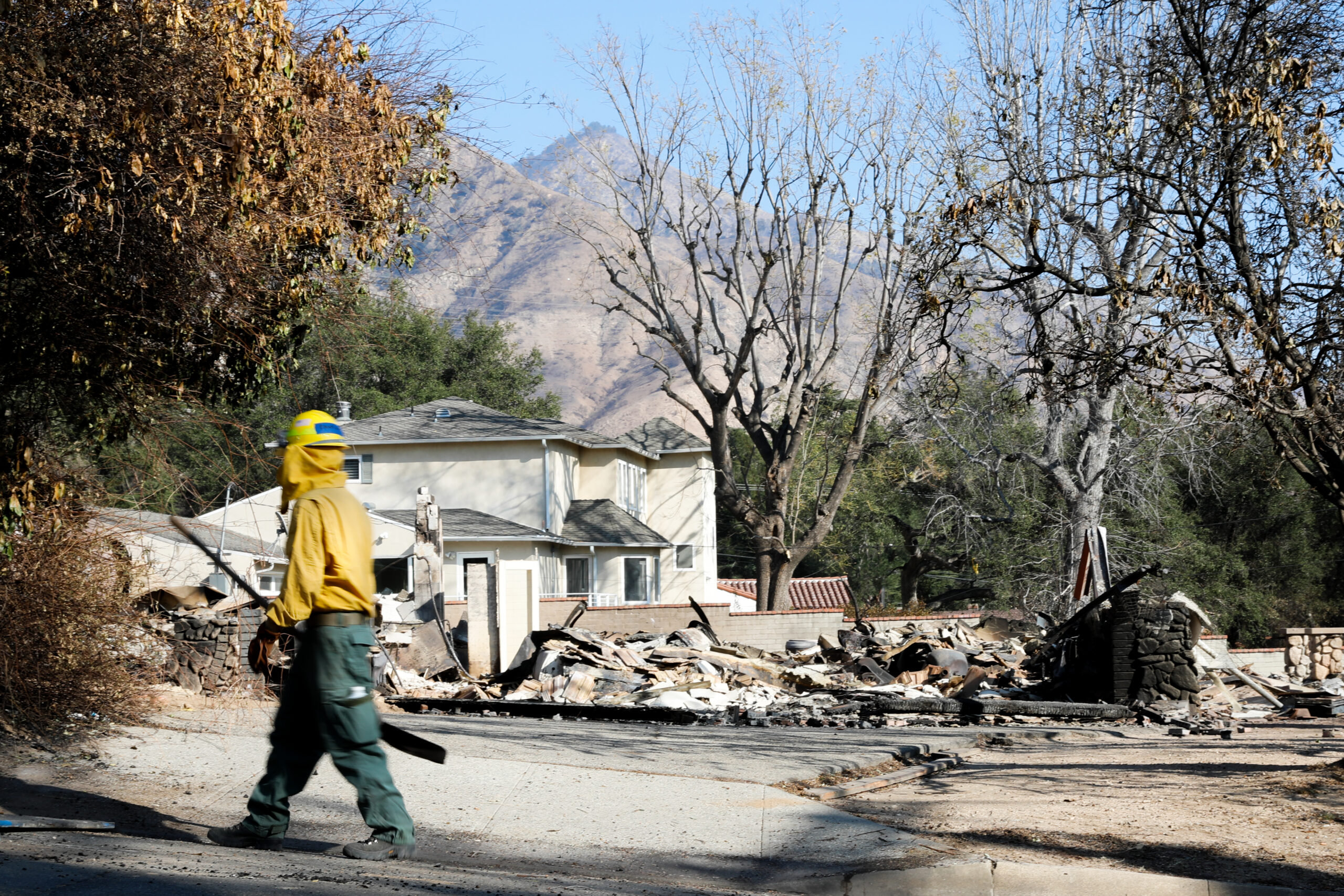
The American housing debate still appears deceptively familiar: build more homes, loosen zoning restrictions, accelerate permitting, reduce construction costs, and help households qualify for mortgages. These goals remain important, especially in states where housing supply has failed to keep up with population and income growth. But they no longer fully capture what housing affordability now entails. A home must not only be permitted, built, purchased, and financed. It must also be insured.
That requirement is becoming harder to satisfy. Homeowners insurance, once a routine escrow item, has become one of the main channels through which physical risk enters the household budget. Rising premiums arrive as higher monthly payments, wider deductibles, narrower coverage, nonrenewal notices, and new difficulties closing on a mortgage.
The shift is national. Federal data show that average homeowners insurance premiums rose 8.7 percent faster than inflation from 2018 to 2022, with homeowners in the highest-risk ZIP codes paying average premiums 82 percent higher than those in the lowest-risk ZIP codes.1 A recent study using more than seventy-four million mortgage-escrow-inferred premiums finds that average annual premiums rose from $1,690 in 2017 to $2,750 in 2024, a 28 percent inflation-adjusted increase; the same study finds that premium increases are being capitalized into home values, reducing home price growth by more than $40,000 in the most exposed ZIP codes.2 This is not merely an insurance story: it encompasses housing, development, and, increasingly, infrastructure.
The deeper issue is simple: Americans want affordable homes, continued development, and resilient infrastructure, but they have not decided who should bear the rising cost of the risks attached to them. Homeowners want lower premiums. Insurers want prices that reflect expected losses, uncertainty, reinsurance costs, and the cost of capital. Regulators want affordability and availability without insurer insolvency. Builders want predictable project costs. Lenders want collateral that remains protected. Local governments want growth and a stable property tax base.
But the hailstorm, wildfire, hurricane, flood, or severe convective storm does not negotiate. The cost must go somewhere. It may appear as a premium, a deductible, a nonrenewal, a residual market assessment, a utility bill, a lower home price, a public subsidy, or an uninsured loss. Insurance is where that cost is increasingly becoming visible.
The policy temptation is to treat high premiums as the problem itself. Sometimes that instinct is understandable. Insurance markets require regulation, and households cannot easily evaluate rate filings, insurer solvency, policy language, or catastrophe models. But if rising premiums reflect rising expected losses, correlated disaster risk, higher rebuilding costs, or more expensive reinsurance, then suppressing premiums alone does not solve the problem. It merely changes who pays, when they pay, and how transparent the payment is.
Insurance as Housing Finance
A household does not buy a home price. It buys a monthly obligation. Principal, interest, property taxes, insurance, utilities, maintenance, HOA fees, and future repairs all enter the affordability calculation. A fixed-rate mortgage can stabilize principal and interest, but it does not stabilize insurance, taxes, or maintenance. Insurance contracts renew frequently, usually annually, exposing homeowners to recurring repricing.
That distinction matters. A buyer who barely qualifies for a mortgage may be priced out not by the purchase price alone but by the insurance quote that arrives before closing. A current homeowner with a fixed-rate mortgage may still see the escrow payment rise because the insurance component has increased. A seller may discover that the buyer’s lender will not close without coverage that has become expensive or difficult to obtain. A builder may secure land and permits, only to face future buyer uncertainty because the finished homes must be insured.
Recent evidence shows that these channels are economically meaningful. One study of private homeowners insurance finds that a 10 percent increase in insurance prices lowers housing prices by roughly 6.5 percent, with stronger effects in markets where buyers rely more heavily on mortgage financing.3 Another study of flood insurance finds that higher insurance costs reduce mortgage take-up, confirming that insurance prices affect not only asset values but also access to credit.4
For mortgage-dependent households, insurance is not optional. Lenders require continuous coverage to protect the collateral. A cash buyer may choose to go uninsured, although doing so is risky. A mortgaged buyer usually cannot. Insurance therefore operates as part of the price of credit. As premiums rise, more of the buyer’s borrowing capacity is consumed by insurance, leaving less available for the house itself.
This is why rising insurance costs are not merely a household finance problem but a development problem as well. If homes become difficult to insure, they become difficult to finance. If they become difficult to finance, they become more difficult to sell. If they become more difficult to sell, values may fall or the market may become less liquid. If enough properties are affected, local tax bases, construction pipelines, and infrastructure plans are affected as well.
Premiums are rising for several reasons at once: replacement and reinsurance costs have increased; severe weather losses have grown, and catastrophe models are being updated; more people and more expensive structures are located in risky places. Insurers must hold capital against correlated losses.
That last point is crucial. A house fire affecting one property is largely idiosyncratic. A wildfire, hurricane, or regional hailstorm is not. It can produce thousands of claims at once. To remain solvent, insurers must either hold more capital or buy reinsurance and catastrophe protection. When the global price of catastrophe risk rises, the cost eventually reaches homeowners.
Recent evidence using mortgage escrow data finds that higher construction costs explain about 35 percent of the increase in homeowners premiums after 2017, while the increasing cost of disaster risk explains about 20 percent. The same evidence shows that U.S. property catastrophe reinsurance prices and catastrophe bond rates doubled between 2018 and 2024, and that the reinsurance shock alone raised 2024 annual premiums by $425 in the top decile of catastrophe-exposed ZIP codes.5
This means that insurance premiums are signals that indicate expected losses, uncertainty, the cost of rebuilding, and the cost of transferring tail risk. Policymakers can suppress those signals, subsidize them, spread them across policyholders, or push them into public residual markets. But they cannot make the underlying risk disappear. The question, then, is not whether insurance should be cheap or expensive in the abstract; it is whether housing and development policy can reduce the underlying losses that make insurance costly, while preserving enough market discipline to avoid building future liabilities into the landscape. Texas and California test that proposition from opposite directions: one where the market still functions but affordability is eroding and another where availability itself has become the crisis.
Texas: The Affordability Model Under Strain
Texas is not usually treated as a housing cautionary tale. It is more often presented as the opposite of California: a state that builds, grows, and remains relatively affordable. Its major metropolitan areas have absorbed households and firms seeking jobs, space, and lower housing costs. Dallas–Fort Worth, Houston, Austin, and San Antonio have all benefited from the perception that Texas offers the American bargain that coastal California increasingly fails to provide.
But Texas affordability has always been more complicated than the purchase price suggests. The state has no income tax, but it relies heavily on property taxes. It has abundant construction, but much of that construction occurs in places exposed to hail, wind, hurricanes, flooding, severe convective storms, and occasional winter storms. Its homes may look inexpensive compared with coastal California, but the monthly carrying cost can surprise buyers once taxes and insurance are included.
The Texas Department of Insurance reports 8.23 million active homeowners policies in 2025 and an average annual homeowners premium of $3,291 in 2024, about $274 per month before deductibles, coverage gaps, or separate flood coverage where needed; the market remains large and competitive, with $19.75 billion in direct premiums written in 2025 and 157 companies across eighty-one groups.6 Yet competition has not prevented major rate increases. Statewide homeowners rate changes averaged 10.8 percent in 2022, 21.1 percent in 2023, 18.7 percent in 2024, and 4.3 percent in 2025.7
These figures do not mean every Texas homeowner faces the same increase. Insurance varies by roof age, location, insured value, deductible, prior claims, wildfire exposure in some regions, hurricane risk along the coast, and vulnerability to hail or severe thunderstorms. But the broad direction is clear. The cost of protecting Texas homes from physical risk is rising.
Texas is certainly not handicapped when it comes to building; rather, the problem is that what it builds may become more expensive to own. This is a different kind of housing constraint from California’s. The state has robust construction capacity, and its private insurance market has not retreated from high-risk localities in the same way that California’s has in wildfire-prone areas. In that sense, Texas still has a more functional development model.
But functionality is not the same as affordability. A private insurance market can remain available while delivering premiums that strain household budgets. Indeed, that is the Texas dilemma. If insurers are allowed to price risk, coverage may remain available, but premiums may rise enough to weaken affordability. If regulators suppress rates too aggressively, insurers may restrict writing or exit, creating the availability problem now visible in California.
Texas exposes a harder truth: even a pro-growth state cannot build its way out of physical risk. The state’s development model depends on converting land, infrastructure, and population growth into attainable homeownership. Rising insurance costs do not stop that model immediately. Builders continue to build, buyers continue to move, and lenders continue to lend. But the monthly affordability advantage begins to narrow.
Consider a middle-class household moving from California to North Texas. The purchase price of a home may look reasonable compared with Los Angeles, San Diego, or the Bay Area. But the household may also face high property taxes, a rising insurance premium, roof-related deductibles, and future renewal uncertainty. The comparison changes when the household examines the full escrow payment rather than the listing price.
The same logic applies along the Gulf Coast, where windstorm and flood exposure complicate the apparent affordability of housing. A home in a fast-growing coastal or near-coastal community may be cheaper than a California home by purchase price, but the cost of insuring wind, water, and rebuilding risk can be substantial. Inland metropolitan areas face their own insurance pressures from hail and storms. Roof losses, in particular, have become an important driver of claims and underwriting attention.
Texas policymakers should therefore resist two temptations. The first is complacency: assuming that because Texas builds more than California, it has solved affordability. The second is rate suppression: assuming that insurance affordability can be created simply by restraining premiums. Texas’s advantage is that its insurance market still functions comparatively well. The task is to preserve that functionality while reducing the losses embedded in the state’s growth model.
The more durable solution is risk reduction. Stronger roofs, hail-resistant materials, wind-resistant openings, better drainage, coastal mitigation, and more resilient construction should be treated not merely as building details but as housing affordability tools. A roof that survives hail is not just a better roof. It is a claim that does not have to be paid, a premium increase that may be avoided, and collateral that remains protected. A coastal home built to withstand wind is not only safer but easier to insure and finance.
Texas has room to lead because it still has a large and competitive market. The state can encourage verified mitigation credits, clearer disclosure of insurance costs before purchase, and building practices that reflect the risks Texas actually faces. The aim should not be to make insurance in Texas artificially cheap but to make homes in the state less costly to insure.
California: When Availability Becomes the Price
California begins from the opposite direction. Housing was already expensive before the recent insurance crisis. In many coastal and high-demand regions, land use restrictions, environmental review, local opposition, permitting delays, and high construction costs contributed to a market in which middle-income households struggled to buy or rent near jobs.
The state has recently tried to reverse some of this damage. Accessory dwelling units have expanded. State housing mandates have become more aggressive. Some local restrictions have been preempted. These reforms may help. But insurance threatens to weaken them. A housing policy that increases theoretical supply may disappoint if the resulting homes are difficult or expensive to insure.
California’s insurance problem is often misunderstood because the statewide average premium does not look extreme. The California Department of Insurance reports an average homeowners premium of $1,571, close to the national average of $1,512.8 But that average masks the deeper issue: availability. The same state data report 8.30 million homeowner policies, excluding FAIR Plan policies; 662 ZIP codes in distressed areas; and 668,609 FAIR Plan homeowner and commercial policies in December 2025.
The FAIR Plan exists for homeowners and businesses that cannot find coverage in the traditional market. Its growth is therefore not evidence of a healthy market but a sign that ordinary coverage has become harder to obtain in parts of the state.
Evidence from the California wildfire insurance market is consistent with this pattern. Real homeowners premiums rose 23.3 percent statewide from 2017 to 2022, after the destructive 2017 and 2018 wildfire seasons. Over the same period, admitted-market policy counts fell in the highest-hazard ZIP codes, participation in the California FAIR Plan rose after 2018, and insurer-initiated nonrenewals increased in high-hazard areas after 2019.9
This is the California affordability problem in insurance form. A buyer may be able to afford a house only if the lender accepts the insurance coverage. A seller may lose qualified buyers if coverage is difficult to obtain. A condominium association may face sharply higher master policy costs. A builder may secure legal permission to construct units but still face uncertainty over whether future owners can obtain affordable coverage.
The distinction between price and availability is crucial. A regulator can limit approved rate increases. That may hold down visible premiums for a time. But if approved rates do not compensate insurers for expected losses, uncertainty, reinsurance, and capital costs, insurers have other options: they can stop writing new business, tighten underwriting, nonrenew policies where allowed, or shift capital to other states. The premium may remain politically acceptable, but the market becomes less available.
California is now trying to manage this tradeoff through regulatory reform. Its Sustainable Insurance Strategy allows greater use of forward-looking catastrophe models and reinsurance costs in rate filings, while requiring insurers that use those tools to write more policies in wildfire-distressed areas. The state says insurers using catastrophe modeling or accounting for reinsurance costs must write at least 85 percent of their statewide market share in wildfire-distressed areas.10 The bargain is clear: more realistic pricing in exchange for broader availability.
That bargain is defensible. A system that allows insurers to price forward-looking risk but imposes no obligation to serve distressed markets may simply produce higher prices. A system that demands availability but denies insurers the ability to price risk may push insurers out. California is attempting to link the two.
Even better rate regulation will not solve California’s problem by itself. Wildfire risk touches on land use, vegetation, utilities, building codes, and infrastructure, among other factors: insurance transmits the cost without doing anything to eliminate the underlying hazard.
There is evidence that mitigation works. California wildfire building codes have been found to reduce average structure loss risk during a wildfire by about 15 percentage points, or roughly 40 percent, compared with reliance on voluntary action alone. The codes also reduce risk to neighboring homes, consistent with reduced structure-to-structure spread.11 That evidence matters because wildfire risk is not purely private. One home’s vulnerability can increase another home’s risk. Dense neighborhoods in fire-prone areas can create shared exposure. Under such conditions, building standards and mitigation rules are not merely forms of consumer protection. They solve a coordination problem.
California’s housing reforms should therefore be judged not only by how many homes they authorize, but by whether they produce insurable homes. More housing in lower-risk, infrastructure-ready areas can improve affordability while reducing future insurance stress. More housing in high-risk areas without mitigation may expand nominal supply while creating future insurance and disaster-relief liabilities.
California needs more housing. But it needs housing that can be insured.
Two Models, One Constraint
The standard comparison between Texas and California remains useful. Texas builds more; California restricts more. Texas has absorbed population growth more easily; California has pushed many households toward unaffordable rents, long commutes, or exit. Texas relies more on market-led expansion; California relies more on regulation and reform after scarcity has already become severe.
Insurance does not erase this contrast but sharpens it. Texas shows that housing supply alone does not guarantee affordability when the carrying cost of ownership rises. A state can build many homes and still expose households to rising premiums, deductibles, property taxes, and climate-sensitive maintenance costs. The result is not a classic supply shortage but a monthly payment problem.
California shows the other side of the same constraint. Housing reform alone cannot restore affordability if insurance availability deteriorates. A state may make it easier to permit housing, legalize more units, and push local governments to approve development. But if buyers cannot obtain stable insurance, lenders cannot finance purchases, and builders cannot assure future marketability, then supply reform is incomplete.
One state faces the rising price of risk in a mostly functioning market. The other faces a visible availability crisis in a more constrained market. The mechanisms differ, even as the underlying constraint is the same: physical risk must be financed.
This is the emerging financial dynamic that housing policy has been slow to absorb. The cost of risk may appear as a premium, deductible, nonrenewal, residual market assessment, higher utility bill, lower home value, or public subsidy. But it appears somewhere. The policy question is whether states reduce that risk, honestly price it, or shift it until households can no longer afford the result.
Infrastructure as a Force Multiplier
Infrastructure should remain secondary to the homeownership question, but it strengthens the analysis because homes do not exist in isolation. They depend on electricity, water, roads, drainage, communications, schools, and emergency services. The cost of insuring, hardening, and operating those systems eventually returns to households through utility bills, taxes, fees, rents, or home prices.
Transmission lines are the clearest example in California. Utility infrastructure can create catastrophic wildfire liability. Hardening, undergrounding, vegetation management, and liability financing all impose costs, but failure to invest may impose larger costs later through fires, insurance losses, utility bills, and public intervention. A privately owned home sits inside a public and regulated risk environment.
This point also helps explain why insurance cannot be treated as separate from development. A house may be built with private capital, financed by a private lender, and insured by a private company. Yet its risk depends on surrounding vegetation, firefighting capacity, road access, water infrastructure, and the reliability of electric equipment nearby. Public and regulated infrastructure help determine private insurability.
Texas faces a different infrastructure version of the same problem. Rapid growth requires continued investment in drainage, distribution systems, coastal protection, and grid resilience. Storm hardening raises costs upfront, but failure to invest can raise future insurance and recovery costs. Development that appears cheap because it postpones resilience may become expensive after the next storm.
The infrastructure point must reinforce rather than overtake the housing argument. Insurable development is not only about the house but about the systems that make the house viable.
Toward Insurable Development
There is no cheap way out of the insurance problem. Government can suppress premiums, subsidize them, spread them across policyholders, shift them to taxpayers, or delay them through residual markets. But it cannot repeal the underlying risk.
The first priority for policymakers interested in realizing the promise of insurable development is to reduce underlying losses. In Texas, that means stronger roofs, better wind resistance, improved drainage, coastal mitigation, and building practices that reflect severe convective storms, hail, hurricanes, and flooding. In California, it means wildfire-resistant construction, defensible space, ember-resistant vents, fire-resistant materials, and better protection of utility grids.
The second priority is to make mitigation financially meaningful. Homeowners and builders need to know which investments reduce risk and whether those investments will be reflected in premiums. If a homeowner spends thousands of dollars on a fire-resistant roof or defensible space but sees little improvement in pricing or availability, the incentive weakens. Insurance regulation should require credible mitigation credits where the evidence supports them, and those credits should be communicated clearly. In Texas and California, insurers should be able to reward verified loss reduction, and homeowners should be able to understand the financial return on resilience.
The third priority is to modernize insurance regulation without abandoning consumer protection. Regulators should allow credible forward-looking catastrophe models and appropriate reinsurance costs in rate filings. But that permission should be paired with transparency, model review, mitigation recognition, and enforceable commitments to serve distressed areas. California’s recent reform attempts to make this bargain explicit. Texas faces a different task: preserving a competitive market while ensuring that premiums reflect actual loss reduction when homeowners and builders invest in resilience.
The fourth priority is to keep residual markets as backstops rather than substitutes. FAIR Plans and wind pools are necessary when private coverage is unavailable. But if residual markets are underpriced or allowed to grow without discipline, they can weaken private markets and create hidden liabilities. Public plans should be transparent, adequately capitalized, and paired with mitigation requirements. A residual market should help households maintain access to coverage. It should not become a permanent substitute for reducing risk or restoring a functioning private market.
The fifth priority is to consider public-private catastrophe risk-sharing at the reinsurance layer. As noted, the hardest insurance problem is not ordinary claims but correlated tail risk. Private reinsurance and catastrophe-bond markets can absorb some of this risk, but they often demand high compensation when losses are correlated, ambiguous, or hard to model.
Evidence from a risk-based public reinsurance program for cyclone damage shows that public reinsurance reduced premiums by up to 23 percent in the highest-risk ZIP codes and increased availability by 12 percentage points, not by simply subsidizing homeowners but by reducing frictions in the market for catastrophe tail risk.12 The United States should be cautious about direct imitation, but the lesson is important. Sometimes the most effective intervention is upstream, where insurers obtain capital and reinsurance, rather than downstream through retail price caps.
The sixth priority is to integrate insurance into housing policy. Zoning reform and permitting reform remain important priorities, especially in California. But housing policy should ask a question it has too often ignored: will the homes being encouraged be insurable at a price ordinary households can afford? Building more homes in high-risk areas without mitigation may expand nominal supply while increasing future insurance and disaster relief liabilities. Building more densely in lower-risk, infrastructure-ready areas may do more for long-run affordability. Texas should ask the same question differently. Its policy challenge is to ensure that the growth it already permits does not create a larger future insurance burden.
The seventh priority is better disclosure. Buyers should know likely insurance premiums, deductible structures, coverage exclusions, and nonrenewal risk before purchase. A home that appears affordable before insurance may become unaffordable after renewal. Better disclosure would not solve the problem by itself, but it would make the true cost of risk visible before households commit their savings.
This is especially important for interstate movers, who may compare purchase prices and taxes while underestimating insurance. It is also important for first-time buyers, who often learn about insurance late in the closing process, when they have little bargaining power.
Finally, public assistance should be targeted. Broad premium suppression often benefits high-risk and high-value properties as well as households in need. Targeted vouchers, mitigation grants, low-interest resilience loans, or tax credits may be more efficient and more equitable. The policy objective should be to help households manage unavoidable costs while reducing future losses.
Texas and California require different policy mixes. Texas should preserve its competitive private market while aggressively reducing the losses embedded in its growth model. California should continue housing reform while restoring a functioning private insurance market and reducing wildfire losses. Neither state can solve the problem by pretending risk is lower than it is.
The Next Housing Policy Must Include Insurability
Texas has succeeded because it has allowed growth. But a state that grows rapidly must also manage the risks that growth accumulates. If more homes are built in places exposed to hail, wind, flooding, or coastal storms, then the cost of those risks will eventually appear in premiums, deductibles, infrastructure costs, and public recovery obligations. The Texas model can remain strong only if it treats resilience as part of affordability.
California has failed for many years to build enough housing in the places where people want to live. Recent reforms are necessary, but they will not be sufficient if the insurance market continues to retreat from high-risk areas. California needs more housing, but it also needs a functioning insurance market and a credible strategy for reducing wildfire losses and supporting future growth. Housing abundance that cannot be insured will not deliver the affordability the state needs.
The next stage of American housing policy must include insurability as a central consideration, for a state development model that ignores insurance costs will eventually discover that physical risk has become a financial barrier to growth.
This article originally appeared in American Affairs Volume X, Number 3 (Fall 2026): 111–23.
Notes
1 U.S. Department of the Treasury, Federal Insurance Office, U.S. Department of the Treasury Report: Homeowners Insurance Costs Rising, Availability Declining as Climate-Related Events Take Their Toll (Washington, D.C.: U.S. Department of the Treasury, 2025).
2 Benjamin J. Keys and Philip Mulder, Property Insurance and Disaster Risk: New Evidence from Mortgage Escrow Data, NBER Working Paper no. 32579 (Cambridge, Mass.: National Bureau of Economic Research, November 2025).
3 Evan M. Eastman, Kyeonghee Kim, and Tingyu Zhou, “Homeowners Insurance and Housing Prices,” SSRN, May 30, 2026.
4 Shan Ge, Ammon Lam, and Ryan Lewis, “The Effect of Insurance Premiums on the Housing Market and Climate Risk Pricing,” SSRN, March 17, 2025.
5 Keys and Mulder, Property Insurance and Disaster Risk.
6 “Texas Homeowners Insurance Market Overview,” Texas Department of Insurance, accessed June 2026.
7 “Auto and Home Insurance Rate Changes,” Texas Department of Insurance, January 22, 2026.
8 “Sustainable Insurance Strategy,” California Department of Insurance, accessed June 2026.
9 Judson Boomhower et al., How Are Insurance Markets Adapting to Climate Change? Risk Classification and Pricing in the Market for Homeowners Insurance, NBER Working Paper no. 32625 (Cambridge, Mass.: National Bureau of Economic Research, February 2025).
10 “Reform Made Real: California Department of Insurance Completes Final Evaluation of Innovative Forward-Looking Model to Address California’s Coverage Crisis,” California Department of Insurance, accessed June 2026.
11 Patrick Baylis and Judson Boomhower, “Mandated versus Voluntary Adaptation to Natural Disasters: The Case of US Wildfires,” Journal of Political Economy 134, no. 3 (2026): 895–948.
12 Adam Solomon, “When Insurance Markets Fail: Catastrophe-Risk Frictions and Public Reinsurance,” SSRN, May 15, 2026.