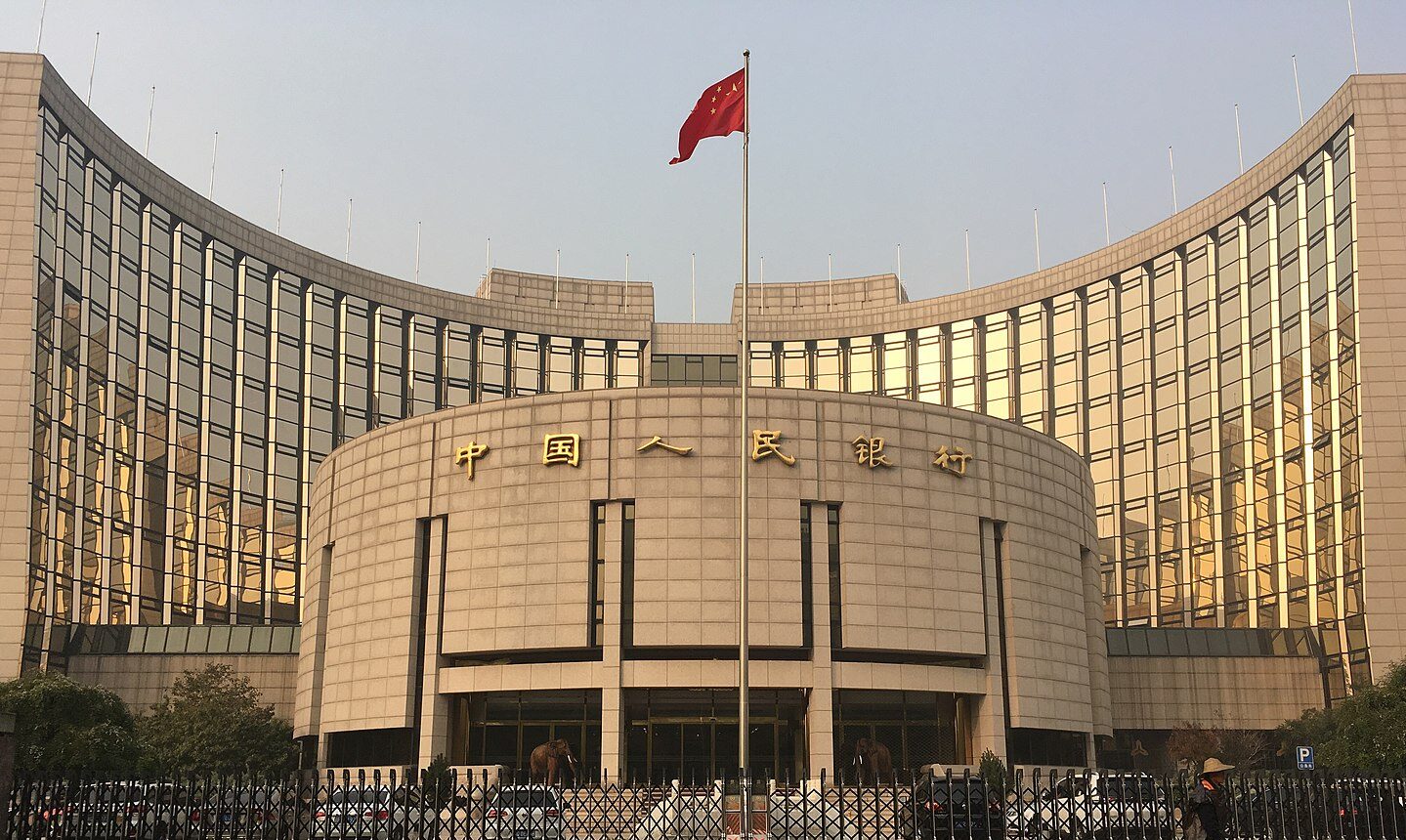
From the early 1990s to the present day, Chinese policy speeches and documents regarding the economy have been rife with the expression hongguan tiaokong 宏观调控. Translating this phrase into English is not entirely straightforward. Hong 宏 means large, wide, vast, and guan 观 means to watch, to view, as well as appearance. Their combination in 宏观 hongguan corresponds to the notion of being macroscopic, or macro-level, as in the macroeconomy (hongguan jingji). The third character tiao 调 is short for tiaojie, meaning to adjust or to regulate, while the fourth character kong 控 is short for kongzhi, to control. A literal translation of hongguan tiaokong might therefore be “macroscopic regulation and control,” or “macro-level control and adjustment.” More convenient alternatives that have occasionally been used in official translations are “macroeconomic control” and “macro-control.” For the sake of brevity, the latter will be used throughout this article.
The essential idea behind macro-control is that of making the state responsible for wielding authority over major developments in the national economy in a coordinated way. This involves assuming responsibility for guiding the level of key macroeconomic aggregates including GDP, broad money, inflation, investment, savings, employment, imports, exports, and the balance of payments. It also calls for articulating this macroeconomic balancing act within the context of development planning writ large, which includes China’s successive five-year plans. A constant leitmotif of macro-control discourse is therefore “comprehensive coordination” (zonghe xietiao) across administrative actors and policy domains, aiming in particular to bridge the triad of fiscal policy, monetary policy, and industrial policy.
The phrase “macro-control” was originally endorsed by the Chinese Communist Party on the occasion of the Fourteenth Congress in 1992. The following year, it was added to the constitution of the People’s Republic of China. In 2007, it was inserted into the Communist Party’s Charter. Given its official status as a fundamental tenet of China’s economic model over the past three decades, it is nigh impossible for scholars and officials within China to reject macro-control as a principle of governance. This does not mean, however, that there is widespread consensus in China on the direction of macro-control—far from it.
Ever since the coinage of the phrase, Chinese economists, policy experts, and leading cadres have entertained competing views as to what macro-control ought to look like. For example, to illustrate some of these disagreements: Should macro-control be devoted primarily to maintaining a stable balance of national-level financial aggregates, or should it aim above all to mobilize financial resources behind the developmental goals of the state? Should it be implemented foremost via price signals (e.g., interest rates) or should it make use of more direct controls over economic activity? Should the central bank play a leading role in carrying it out or should macro-control rely on several equally influential central government actors working in cooperation? And not least, to what extent are micro-level interventions targeting specific regions, sectors, or firms justifiable in the name of implementing macro-control?
The fact that macro-control encompasses a number of divergent possibilities has made it a source of significant expert disagreement and bureaucratic rivalry over the fate of economic policy in China. During the past few decades, however, some conceptions of macro-control have won out while others have been marginalized. In brief, since the mid-2000s, macro-control has relied primarily on granular interventions over the volume and allocation of financial capital in the economy, most notably (but not limited to) bank lending. In contrast to such direct credit controls, fiscal adjustments and market-based monetary policy instruments have played a secondary role. The reality of macro-control under the leaderships of Hu Jintao (2002–12) and Xi Jinping (2012–) has therefore belied the reformist vision, born in the 1980s, of a steady convergence with the policy paradigms of the West.
Early Days of Macro-Control
Although macro-control today appears as an embodiment of the distinctly statist character of the Chinese political economy, it is one of the ironies of China’s reform history that this phrase was originally coined in the mid-1980s in a bid to emulate the macroeconomic policy framework of advanced capitalist nations. An account of the birth of hongguan tiaokong can be found in Julian Gewirtz’s study of the influence of Western economists on Chinese reformers during the first decade of “Reform and Opening.”1 According to Gewirtz’s account, the phrase was first conjured up by Edwin Lim (a World Bank official) and Wu Jinglian (one of China’s most prominent economists of the past decades) to translate the expression “macroeconomic management” used by U.S. Keynesian economist James Tobin during a talk at an international conference convened on a cruise ship on the Yangtze River in September 1985. Tobin was impressing on his Chinese audience the workings of U.S. monetary policy, in particular the balancing of aggregate supply and demand and the maintenance of price stability.
After this episode, the phrase hongguan tiaokong rapidly took on a life of its own in the milieu of Chinese economists and policymakers. Between the mid-1980s and the early 1990s, several academics and officials—including Liao Jili,2 Guo Shuqing,3 and Chen Yuan4—penned articles and books about it, seeking to define its scope in ways concordant with their respective policy preferences. Despite divergences regarding the specific content of macro-control, the expression itself unequivocally evoked the modernization of China’s policy framework in the gradual transition away from the collectivist system of the Mao era.
To many reform-minded Chinese economists, including Wu Jinglian, macro-control further held the promise of steadily aligning macro-economic policy with Western practice. This entailed, among other elements, assigning responsibility for monetary policy to a powerful central bank tasked with overseeing the money supply via interest rates and other market-based interventions. In turn, such a policy framework could only operate effectively if the economic landscape were thoroughly marketized in the first place, making financial institutions fully responsive to price signals coming from the central bank. From such a pro-market standpoint, amid the backdrop of China’s only partially reformed economy of the 1980s, the choice of the compound word tiaokong (adjustment and control) also served to sell the market reform proposition to China’s top leadership, offering a promise of “control” in contradistinction to the powerlessness of laissez-faire. Zhao Ziyang, briefly general secretary of the Communist Party from 1987 to 1989, was visibly receptive to this notion, including, in passing, the expression “macro-level regulation” (hongguan tiaojie) in his report to the Party’s Thirteenth Congress in October 1987.5
The formal enshrinement of “macro-control” at the apex of China’s policy discourse, however, would only take place five years later, on the occasion of the Fourteenth Congress in October 1992. In the interval, Zhao had been abruptly removed from office in June 1989 as a result of Tiananmen, to be replaced by Jiang Zemin. Anticipated by Deng Xiaoping’s Southern Tour in early 1992, the Fourteenth Congress endorsed for the first time the notion of a “socialist market economy.” In practical terms, this amounted to accepting the principle of market allocation throughout the economic system. This was not meant to make Chinese economic planning as such disappear, but instead to bring about a new relationship between plan and market, the link between the two being effected by macro-control. In the words of Jiang’s report to the Fourteenth Congress: “On the basis of macro-control, our socialist country is capable of integrating the people’s present interests with their long-term interests, and the interests of some with the interests of all, taking advantage of the strengths of planning as well as markets.”6
Such a statement did not come out of nowhere. It reflected the economic arguments that reform-minded policy experts had already been making for several years. Describing these expert insiders as “intellectuals-cum-officials-cum-cadres,” Julian Gruin observes that by the early 1990s, “their role within the policymaking process was to encourage the increasing expertise and concomitant rationalization of economic thinking, coalescing around the idea of ‘macroeconomic control’ [宏观调控] as the fundamental basis upon which to realize a ‘socialist market economy.’”7
In the conception then endorsed by the Communist Party, which persists to the present day, macro-control and market allocation are understood as forming a pair, the former being the indispensable instrument by which to put the latter in the service of the state’s developmental ambitions. This explains why “market economy” (shichang jingji) and “macro-control” came into their own at about the same time in China’s policy discourse, representing two sides of the same coin in the context of China’s revamped reform strategy of the early 1990s.
One year after the Fourteenth Congress, in November 1993, a plenary meeting of the Party’s Central Committee issued a landmark document on “establishing the system of socialist market economy.” This document put forward, for the first time, an official definition of “macro-control.” In particular, it assigned the following objectives to macro-control: “maintain the fundamental balance of economic aggregates, accelerate the optimization of the economic structure, guide the national economy’s sustained, rapid and sound development, and push forward comprehensive social progress.”8 While the first of these objectives was basically consistent with macroeconomic management in Tobin’s sense, as practiced in advanced capitalism at the time, the following ones opened the door to construing macro-control in a much more interventionist way, as forcefully steering the national economy in accordance with a developmental vision. Endowed with such a broad and vague set of missions, macro-control always had the potential to vary markedly depending on where policymakers’ main emphasis would fall.
From Westernization to Exceptionalism
Following on the heels of the Fourteenth Congress and the 1993 Central Committee plenary session, China’s financial architecture was thoroughly rebuilt between 1993 and 1995. The main protagonist of this overhaul was Zhu Rongji, who, during this period, was simultaneously a member of the Party’s Politburo Standing Committee, vice premier tasked with economic affairs, and governor of the People’s Bank of China (PBOC).
Under Zhu’s stewardship, the latter became a fully-fledged central bank solely responsible for the conduct of monetary policy. The PBOC Law of 1995, however, did not grant it statutory independence in the manner of most Western central banks. To this day, the PBOC is a ministerial-level body under the State Council (China’s central government), from which it must seek approval before carrying out major decisions concerning the money supply, interest rates, and the exchange rate (Article 5 of the PBOC Law). At about the same time, three policy banks, including China Development Bank, were set up alongside the preexisting “Big Four” state-owned commercial banks (Industrial and Commercial Bank of China, China Construction Bank, Agricultural Bank of China, and Bank of China). Current account convertibility was implemented in 1994 as prior exchange controls were lifted (though not capital controls), and the renminbi was drastically devalued and pegged to the U.S. dollar. Such measures, together with drives to further expand bond and equity markets, rationalized the structure of China’s financial sector and allowed it to play an ever more pivotal role in capital accumulation. They did not, however, subject major state-controlled financial institutions to significant market competition. If anything, Zhu worked strenuously to increase mechanisms of political control and coordination across the financial sector—contra his image as a neoliberal reformer, which is how some Western China watchers still remember him.
The manner in which macro-control was invoked and implemented in the 2000s under General Secretary Hu Jintao and Premier Wen Jiabao displayed much continuity with the previous decade under Jiang Zemin and Zhu Rongji. In 2003, a plenary meeting of the Central Committee called for “improving the system of macro-control.”9 One year later, another plenary meeting committed to “handle correctly the relationship between the market mechanism and macro-control.”10 In terms of decision-making, Hu and Wen sought to restrict runaway investment growth in 2004 and to tame economic “overheating” (guore)—a recurring theme in Chinese economic policymaking during the reform era. Revealingly, however, Hu and Wen were faulted by pro-reform economists such as Wu Jinglian for going too far in imposing direct controls on bank lending and investment projects in the name of macro-control. By 2005, in Wu’s opinion, officials’ understanding of macro-control had become “rather muddled,” since “all the government’s actions are being called macro-control, when in fact many issues have to do with micro-level intervention, not macro-control.”11
Wu’s misgivings about macro-control—a concept he had himself contributed to developing twenty years prior—reflected a larger reckoning about state interventionism that occurred among liberal reformist circles in China in the mid-2000s. The major structural reforms overseen by Zhu Rongji in the 1990s, though they had the effect of concentrating more economic authority in the hands of the central state, were typically interpreted at the time as intermediary milestones on the path to a more complete, more systematic liberalization to be expected in the near future. Ever since the turn of the twenty-first century, however, no such system-wide liberalization has been forthcoming. Instead, as early as Hu’s first term, large-scale privatization of state assets ended, new forms of credit controls were introduced, and planning and industrial policy were significantly reinvigorated. This set the stage for a narrative of “stalled reform” that then became increasingly popular among Chinese liberals and the U.S. policy establishment, as if China had become awkwardly stuck halfway between the ideal-types of collectivism and the free market. This depiction, however, fails to grasp the dynamics of the Chinese political economy on their own terms. A better grounded account would suggest that, in the 2000s, a more statist version of macro‑control decisively won out against a less interventionist one. Consequently, a distinctive economic configuration—neither collectivism nor the free market—was stabilized and continued to be consolidated thereafter.
Xi Jinping became general secretary in late 2012, only a few years after the 2008 global financial crisis had sent the West into recession. China, by contrast, had injected so much counter-cyclical lending into construction and infrastructure that it had maintained its growth rate at 8–10 percent through the late 2000s and early 2010s. This disparity between China and the West, in turn, bolstered the belief among regime insiders that the country’s vigorous macro-control, founded upon an unmatched ability to channel financial capital in directions determined by the state, represented a form of advantage or superiority (youshi) vis-à-vis an enfeebled Western model of capitalism.
Only a few months into Xi’s mandate as general secretary, in April 2013, a brief was circulated by the Communist Party General Office that warned against ideological attacks against China’s system. Subsequently leaked and widely commented upon, “Document no. 9,” as it became known, targeted Western criticism of China’s regime and took aim at such liberal-democratic notions as “civil society,” “freedom of the press,” and “universal values.” Far less noticed, however, was its explicit denunciation of neoliberalism in the name of macro-control. In the document’s own words: “Neoliberalism advocates the economy’s absolute liberalization, complete privatization and total marketization. . . . In China, this is mostly expressed as actively promoting ‘market omnipotence theory’ and stating that our country’s macro-control is strangling markets’ efficiency and vitality.”12
In the light of macro-control’s origins in the mid-1980s, this represented a remarkable turnaround. Framed as a way to emulate advanced capitalist nations in the early years of reform, by the era of Xi Jinping, macro-control had become an overt marker of national exceptionalism. Chinese academics and officials now routinely present it as such, as exemplified by pronouncements from Fudan University professor Zhang Weiwei,13 former Chongqing mayor Huang Qifan,14 as well as former Politburo member and vice premier Liu He.15
Yet another development of the Xi era has been the complexification of macro-control, in the sense of appending new missions to the concept and promoting more fine-grained implementation methods. A 2013 plenary meeting of the Central Committee rephrased the 1993 definition by adding the goals of “mitigating the impact of cyclical economic fluctuations,” “guarding against regional and systemic risks,” and “stabilizing market expectations.” It also called for making macro-control more “proactive,” “targeted,” and “coordinated.”16 On the one hand, this showed Chinese policymakers’ renewed preoccupation with financial crises and volatility in the wake of 2008, visibly seeking to absorb some of the macro-prudential regulation (MPR) agenda that was then in vogue in global financial fora. On the other hand, the notion of becoming more “targeted” signaled an even greater readiness than in the past to engage in narrowly focused interventions in the name of macro-control. While the 2013 plenum was, at the time, mistakenly perceived in the West as a clarion call for economic liberalization, such hopes were belied by subsequent events. Nor did China’s macro-control ever come to resemble the kind of MPR advocated by the Bank of International Settlements.
Over the past decade, macro-control also seems to have become more intricately layered—at least in intent. Between 2013 and 2016, Premier Li Keqiang took the initiative to attach to hongguan tiaokong such new phrases as qujian tiaokong (“interval controls,” in the sense of range targeting), dingxiang tiaokong (“targeted controls” or possibly “directional controls”), xiangji tiaokong (“time-sensitive controls”), jingzhun tiaokong (“precision controls”), and yu tiao wei tiao (“anticipatory and micro adjustments”).17 Although presented in the outlines of China’s thirteenth (2016–20) and fourteenth (2021–26) five-year plans as constituting significant innovations in macro-control,18 it is uncertain to what extent such a flurry of technocratic vocabulary has actually reshaped China’s economic policy practices. Moreover, as these expressions were brought forward not by Xi himself but by Li Keqiang, it is equally uncertain how long they will survive the latter’s retirement from the premiership this spring.
China’s Credit Policy as an Instrument of Macro-Control
The authority wielded by the Chinese state over the creation and allocation of credit in the economy is the most visible manifestation of macro-control in action. While the aims and instruments of macro-control reach beyond the perimeter of credit policy, no other macroeconomic lever has been mobilized over the past decades as frequently and to so much effect as credit. Whether in aiming to reach annual GDP growth targets, to manage financial risk in the property sector, or to fund technological ambitions, Chinese authorities have repeatedly fallen back on control over credit as their prime method of macro-control.
Significantly, this represents a departure from how Chinese policymakers understood monetary system reform in the early 1990s. The landmark 1993 plenary session of the Central Committee, already mentioned above, vowed instead to transition from a monetary policy framework “relying mainly on managing the scale of credit” to one “applying reserve ratios, the central bank’s lending rate, open market operations and other means.”19 These latter methods, inspired by foreign central banking practices, were explicitly intended to replace the volume‑based controls that had been the main method for taming “overheating” and inflation in the past. In line with this commitment, the national credit plan (xindai guimo jihua), which set lending quotas for banks across the board, was retired in 1998.20
In the early 2000s, however, confronted with yet another bout of runaway investment, industrial overcapacity, and “overheating,” the Chinese government and the PBOC discovered that supposedly modern, market-based tools—such as setting policy rates and adjusting reserve requirements—were not impactful enough to achieve the desired degree of macro-control. As shown in a detailed study by Michael Beggs and Luke Deer, market-based monetary policy instruments failed to effectively transmit policy changes across China’s state-centric financial sector.21 In the face of this challenge, Chinese authorities decided to resort to ad hoc instructions to state-owned banks—henceforward known as “window guidance” (chuangkou zhidao)—as a more expedient and direct way to restrict lending and address overheating. Given pervasive government share ownership throughout the financial sector and institutional hierarchies embedded in both state and Party organs, such instructions could hardly be resisted by the corporate actors on the receiving end.
A further advantage of direct instructions from the PBOC to financial institutions was that they could be adjusted sector by sector, tweaking macro-control to address excessive leverage where it was most glaring while preserving accommodating credit conditions elsewhere. To illustrate, in the early 2000s, China’s “Big Four” commercial banks were instructed to impose 35 to 40 percent self-financing thresholds before approving investment lending in steel, cement, and real estate. In a remarkably candid piece published in 2004 by Peking University’s National School of Development, the economist Justin Yifu Lin, discussing these credit controls in some detail, concluded that “[i]n China’s current environment, adopting window guidance and drawing on commercial banks’ function in approving investment projects represents a progress in our macro-control measures.”22
Up to the present, imparting instructions to financial institutions along such lines has been a constant feature of Chinese economic policymaking. This illustrates how a certain interventionist understanding of macro-control, as exemplified by Lin, eventually won out over the more market-based and arm’s-length concept long advocated by Wu Jinglian. The arc of the phrase “window guidance” is also instructive on this point. This expression originally comes from the Japanese madoguchi shidō, referring to the credit quotas that the Bank of Japan used to impose on the nation’s commercial banks up to the 1990s.23 When the phrase was first introduced in Chinese, it suggested an intent to learn from the experience of more advanced capitalist nations—consistent with the spirit in which “macro-control” itself had been coined in the 1980s. From today’s vantage point, however, the ability of the Chinese state to issue window guidance to financial institutions speaks more to China’s exceptionalism in matters of political economy than to its convergence with the rest of the world.
In the same way that James Tobin’s “macroeconomic management” eventually took on a whole different meaning within China, the Chinese embrace of madoguchi shidō has altered its character far beyond the Japanese precedent. As of today, window guidance, in its widest definition, denotes actionable instructions passed on by government bodies to corporate actors that require firms to fulfill demands ranging far beyond aggregate lending quotas. In the financial sector specifically, not only does the PBOC send instructions to banks, but so does the China Banking and Insurance Regulatory Commission (cbirc), while the China Securities Regulatory Commission (CSRC) similarly sends out instructions to institutions involved in capital markets, including exchanges, investments banks, brokerages, and so on. This practice is also mirrored at the subnational level of governance with, for example, local branches of the PBOC reserving the authority to make operational demands on local-level banks. In contrast to the expression “macro-control,” however, “window guidance” is hardly ever mentioned in major policy speeches and documents. This is because the practice remains partly informal, taking place behind closed doors by way of written and oral instructions and via meetings of regulators with the staff of financial institutions. By default, the specifics of window guidance are not meant to be disclosed, though on numerous occasions the PBOC, the cbirc, and the CSRC do choose to make the content of their guidance public.
Major junctures of Chinese economic policymaking over the past two decades have witnessed the macro-level adjustment and micro-level channeling of credit by means of window guidance. In 2009, China’s counter-cyclical response to the fall of export orders caused by the global recession mobilized both fiscal resources and bank lending on an enormous scale, but the latter took precedence over the former. Outstanding loans in the Chinese economy increased by 29 percent (representing over $1.2 trillion) in the space of a single year as a result of government instructions to the banking sector.24 Much of this bank credit was channeled via local government financing vehicles (LGFVs) toward infrastructure and construction projects. When, in 2010, the sheer pace of such investment was deemed excessive by central authorities, they resorted again to window guidance, only this time to instruct banks to contain runaway credit growth. Several years later, confronting financial volatility and a growth slowdown, the Chinese government once again accommodated a rapid rise in aggregate credit in 2015 and 2016, which it later acted to contain in 2017 and 2018. After China was first hit by the coronavirus in early 2020, commercial banks once again were leaned on to ensure financial support to corporations and stave off bankruptcies.
Moving from the aggregate picture to instances of sector-specific measures, the recent travails of China’s property market have also set the stage for successive rounds of window guidance in order to address financial risks. In 2021, it was widely reported that “three red lines” had been imposed on highly indebted real estate developers, restricting their access to bank loans and their ability to issue corporate bonds. These rules had been conveyed informally in the summer of 2020 during a meeting convened by the PBOC.25 Lately, however, in the face of an ailing economy after months of coronavirus restrictions and a steep fall in real estate transactions, it has been reported that the three red lines in question have been lifted—a typical instance of ad hoc instructions piled on top of previous rounds of ad hoc instructions.26 While this kind of cumulative window guidance has failed to cure the structural ills of Chinese real estate, it has so far prevented the tremendous buildup of debt in the property sector from triggering a financial meltdown.
In the area of industrial and technology policy—yet another policy domain subsumable under macro-control—credit guidance by way of authoritative instructions has also been utilized at scale. To illustrate, in March 2017, the National Development and Reform Commission (the NDRC, China’s main planning body), the PBOC, the CSRC, the China Banking Regulatory Commission, and the China Insurance Regulatory Commission (subsequently merged to form the cbirc), jointly pledged support for the Made in China 2025 agenda, committing to provide “better access to bank loans, initial public offerings, and bond issuance” to businesses covered by the program.27 Funding of industrial policy by means of channeling all manner of financial capital to enterprises is pervasive at all levels of Chinese development planning, often dwarfing the budgetary resources spent in direct subsidies to firms.
To sum up, the Chinese state’s ability to impose direct controls over the volume of credit and its allocation across the economy has served as an engine of macro-control from the official adoption of that concept to the present day. Although reform-minded economists and officials have repeatedly advocated transitioning from direct instructions to indirect market-based measures, and even though the Central Committee itself vowed to do just that in 1993, the government has never relinquished authoritative guidance to market actors as an essential policy method. This propensity to send out binding instructions to corporations has often been framed as a holdover of the Mao-era command economy destined to be gradually phased out. More than four decades since the onset of Reform and Opening, however, it is this liberalization framing, more than the practice of window guidance itself, that has become outdated. In both the Hu Jintao and Xi Jinping eras, the Chinese government has left little doubt regarding its readiness to engage in targeted, micro-level interventions in the name of macro-control. And while direct credit controls are by no means a panacea for China’s numerous economic ailments, they do constitute a formidable source of authority over economic activity that is unmatched anywhere in the West.
Organizational Hierarchies of Macro-Control
Taking a step back from macro-control’s policy content and methods, what are the institutional conditions that make such an interventionist paradigm feasible in the first place? The short answer is that macro-control is deployed against the backdrop of not one but two parallel organizational hierarchies: the pyramidal structure of the Chinese state and the decision-making channels of the Communist Party.
Within the state, the key implementors—not the ultimate decision-makers—of macro-control are a set of ministerial-level bodies of the State Council, including, but not limited to, the PBOC, the cbirc, the CSRC, the Ministry of Finance, and the NDRC. In contrast to administrative arrangements in most Western nations, the financial regulatory agencies (the cbirc and the CSRC) and the central bank (the PBOC) are not statutorily independent and therefore are subject to organizational hierarchy like the Ministry of Finance and the NDRC are. Being ministerial-level entities, headed by ministerial-level cadres (none of whom is a Politburo member), these institutions, authoritative as they may be, are outranked by the State Council itself and by coordinating bodies such as the Party’s Central Commission for Financial and Economic Affairs (headed by Xi Jinping) and the State Council’s Financial Stability and Development Commission (set up in 2017 under the authority of vice premier Liu He). It is in the latter, higher-ranking institutions that major macro-control policy orientations are likely to be set. Below the ministerial-level implementors, the leaders of state-controlled corporate actors in the financial sector are also assigned an administrative rank. For example, the “Big Four” commercial banks are equivalent to vice-ministerial entities, that is one half rank below their PBOC and cbirc supervisors. China’s twelve joint-stock commercial banks (such as citic Bank, Everbright Bank, and so on), on the other hand, correspond to bureau-level entities, that is one half rank below the “Big Four” and one full rank below the PBOC and cbirc. At the subnational level, local branches of the PBOC will similarly outrank local financial institutions. The effectiveness of window guidance, and in turn of macro-control, relies on this systematic attribution of administrative ranks (xingzheng jibie) throughout the state writ large.
The Communist Party’s own hierarchy within government and the financial sector parallels that of the state. Government bodies tasked with implementing macro-control, as well as all large state-controlled financial institutions, feature a Party committee (dangwei) out of which is formed a Party group (dangzu). These Party groups have three to nine members and are tasked, according to Article 48 of the Party’s Charter, with a “leading role” and empowered to “discuss and decide important matters” within their respective organizations. The Party’s authority does not only flow downward inside each individual institution, but also downward from one organization to the next, for instance from the cbirc’s Party committee to the Party committee of a state-owned commercial bank. Furthermore, the task of appointing leading personnel throughout the financial system is wielded by organization departments (zuzhi bu) of Party committees along the hierarchy, vice-ministerial cadres and above being directly selected by the Party’s Central Organization Department.
While it might be misleading to describe the Chinese political economy as highly centralized—many significant economic prerogatives are wielded at subnational levels, within provinces, cities, and counties—it is nonetheless the case that the institutional apparatus tasked with carrying out macro-control is tightly hierarchical. Throughout the government and the landscape of corporate finance, state and Party hierarchies reinforce each other in ensuring that decisions adopted at the top will be passed on to ministerial-level bodies and their local branches, and then down to the financial institutions under their respective purviews. The imbricated hierarchy of state and Party, so long as it operates effectively, is the organizational linchpin of China’s wide-ranging policy interventionism. Without it, any discourse of macro-control, aggregate balancing, or comprehensive coordination would be little more than technocratic daydreaming.
Looking at policy practices from such an organizational vantage point, it may well seem that the doctrine of macro-control flows organically from China’s distinctive political and administrative architecture. Within a polity where all political, administrative, and regulatory bodies, together with large-scale financial corporations, happen to be integrated within one formal, rank-based, pyramidal institutional design, there is perhaps a natural propensity for the actors located at the very top of such a system to speak in a lexicon of macro-level comprehensive control.
By contrast, if the president of the United States were to set out a plan that aimed to adjust, in concert, GDP growth, inflation, broad money, employment, investment, savings, exports, imports, and the balance of payments, all in the service of a national developmental agenda, this would be received as part quixotic and part risible. The United States happens to have a Congress vested with real lawmaking authority, as well as an independent central bank, alongside agencies like the SEC that are by design significantly insulated from presidential decision-making—not to mention the overwhelmingly private, for-profit financial sector.
Nevertheless, no hierarchical system is ever perfectly functional. Conversely, pluralist systems of power might display a high degree of concordance among their different parts. China’s unified, pyramidal architecture is what entitles it to realistically contemplate macro-control. At the same time, the Central Committee’s recurring calls to improve “coordination” (xietiao) across policy domains and actors is symptomatic of persistent challenges in running the Chinese bureaucratic apparatus smoothly. From this perspective, the decision to establish the Financial Stability and Development Commission in 2017 should be seen as a response to coordination failures across the central bank and the financial regulatory agencies that manifested themselves in prior years, particularly around the time of the sharp fall in China’s equity markets in mid-2015 and the ensuing financial volatility. In the West, meanwhile, although fiscal policy and monetary policy are in principle carried out independently, they are still capable of displaying de facto coordination in times of serious crisis, such as in 2008 and 2020.
Macro-Control and State-Owned Capital
In order to make sense of macro-control organizationally, then, it is necessary to grasp not only the specifics of its implementation but also key features of China’s administrative system. It is clear that the macro-control paradigm is only conceivable amid the backdrop of the encompassing organizational hierarchies that define the Chinese polity. But what if one further step back is taken? Whether in China or anywhere else, the workings of administration are themselves under the influence of broader power relations in the economy and society. The state’s ability to shape economic activity, when it exists, follows less from bureaucratic organograms and administrative statutes than from some effective control over material resources in the national economy, over and against the control exercised by private actors.
With this in mind, the ubiquity of state-owned capital in the Chinese economy, and particularly within the financial system, should be seen as the principal foundation upon which macro-control—as policy doctrine and as implementation machinery—has been constructed. As discussed above, credit interventions are an instrument of macro-control, and these interventions, in turn, rely on tight political and administrative hierarchies. But ultimately, it is the fact that practically all large-scale financial institutions in China are government-controlled which allows these hierarchies to effectively penetrate the corporate landscape of finance and to shape the generation and orientation of credit.
The scale of the Chinese state’s direct involvement in the financial sector is unmatched in any other major economy. In banking, to begin with, government entities and state-owned holding companies are the controlling shareholders of all the most significant institutions. The “Big Four” commercial banks, which taken together held assets of no less than $19 trillion as of 2022,28 are under majority state ownership. The China Development Bank, the country’s largest policy bank, is under full government ownership as well. Further down the ranking, the Postal Savings Bank of China and the Bank of Communications, though publicly listed in the manner of the “Big Four,” also have government entities as their main shareholders. In fact, out of the twenty or so largest Chinese banks, only three—Minsheng Bank, Zheshang Bank, and Ping An Bank—do not have state-held entities as controlling shareholders.
Beyond banking, the insurance sector also features a great many state‑controlled actors. Among the very largest Chinese insurers by assets, China Life Insurance and People’s Insurance Company of China are both state-owned, though Ping An Insurance has a mostly dispersed and private shareholding structure. Moving to capital markets, it should be observed that mainland China’s stock exchanges in Shanghai and Shenzhen are not for-profit corporations in the manner of ICE or nasdaq but bureau-ranked public bodies under the CSRC. As shown by Johannes Petry, they have a mission to channel the state’s developmental priorities into the very design and day-to-day operations of equity markets.29 This may involve vetting corporations applying to list by ensuring the conformity of their business with China’s industrial policies. It can also mean, in an illustration of highly granular interventionism, issuing window guidance to traders and brokers to suppress speculation on specific products at specific times. China’s bond markets are equally state-centric. Aside from sovereign debt, the most significant financial and nonfinancial issuers of bonds are state-held entities, whether development banks, industrial SOEs, or local-level investment companies, including LGFVs. Venture capital, finally, is also predominantly within the orbit of the state, as witnessed by the remarkable growth of “guidance funds” over the past decade.30
Comparing China with the United States in this respect is telling. Whereas the greatest concentrations of capital in the Chinese financial sector are under government control, the financial system in the United States resembles more an ocean of privately managed capital with only a few government-held islands. Beyond the Federal Reserve itself, the notion of government banking, or development banking, seems foreign. Rare exceptions to this include the Export-Import Bank of the United States, the Bank of North Dakota, and the Puerto Rico Government Development Bank—all tiny players in the face of JPMorgan Chase and Bank of America. Outside of banking, Fannie Mae and Freddie Mac do constitute hybrid institutions, officially known as government-sponsored enterprises (GSEs), with private shareholders yet under conservatorship since 2008. Though sizeable, their assets pale in comparison to the assets under management at BlackRock, Vanguard, and State Street.
Implementation of macro-control by China is thus premised on the fact that most financial capital in the economy happens to be controlled and managed by the state in the first place. Growth targets, credit controls, window guidance at all levels, and indeed the whole technocratic discourse of aggregate balancing and comprehensive coordination are outgrowths of the state-centricity of the economic structure itself. In sociological terms, it is an elite of cadres, administrators, executives, and managers in Party and government organs, as well as in state-owned corporations, that happen to concentrate the most economic authority in the land. In this light, macro-control should be seen, above all, as an evolving method in keeping these vast resources working broadly in sync and toward the state’s developmental ambitions, all within an unevenly competitive market environment that is prone to sharp fluctuations and all manner of risks.
The Future of Macro-Control
What does the future hold for China’s macro-control? The history of hongguan tiaokong, it should be recalled, spans almost the entire reform era. Introduced in the mid-1980s, the concept was formally endorsed by the Communist Party in the early 1990s at the very same time that it officially embraced the market economy. From that point on, marketization and macro-control have gone hand in hand. If anything, both have strengthened in tandem, one decade after the next, from the Jiang Zemin and Hu Jintao years up to and including the Xi Jinping era—refuting the “state versus markets” schema that so many Western commentators fall back upon when attempting to make sense of Chinese policy developments.
It follows that macro-control, having become firmly entrenched in policymaking over three decades, will not disappear any time soon. Rather, its staying power as a policy paradigm is a testament to the stability of the major financial, industrial, and administrative structures that emerged in China following a raft of systemic reforms enacted in the 1990s. These structures simultaneously undergird market allocation throughout the economic landscape and steer market activity on the part of the state. The age of Xi Jinping, for all the eventfulness of Chinese politics since 2012, has not significantly altered this configuration. The meshing of state and market, as encapsulated by macro-control, is likely to continue to define China’s political economy well into the twenty-first century.
This article originally appeared in American Affairs Volume VII, Number 1 (Spring 2023): 113–31.
Notes
1 Julian Gewirtz,
Unlikely Partners: Chinese Reformers, Western Economists, and the Making of Global China (Cambridge: Harvard University Press, 2017),
143–46.
2 廖季立 [Liao Jili], 国家调控市场、市场引导企业 [“The State Regulates and Controls the Market, the Market Guides Enterprises”], 经济研究 [Economic Research] (1989).
3 郭树清 [Guo Shuqing], 经济体制转轨与宏观调控 [The Reform of the Economic System and Macro-Control] (Tianjin: Tianjin People’s Publishing House, 1992).
4 陈元 [Chen Yuan], 我国经济的深层问题和选择 [“Deep-Lying Issues and Choices in China’s Economy”], 经济研究 [Economic Research] (1992).
5 赵紫阳 [Zhao Ziyang], 沿着有中国特色的社会主义道路前进 [“Advance along the Road of Socialism with Chinese Characteristics”], October 25, 1987.
6 江泽民 [Jiang Zemin], 加快改革开放和现代化建设步伐 夺取有中国特色社会主义事业的更大胜利 [“Accelerate the Pace of Reform, Opening up and Modernization, Win Greater Victories in the Undertaking of Socialism with Chinese Characteristics”], October 12, 1992.
7 Julian Gruin, Communists Constructing Capitalism: State, Market, and the Party in China’s Financial Reform (Manchester: Manchester University Press, 2019), 100–1.
8 中共中央关于建立社会主义市场经济体制若干问题的决定 [“Decision of the Central Committee of the Communist Party of China on Certain Issues Pertaining to Establishing the System of Socialist Market Economy”], November 14, 1993.
9 中共中央关于完善社会主义市场经济体制若干问题的决定 [“Decision of the Central Committee of the Communist Party of China on Certain Issues Pertaining to Perfecting the System of Socialist Market Economy”], October 14, 2003.
10 中共中央关于加强党的执政能力建设的决定 [“Decision of the Central Committee of the Communist Party of China on Strengthening the Building of the Party’s Governing Capacity”], September 19, 2004.
11 第一财经日报 [China Business News], 吴敬琏:要分清宏观调控和微观干预 [“Wu Jinglian: We Have to Distinguish Between Macro-Control and Micro-Intervention”], March 31, 2005.
12 关于当前意识形态领域情况的通报 [Briefing on the Current Situation in the Ideological Sphere]. An English translation is available at https://www.chinafile.com/document-9-chinafile-translation.
13 张维为 [Zhang Weiwei], “中国模式” 成功的制度原因 [“System-Level Reasons for the Success of the ‘China Model’”], 人民日报 [People’s Daily], September 22, 2014.
14 黄奇帆 [Huang Qifan], 新时代,中国开放新格局、新特征和中美贸易摩擦 [“The New Era, the New Pattern and Features of China’s Opening, and China-US Trade Frictions”], 中国金融四十人论坛 [China Finance 40 Forum], September 10, 2019.
15 刘鹤 [Liu He], 坚持和完善社会主义基本经济制度 [“Upholding and Perfecting the Fundamental Economic System of Socialism”], 人民日报 [People’s Daily], November 22, 2019.
16 中共中央关于全面深化改革若干重大问题的决定 [“Decision of the Central Committee of the Communist Party of China on Certain Major Issues Pertaining to Comprehensively Deepening Reform”], November 12, 2013.
17 中国政府网 [Website of the Central People’s Government, www.gov.cn], 李克强的宏观调控“三部曲” [“The ‘Trilogy’ of Li Keqiang’s Macro-Control”], August 6, 2015.
18 中华人民共和国国民经济和社会发展第十三个五年规划纲要 [Outline of the Thirteenth Five-Year Plan for National Economic and Social Development of the People’s Republic of China], March 17, 2016; 中华人民共和国国民经济和社会发展第十四个五年规划和2035年远景目标纲要 [Outline of the Fourteenth Five-Year Plan for National Economic and Social Development and Long-Range Objectives for 2035 of the People’s Republic of China], March 12, 2021.
19 中共中央关于建立社会主义市场经济体制若干问题的决定 [“Decision of the Central Committee of the Communist Party of China on Certain Issues Pertaining to Establishing the System of Socialist Market Economy”], November 14, 1993.
20 See Victor Shih, Factions and Finance in China: Elite Conflict and Inflation (Cambridge: Cambridge University Press, 2008), 33–37.
21 Michael Beggs and Luke Deer, Remaking Monetary Policy in China: Markets and Controls, 1998–2008 (Singapore: Palgrave Macmillan, 2019).
22 林毅夫 [Justin Yifu Lin], 窗口指导和宏观调控:对我国当前宏观经济政策的思考 [“Window Guidance and Macro-Control: Reflections on China’s Current Macroeconomic Policy”], Peking University National School of Development, 2004.
23 See Stefan Angrick and Naoyuki Yoshino, “From Window Guidance to Interbank Rates: Tracing the Transition of Monetary Policy in Japan and China,” Bank of Finland, 2018.
24 People’s Bank of China yearly statistics, www.pbc.gov.cn/.
25 Thomas Hale, “Beijing Turns the Screws on China’s Property Sector,” Financial Times, January 25, 2021.
26 Thomas Hale, Sun Yu, and Cheng Leng, “China Eases Curbs on Property Developers to Counter Downturn,” Financial Times, January 11, 2023.
27 Fran Wang, “Made in China 2025 Initiative Gets New Boost,” Caixin, March 29, 2017.
28 Forbes Global 2000, 2022 edition, see https://www.forbes.com/lists/global2000/.
29 Johannes Petry, “Financialization with Chinese Characteristics? Exchanges, Control and Capital Markets in Authoritarian Capitalism,” Economy and Society 49, no. 2 (2020): 213–38.
30 David Adler, “Guiding Finance: China’s Strategy for Funding Advanced Manufacturing,” American Affairs 6, no. 2 (Summer 2022): 17–40.